Yorkshire Marathon 2026: five years of extraordinary growth and a new sub-3 record
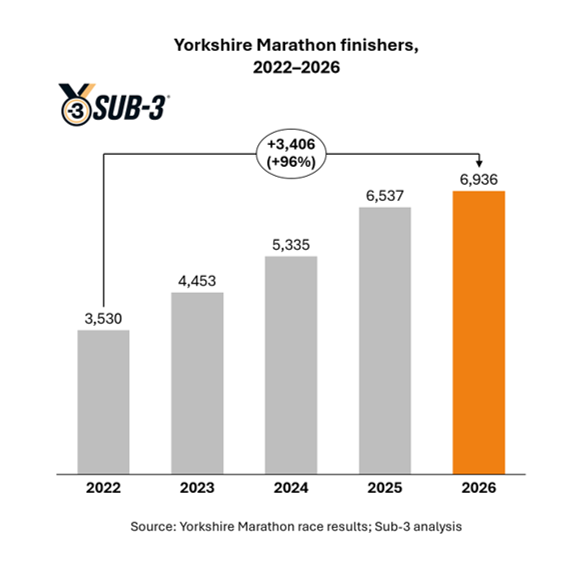
From 3,530 finishers in 2022 to almost 7,000 in 2026, the Yorkshire Marathon has enjoyed remarkable growth. But its competitive performances tell an even more interesting story, with 364 runners breaking three hours in a record-breaking year.
The Yorkshire Marathon has established itself as one of Britain's major autumn running events, attracting thousands of participants to the historic city of York and its surrounding countryside. But while its expansion has been impressive, an analysis of five years of results reveals something even more striking: the number of runners breaking three hours has grown at almost twice the rate of overall participation.
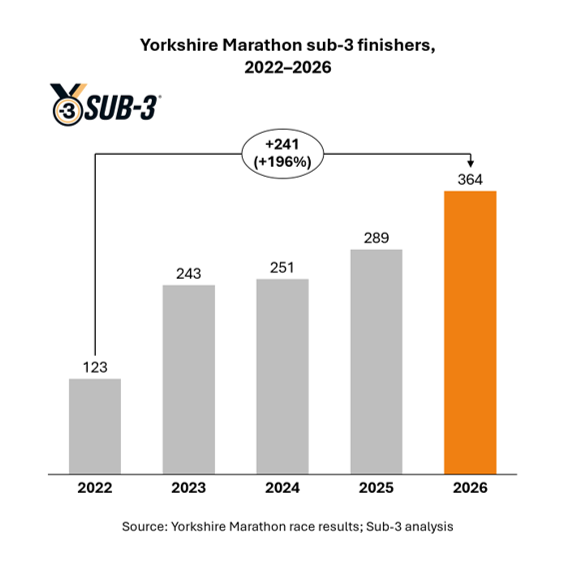
At the 2026 edition, held on Sunday 18 October, a total of 6,936 runners completed the marathon, including 364 who finished in under three hours. That represented a new record for the event, comfortably surpassing the previous high of 289 set in 2025. Four years earlier, Yorkshire recorded just 3,530 finishers, of whom 123 broke the three-hour barrier.
In other words, the field has almost doubled in five years, while the number of sub-3 performances has nearly tripled.
Five years of remarkable growth
Yorkshire's expansion has been both substantial and remarkably consistent. Between 2022 and 2026, the number of marathon finishers increased by 96.5%, with participation rising every year.
The event attracted 4,453 finishers in 2023, followed by 5,335 in 2024 and 6,537 in 2025. The latest edition added almost another 400 runners, taking the total to 6,936, the highest recorded during the five-year period.
This sustained increase is particularly notable given the scale the event has now reached. Yorkshire has continued to attract more runners, building on its established reputation and the appeal of an October marathon in one of England's most historic cities.
The marathon forms part of the wider Yorkshire Marathon Festival, organised by Jane Tomlinson's Run For All. Alongside the full marathon, the event includes a 10-mile race and a marathon relay, bringing thousands more runners to York.
Founded in 2013 in memory of the inspirational athlete and charity fundraiser Jane Tomlinson, the marathon has developed considerably since its inaugural edition. That first race recorded just 57 sub-3 finishers, a figure that provides some perspective on the competitive field Yorkshire now attracts.
An all-time record for sub-3 performances
While overall participation has grown impressively, the increase in sub-3 performances is even more striking.
The marathon recorded 123 sub-3 finishers in 2022, a figure that almost doubled to 243 the following year. The total increased more modestly to 251 in 2024, before rising to 289 in 2025 and reaching a new high of 364 in 2026.
That represents a 196% increase in sub-3 finishers over five years, compared with 96.5% growth in the overall field. It also means Yorkshire has now recorded four consecutive editions with a new all-time high for sub-3 performances.
The latest result was particularly impressive, with 75 more runners breaking three hours than in 2025, an increase of 26.0%. Yorkshire's competitive field has grown substantially in both absolute numbers and depth.
For runners targeting a sub-three-hour marathon, this growing concentration of competitive athletes is encouraging. A larger group of runners maintaining similar speeds can provide opportunities to work together, settle into a consistent pace and benefit from the collective momentum of a competitive field.
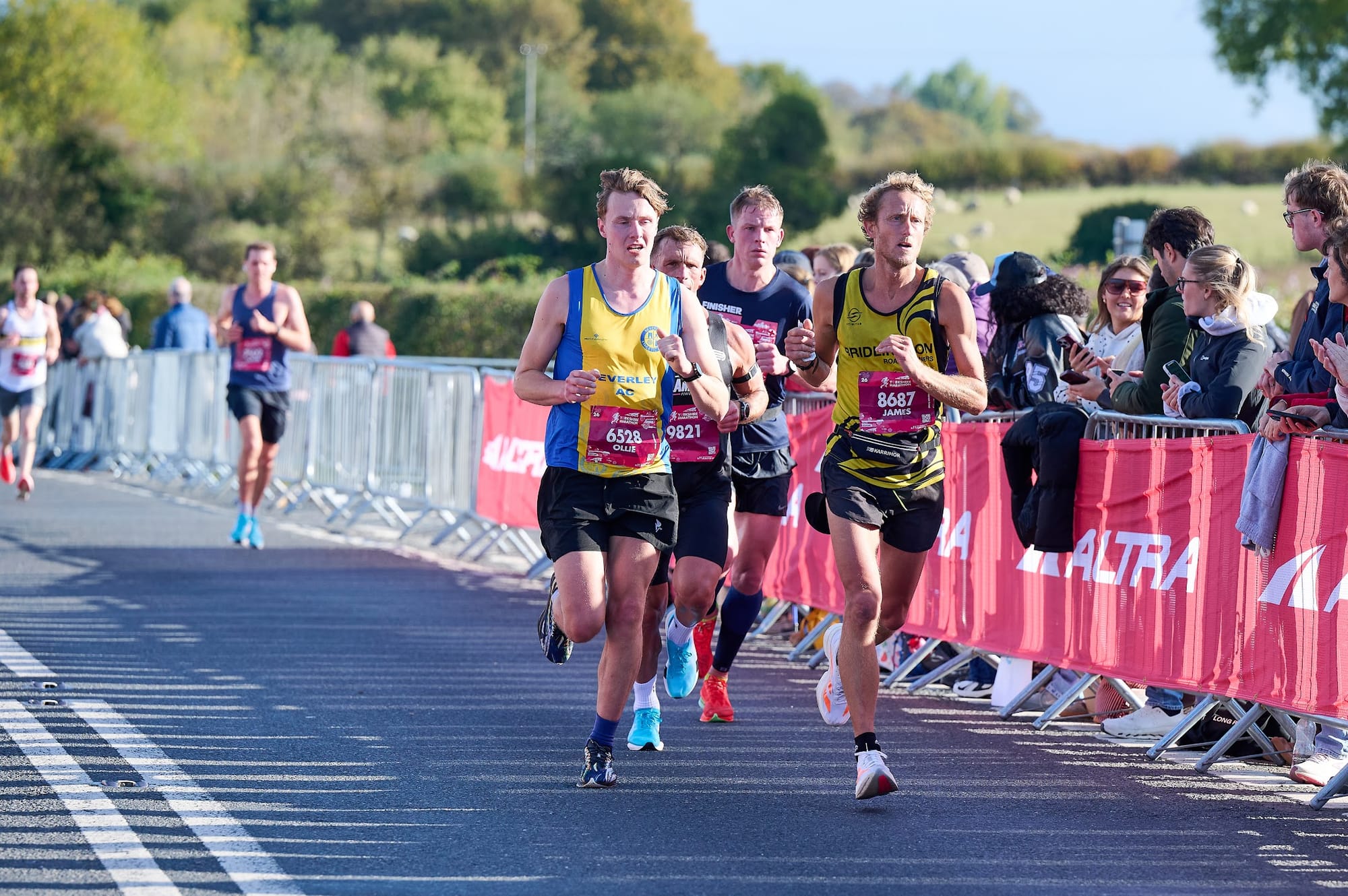
Of course, the figures do not establish precisely why more runners are achieving the benchmark. Greater participation, the composition of the field, race-day conditions and the increasing popularity of marathons among competitive club runners may all play a part. What the results demonstrate, however, is that Yorkshire now attracts considerably more runners capable of finishing inside three hours than it did only a few years ago.
A particularly impressive 2026
The changing proportion of sub-3 finishers adds another dimension to Yorkshire's growth.
In 2022, just 3.5% of finishers broke three hours. That figure rose sharply to 5.5% in 2023, before declining to 4.7% in 2024 and 4.4% in 2025.
This was not a sign that fewer runners were achieving fast times. The number of sub-3 finishers continued to increase, but the overall field was growing more quickly. Between 2023 and 2025, marathon participation increased by almost 47%, while sub-3 performances rose by around 19%.
It is a pattern familiar from other expanding marathons, where increasing popularity among recreational runners can reduce the proportion of faster finishers, even as their absolute number continues to rise.
In 2026, however, Yorkshire reversed that trend. The overall field increased by just 6.1% compared with 2025, but sub-3 performances surged by 26.0%. As a result, the proportion of runners breaking three hours climbed from 4.4% to 5.2%, its highest level since 2023.
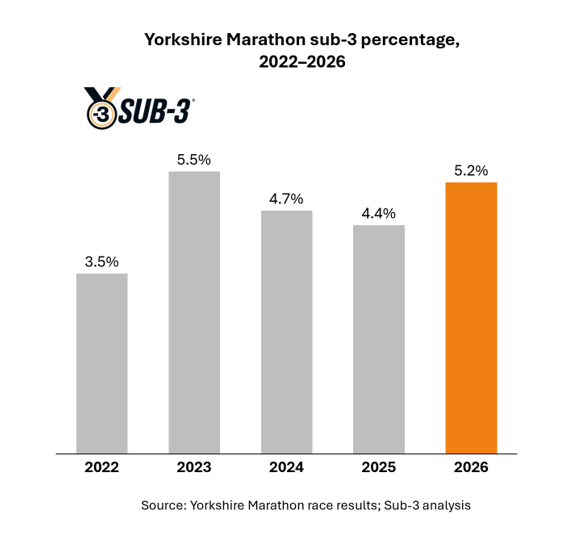
Although the 2026 percentage remains slightly below the 5.5% achieved in 2023, the combination of a much larger field and significantly more fast performances represents an important development.
In 2022, approximately one runner in every 29 broke three hours at Yorkshire. In 2026, that figure had improved to around one in 19. The latest results suggest the marathon is not simply attracting more participants, but is also developing a stronger competitive field relative to its size.
A fast course with plenty of Yorkshire character
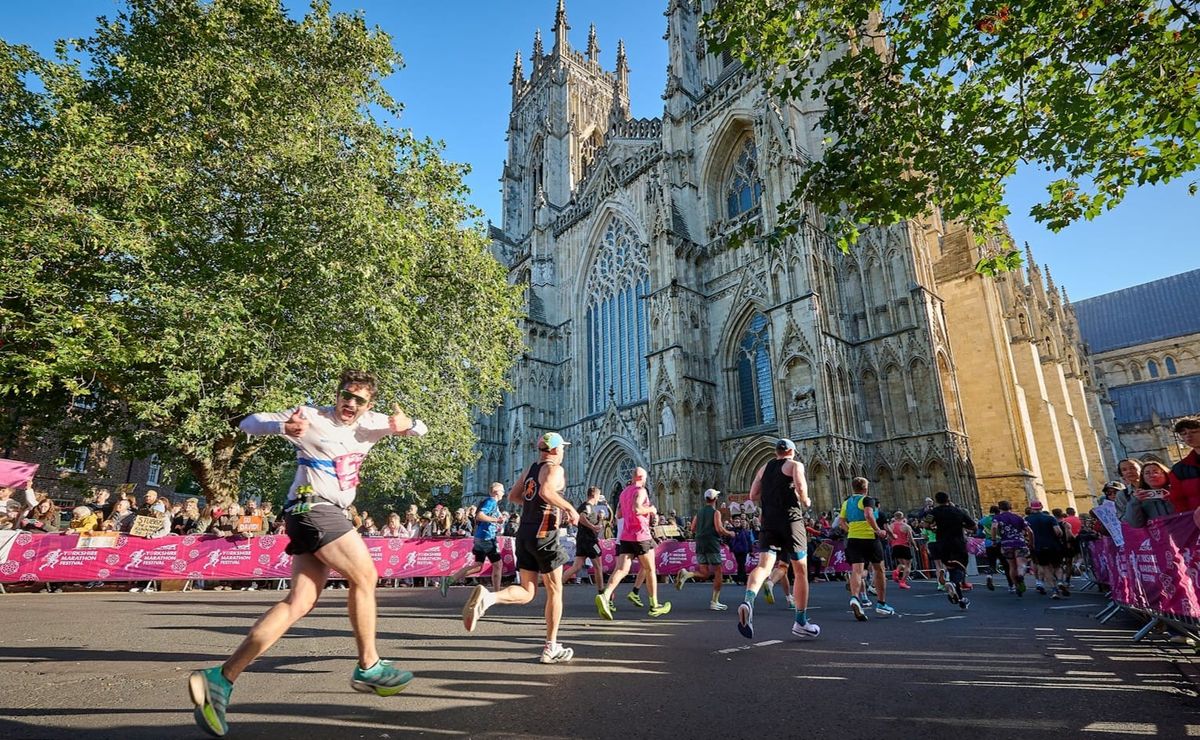
Yorkshire's appeal extends well beyond its historic setting and attractive countryside. Starting at the University of York, the marathon takes runners through the city centre, past the magnificent York Minster, before heading into the villages and open countryside of the Vale of York. But unlike some of Britain's larger city marathons, it offers a different running experience, with quieter roads, more space and an atmosphere that many runners find refreshingly relaxed.
In his book 26.2 Miles to Happiness, comedian and marathon runner Paul Tonkinson recalled "a sense of homecoming about it, the friendliness and the easy banter". Contrasting his experience with the congestion and frantic atmosphere of the London Marathon, Tonkinson celebrated the freedom to run without constantly worrying about the runners around him.
It is an often-overlooked advantage for those chasing a particular time: the ability to settle into a rhythm, follow the shortest racing line and avoid the additional distance that can accumulate through weaving around other competitors. While Yorkshire's course is not necessarily faster on paper than some larger marathons, the relative freedom to run without obstruction can be a practical advantage.
The course has its share of hills, although the undulations through the countryside provide welcome changes in rhythm, with descents generally compensating for the climbs. There is also a sting in the tail, as runners tackle the climb up Green Dykes Lane shortly after mile 25, retracing a downhill section they enjoyed near the beginning of the race. Fortunately, once the summit is reached, the final stretch towards the university finish is considerably more forgiving.
The friendly atmosphere is another of Yorkshire's distinguishing features, with enthusiastic support in the city and surrounding villages, followed by a lively reception at the finish. Tonkinson memorably described the finishers' enclosure as "bouncing with Yorkshire bonhomie and sheer big-hearted fun". It is perhaps this combination of a relatively quick course, room to run and a genuinely welcoming atmosphere that helps explain the event's enduring popularity.
The winning times tell only part of the story
The 2026 men's race was won by Nicholas Coyle of Stroud & District AC, who crossed the line in 2:19:32. Tom Charles followed in 2:25:06, with Daniel Grant third in 2:26:40.
In the women's race, Heather Townsend of Leeds City AC claimed victory in 2:40:35, completing a remarkable hat-trick of Yorkshire Marathon wins. Townsend had set a women's course record of 2:38:58 in 2025, improving on her own record from the previous year.
Interestingly, the fastest men's finishing time in 2026 was slightly slower than the 2:18:15 recorded by Edward Buck in 2025. Yet the number of runners breaking three hours increased substantially.
It is an important distinction when assessing a marathon's competitive strength. Elite winning times provide one measure of performance, but they reveal relatively little about the depth of the field behind the leaders. Yorkshire's results demonstrate why looking beyond the winners can produce a more revealing picture.
Why Yorkshire continues to appeal to sub-3 runners
For runners pursuing a sub-three-hour marathon, Yorkshire offers an increasingly attractive proposition. Its October date provides a natural target after a summer of training, while the course combines the opportunity for a fast time with enough variation to keep things interesting. Perhaps most importantly, it offers a competitive environment without the congestion that can make some of Britain's largest marathons difficult to navigate.
The growing number of sub-3 finishers adds to that appeal. With 364 runners achieving the benchmark in 2026, there is every prospect of finding others running at a similar pace, whether targeting a first sub-three-hour finish or looking to improve an existing personal best. The hills demand some respect, particularly in the final miles, but the course rewards runners who judge their effort carefully and maintain their rhythm.
Yorkshire's appeal lies in offering something rather different: a substantial competitive field, a relatively quick and runnable course, historic surroundings and an atmosphere that remains unmistakably Yorkshire.
For those chasing the elusive sub-three-hour marathon, that combination is difficult to overlook. And with the number of runners achieving the benchmark continuing to rise, Yorkshire is giving ambitious amateurs more reasons than ever to make the journey to York each October.
Finding this useful? Help keep Sub-3 running — support us with a coffee.