Marathon Vert Rennes 2026: the remarkable rise of France's fastest marathon
From just 93 sub-3 finishers in 2022 to 633 in 2026, the Breton race has become one of Europe's most competitive marathons, combining a fast city-centre course with extraordinary growth in amateur performances.
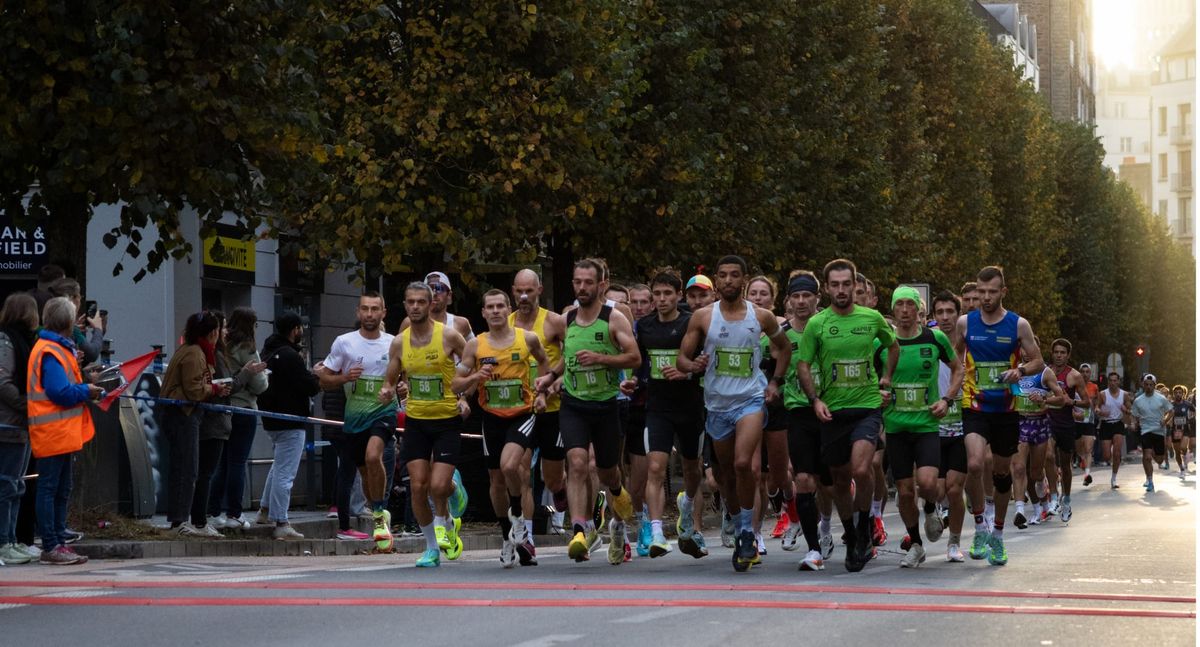
Some of the most remarkable developments in marathon running are taking place well away from the established World Marathon Majors. In the French city of Rennes, a regional marathon with a distinctive environmental mission has undergone an extraordinary transformation, attracting thousands of additional runners while developing into one of Europe's leading destinations for those chasing a sub-three-hour finish.
At the 2026 Marathon Vert Rennes on Sunday, 18 October, 633 of the race's 4,386 finishers broke three hours, giving it an exceptional sub-3 percentage of 14.4%. Sub-3 monitors hundreds of marathon performances around the world, and of the qualifying races analysed so far in 2026, only Boston, Seville and Abingdon have recorded a higher proportion of sub-3 finishers.
Rennes entered this year's race as France's number-one marathon in the Sub-3 World Marathon Rankings, having finished 13th worldwide and eighth in Europe based on 2025 results. Its latest performance suggests that an already impressive reputation among competitive amateur runners is continuing to strengthen.
An extraordinary five-year transformation
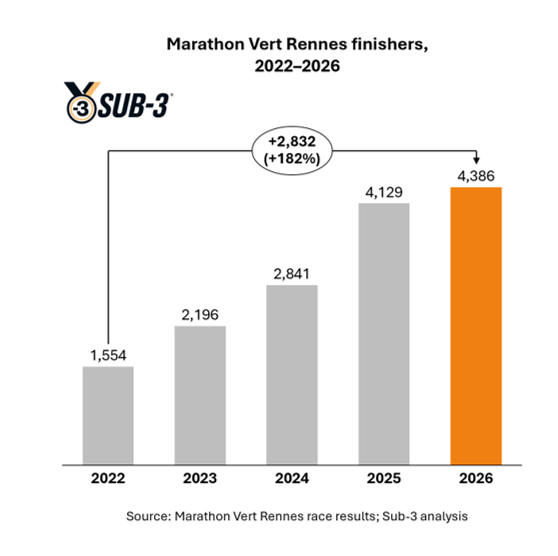
The scale of Rennes's improvement becomes apparent when examining the results over five editions. In 2022, the marathon attracted 1,554 finishers, of whom just 93 broke three hours, equivalent to 6.0%. Four years later, the finishing field has nearly tripled, while the number of sub-3 performances has increased almost sevenfold.
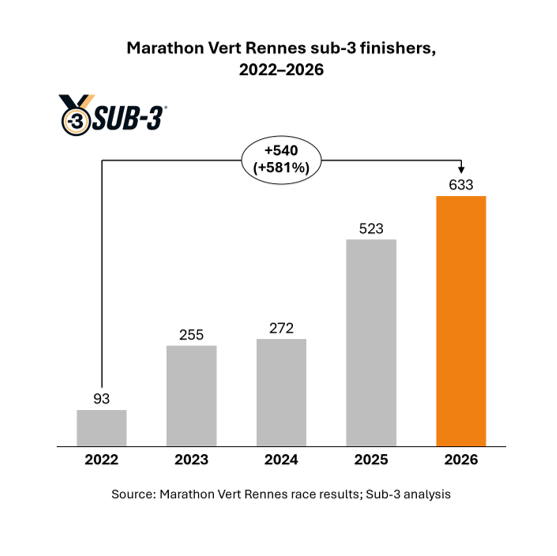
The most dramatic improvement came between 2022 and 2023, when sub-3 numbers jumped from 93 to 255. Further growth followed, with 272 in 2024 and 523 last year, before the total reached 633 this October. That represents an increase of 581% since 2022, considerably outpacing the 182% growth in overall participation.
Perhaps even more impressive is the growing concentration of fast runners. The sub-3 percentage more than doubled between 2022 and 2023, from 6.0% to 11.6%, before falling slightly to 9.6% in 2024. It subsequently climbed to 12.7% last year and reached a new five-year high of 14.4% in 2026.

The latest results suggest that the marathon's competitive appeal is accelerating rather than simply keeping pace with its popularity. Compared with 2025, the total number of finishers increased by just 6%, while the number breaking three hours rose by 21%. Rennes is attracting more runners, but an increasingly substantial proportion of them are capable of delivering genuinely fast performances.
How a new course helped transform Rennes
The Marathon Vert was founded in 2011 by Daniel Jeulin, initially following a point-to-point route from Cap Malo, a commercial development north of Rennes, through several surrounding communes before finishing in the city centre. The event established a reputation within the French running community and twice hosted the French Marathon Championships, in 2015 and 2021, but its most significant transformation came the following year.
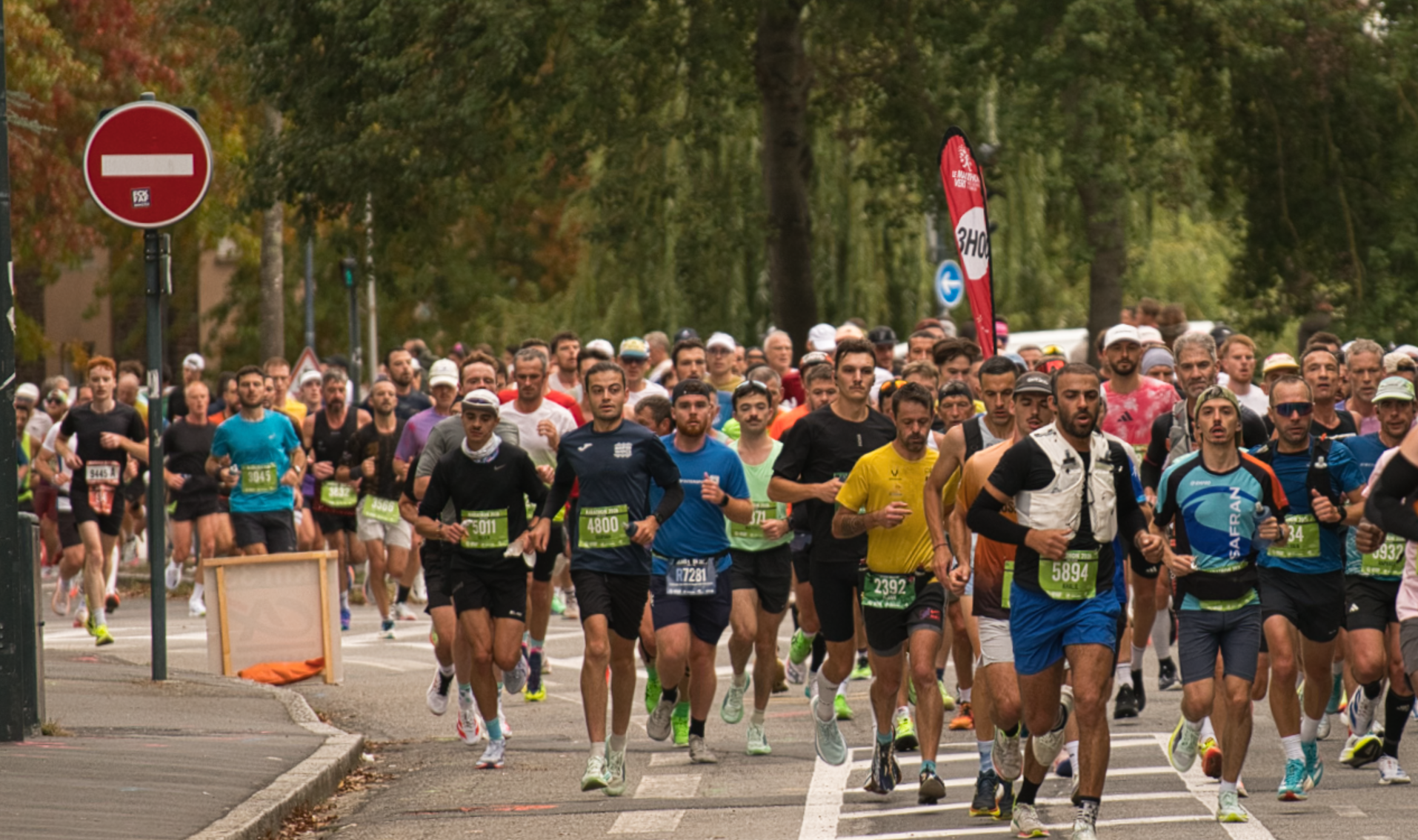
In 2022, organisers abandoned the traditional route in favour of an entirely new, predominantly urban course comprising two loops through Rennes. The change brought the race into the heart of the Breton capital, making it more accessible to spectators and placing runners much closer to the city's historic landmarks, restaurants and cafés. It also created a more compact event, with the start and finish conveniently served by the city's expanding metro network.
The new format appears to have marked a turning point. Although the 2022 edition itself produced a relatively modest sub-3 percentage, the dramatic improvement the following year suggests that Rennes was beginning to attract a different calibre of amateur runner. There was no equivalent wholesale redesign between 2022 and 2023, making it plausible that word was spreading through French running clubs about the course's potential for fast times.
Of course, weather, changes in the participating field and other factors will also have influenced the results. But the sustained improvement since 2022 suggests that Rennes has developed a competitive reputation extending well beyond any single favourable edition.
A fast course through the heart of Brittany
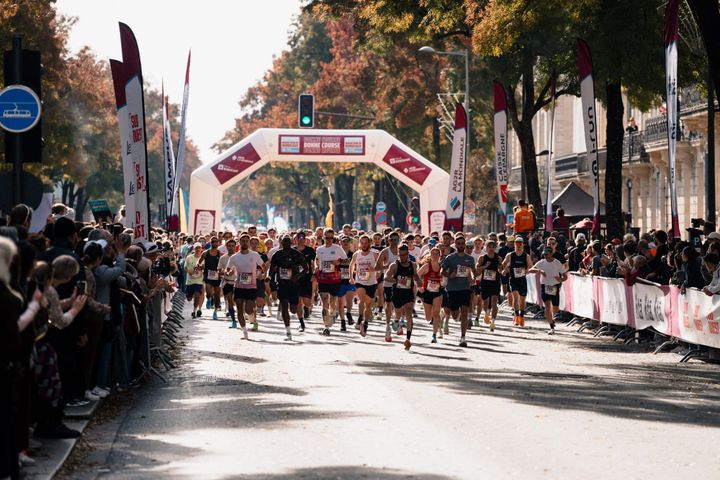
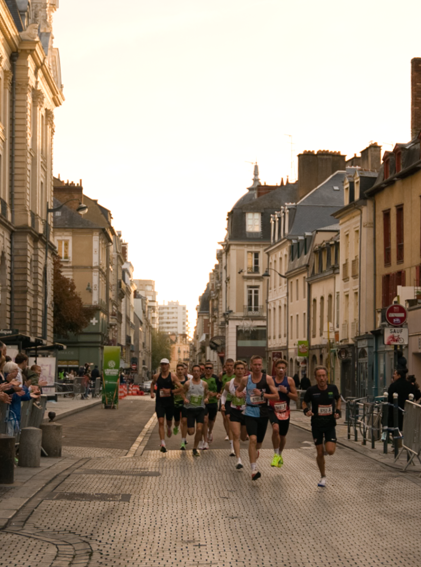
Rennes offers an appealing combination of historic surroundings, enthusiastic local support and a route designed with fast running in mind. The marathon begins on Mail François Mitterrand before taking runners through the city's streets, past the elegant civic buildings of the historic centre and alongside stretches of the Vilaine and the canal d'Ille-et-Rance.
The two-loop course passes landmarks including Place de la République, the Hôtel de Ville and the Opéra, combining broad urban avenues with riverside sections and leafy streets. Runners eventually finish on Esplanade Charles-de-Gaulle, close to the city's cultural centre, providing a fitting conclusion to a marathon that has increasingly embraced its urban setting.
Despite the attractive scenery, the route has clearly been designed with performance in mind. Organisers describe it as très roulant, meaning fast and flowing, with approximately 110 metres of cumulative elevation gain. The course carries an international Gold Label from the French Athletics Federation and hosts the Brittany Marathon Championships, while dedicated starting areas and pacemakers help runners targeting ambitious finishing times.
The competitive credentials were reinforced by this year's winners. Florian Caro of Stade Brestois claimed his second Rennes marathon victory in 2:16:04, while fellow Breton Marie Lohéac-Bouchard won the women's race in 2:38:39. Although the men's winning time was slower than last year's 2:11:38, the broader results demonstrated just how much the depth of amateur running has improved.
A marathon with an environmental mission
The Marathon Vert has another distinguishing feature: its longstanding commitment to tree planting. Since 2012, the organisers have worked with the Fondation Yves Rocher to link participation in the event with reforestation projects, originally pledging to plant one tree for every kilometre completed by runners.
That commitment has helped fund the planting of more than 1.7 million trees over the event's history, supporting projects in countries including Ethiopia, India, Portugal and France. The formula was adjusted in 2025 to one tree for every two kilometres completed, meaning each marathon runner now contributes towards the planting of approximately 21 trees.
The environmental theme also influenced the decision to move the marathon into the city centre, allowing greater use of public transport and reducing reliance on cars. It is an unusual identity for a race that has simultaneously become one of France's most competitive marathons, demonstrating how a distinctive community initiative can develop into a major sporting attraction.
France's fastest marathon for sub-3 runners
Rennes's rise is particularly noteworthy when placed in the wider European context. In the 2026 edition of the Sub-3 rankings for France, based on performances from 2025, the Marathon Vert finished ahead of considerably larger and better-known events, including Paris and La Rochelle.
The rankings assess three factors: the proportion of runners breaking three hours, the absolute number of sub-3 performances and the fastest finishing time. Rennes's combination of a relatively compact field, exceptional sub-3 concentration and respectable elite performances proved particularly effective under that methodology.
The 2026 results strengthen its credentials further. A sub-3 percentage of 14.4% places Rennes among the most competitive marathons recorded anywhere in the world this year, while 633 sub-3 finishers gives it substantial depth beyond the leading athletes.
There is something particularly encouraging about a marathon improving its competitive standards while expanding so rapidly. As Sub-3 has reported, in several major races, recent growth in participation has coincided with declining sub-3 percentages, reflecting the increasing diversity of runners taking on the distance. Rennes has demonstrated that the opposite is also possible, with growing demand from runners pursuing ambitious finishing times.
For anyone considering a European autumn marathon, the Breton capital now deserves serious attention. Its fast course, attractive historic setting and increasingly deep competitive field offer a compelling combination, particularly for runners seeking an alternative to the logistical challenges and congestion of the largest city races.
Fifteen editions after its modest beginnings, the Marathon Vert has established itself as far more than a regional French sporting event. What began as an environmentally minded marathon has evolved into one of Europe's most attractive destinations for competitive amateur runners, and the remarkable results of 2026 suggest there is still plenty of room for it to grow.
Finding this useful? Help keep Sub-3 running — support us with a coffee.