Bordeaux Marathon 2026: A New Beginning After Seven Years Away
Seven years after its last edition, the Bordeaux Marathon has returned with a new course, new organisers and a substantially more competitive field. Sub-3 examines the revival of one of France's major city marathons and how its reinvention could reshape its reputation among faster runners.
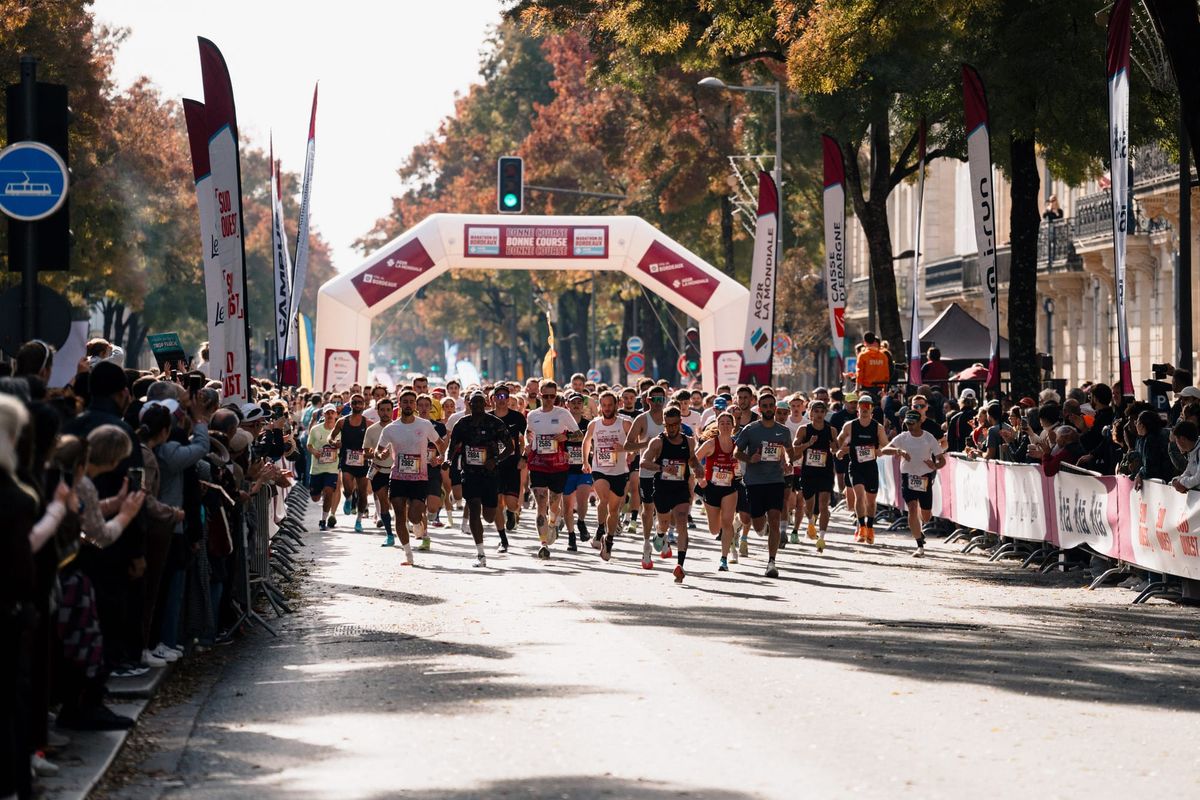
After a seven-year absence, the Bordeaux Marathon made its long-awaited return on Sunday 8 November 2026, with a completely reinvented event and a substantially more competitive field than its predecessor attracted.
The French city last staged a marathon in October 2019, bringing to an end five editions of a distinctive night-time race. Its return in 2026, under the organisation of ASO and Stade Bordelais Athlétisme, introduced a new daytime course taking runners through the historic city centre and across both banks of the Garonne.
The relaunch attracted considerable interest, with approximately 34,000 registrations across the marathon, half marathon and 10K, including around 9,000 for the full marathon distance. Of those entering the marathon, some 41.7% were attempting the distance for the first time.
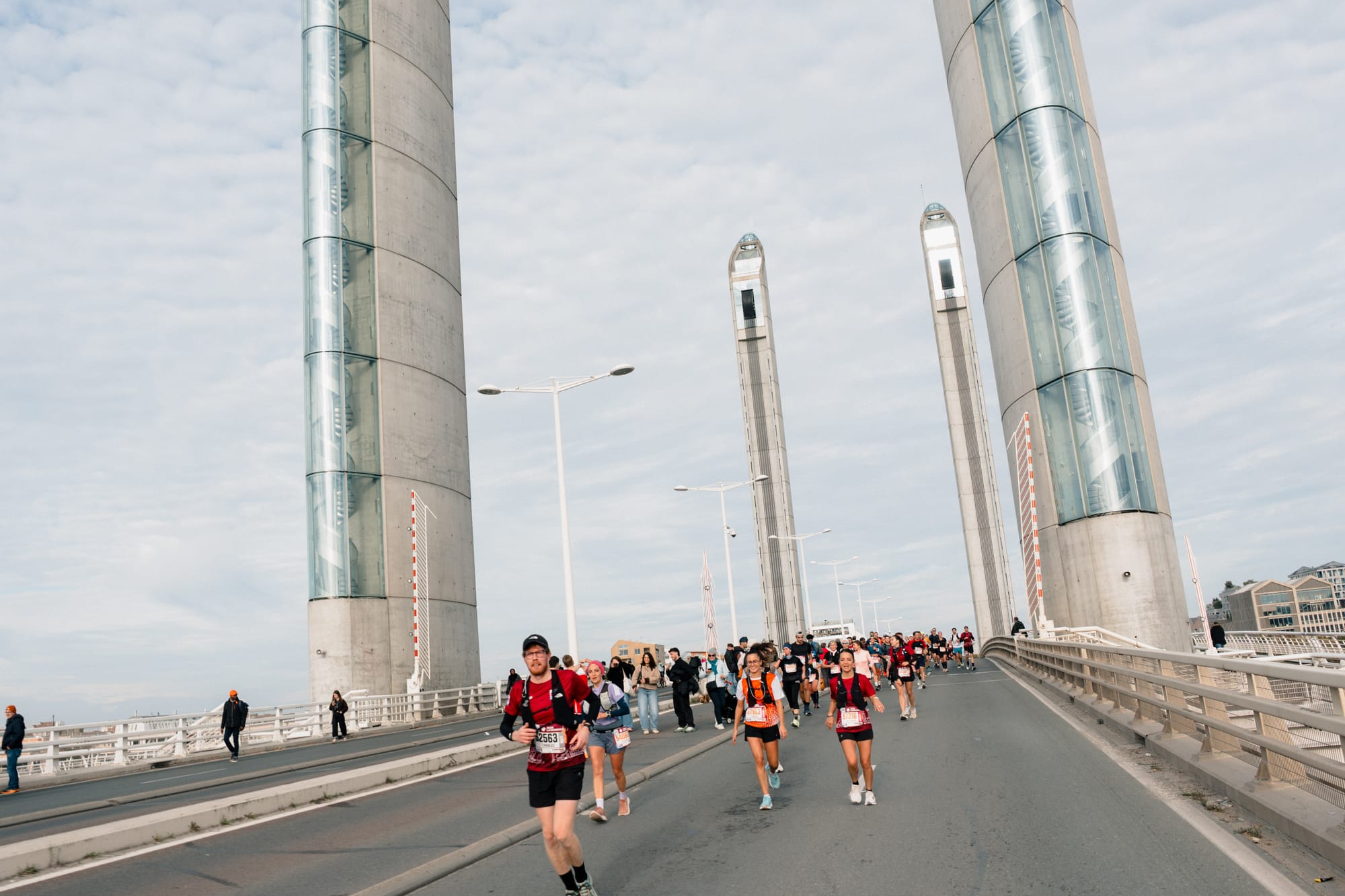
A dramatic finish in Bordeaux
The men's race produced a thrilling conclusion, with local runner Jason Pointeau taking victory in 2:18:32, just five seconds ahead of Téo Dubuc (2:18:37). Florian Laplanche completed the podium in 2:19:42.
Pointeau's achievement was particularly remarkable given that he had completed the New York City Marathon just seven days earlier, finishing in 2:19:30. He therefore managed to run almost a minute faster in Bordeaux, despite having barely a week to recover.
Solvegue Feuillade won the women's race in 2:49:39, ahead of Léa Douheret (2:50:12) and Ludivine Balluais-Delaunay (2:51:09).
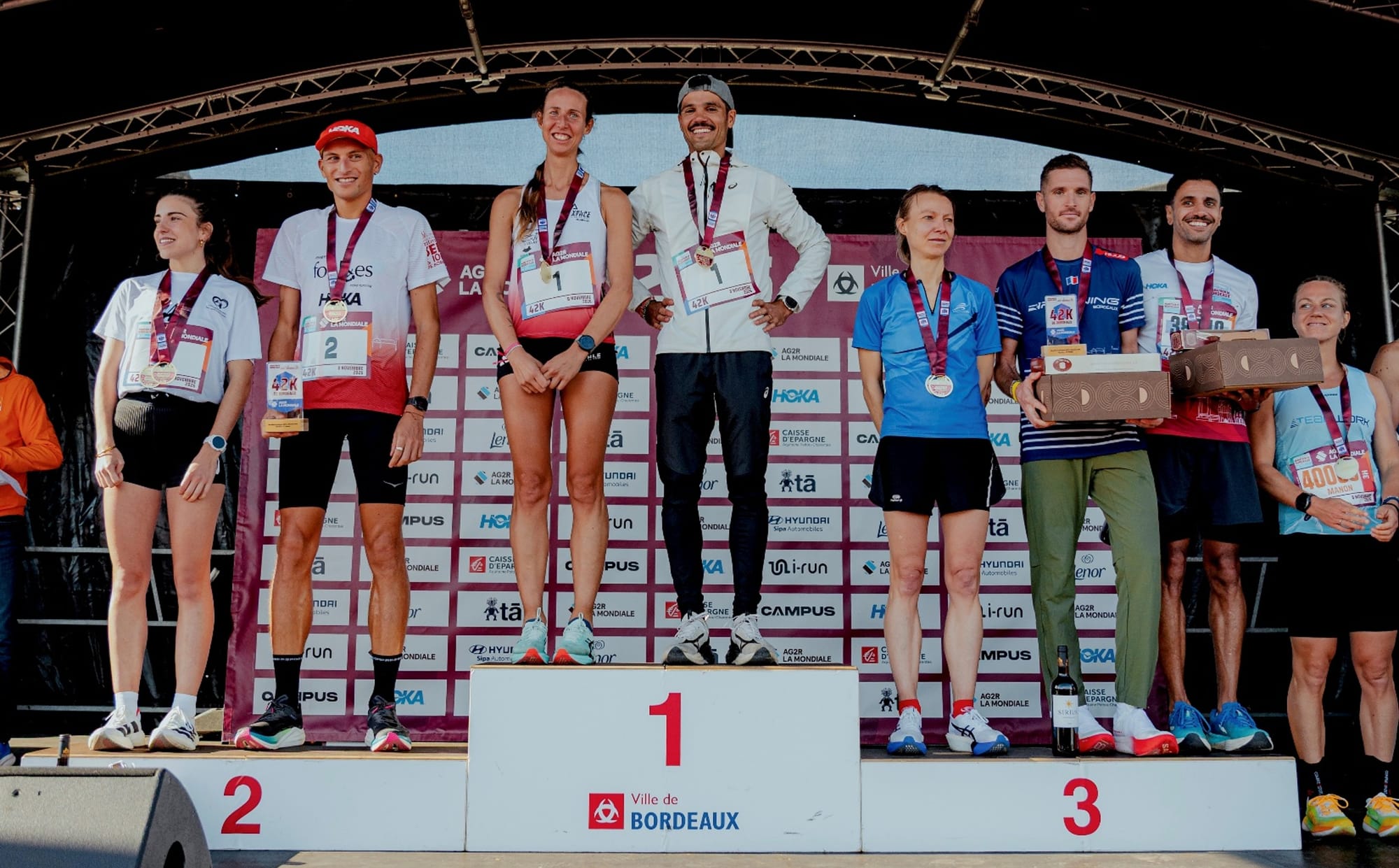
A very different sub-3 picture
For competitive amateur runners, the results revealed an equally interesting transformation.
A total of 411 runners broke three hours from 6,976 finishers, representing 5.9% of the field. This included 399 men and 12 women, a striking contrast with the final edition of the original Bordeaux Marathon in 2019, when just 24 runners broke three hours from 1,622 finishers, a rate of 1.5%. No women finished inside three hours that year, with the female winner recording 3:08:30.
The overall sub-3 percentage has therefore increased almost fourfold, while the absolute number of sub-3 finishers has risen more than seventeenfold. Overall participation has also expanded dramatically, with the 2026 marathon attracting more than four times as many finishers as its predecessor.
Direct comparisons require considerable caution. The new Bordeaux Marathon has different organisers, a different course and a morning start rather than the previous evening format. The composition of the field has also changed substantially, making it difficult to draw conclusions about the relative speed of the two courses.
Nevertheless, the figures demonstrate that the relaunched event has attracted a much larger competitive field.
How does Bordeaux compare with other French marathons?
Bordeaux's 5.9% sub-3 rate compares favourably with many established French marathons.
In Sub-3's Fastest Marathons in France – 2026 Edition, which analyses results from the 2025 calendar year, only a handful of events exceeded this percentage. These included Marathon Vert Rennes (12.2%), Annecy (6.7%) and La Rochelle (6.6%).
Bordeaux's performance was also ahead of the figures recorded by Saumur (5.6%) and Poitiers (5.7%) in 2025. With more than 400 runners breaking three hours, its competitive depth is already comparable with some of France's most established regional marathons.
A promising return
Bordeaux was absent from the current Sub-3 World Marathon Rankings, which assessed performances across the 2025 calendar year. Its return means the race can now be considered for inclusion in the 2027 edition, alongside other international marathons held during 2026.
For a city with a rich sporting heritage and an attractive urban course, the marathon's revival is welcome news. The 2026 results establish a promising starting point, although future editions will reveal whether Bordeaux can consistently attract the competitive fields needed to establish itself among France's leading marathons for faster amateur runners.
Finding this useful? Help keep Sub-3 running — support us with a coffee.