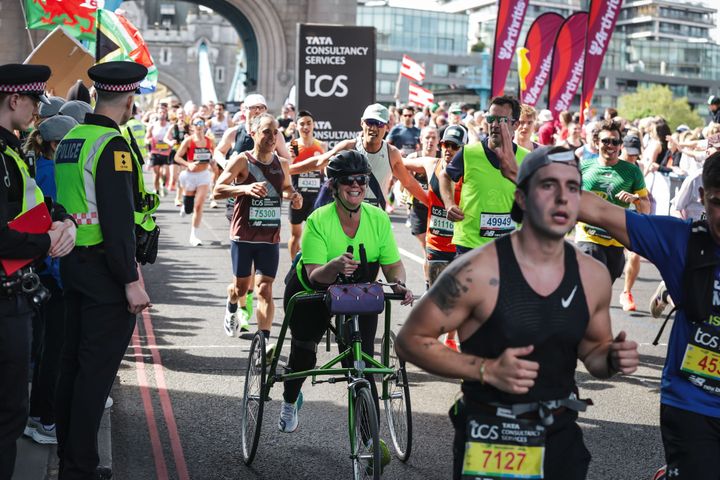
When the pace gets hard, a familiar voice can carry you through
When the final kilometres of a marathon begin to bite, support from friends and family can provide a powerful mental boost. Back My Run founder Daniel Moores explains how hearing a familiar voice at just the right moment can help runners through the toughest miles.

Chasing a sub-three-hour marathon demands months of disciplined training, careful pacing and a willingness to become comfortable with discomfort. But even the best-prepared runner knows that the final kilometres are not negotiated by fitness alone. When the legs are heavy and the finish still feels a long way away, the conversation inside your head can become as important as the numbers on your watch.
Many runners rely on a mantra in those moments. Others picture the people waiting at the finish, remember the reason they entered, or replay something a coach or family member once told them. These thoughts do not replace training, fuelling or sensible pacing, but they can help you stay connected to the effort when slowing down begins to feel like the easiest option.
For me, that connection became especially powerful while training for my first marathon, the 2024 Abu Dhabi Marathon, which I ran in memory of my grandmother and grandad. The training block often felt like a private undertaking, but it was supported by many people: those who asked how a long run had gone, donated to the causes I was supporting, or simply understood why the race mattered.
During an approximately 30-kilometre training run, with no music playing and only my breathing and footsteps for company, I imagined hearing the voice of someone I loved at that exact point. Then I thought about what it would mean to hear a message recorded by my grandparents, not only as encouragement, but as a memory I could keep.
That thought eventually became Back My Run, an app that lets friends and family record voice messages that play automatically at selected distances during a run or race. A runner creates an event or personal route and shares a link. Supporters record through their browser, without downloading an app or opening an account, and their messages are prepared on the runner’s phone before the start.
The purpose is simple: to bring a familiar voice into the moments when support can have the greatest emotional impact. That might be shortly after halfway, at the start of a difficult section, around 30 kilometres, or as the final push begins.
For a runner targeting sub-three, those points should be chosen thoughtfully. The opening kilometres are usually about restraint, rhythm and avoiding unnecessary excitement. Later, once maintaining goal pace requires real concentration, a short message can serve as a reset: relax your shoulders, return to your rhythm, take the next gel, or remember who helped you reach the start line.
The most effective messages do not need to be dramatic. Specific, personal encouragement is often more meaningful than a generic instruction to “keep going”. A shared joke, a child’s voice, a reminder of a difficult training run completed in bad weather, or a simple expression of pride can reconnect a runner with something larger than the discomfort of the moment.
It is also worth being selective. A marathon filled with constant notifications could become distracting. A few messages placed at genuinely significant distances leave room for the runner to focus while making each voice feel like an event. As with shoes, nutrition and headphones, the complete setup should be tested in training and used in accordance with the race’s rules.
Race-day reliability was another important consideration when developing Back My Run. Messages and race information are downloaded beforehand, so playback does not depend on mobile data. They can play while the phone is locked and stored in a pocket or running belt, including on crowded courses, in tunnels or in places with weak coverage. After the finish, the recordings remain available as a keepsake.
No message can guarantee a personal best, and technology cannot do the work of a training block. Yet marathon running has never been entirely solitary. Behind most athletes is a quiet network of family, friends, training partners and supporters who have carried some part of the journey.
When the race reaches its hardest point, remembering that support may be exactly what helps a runner keep moving. Back My Run is one way of allowing those people to be present on the course, wherever they happen to be. Runners can try it on their own races and personal routes, or ask organisers to consider making supporter messages part of the event experience.
 Back My Run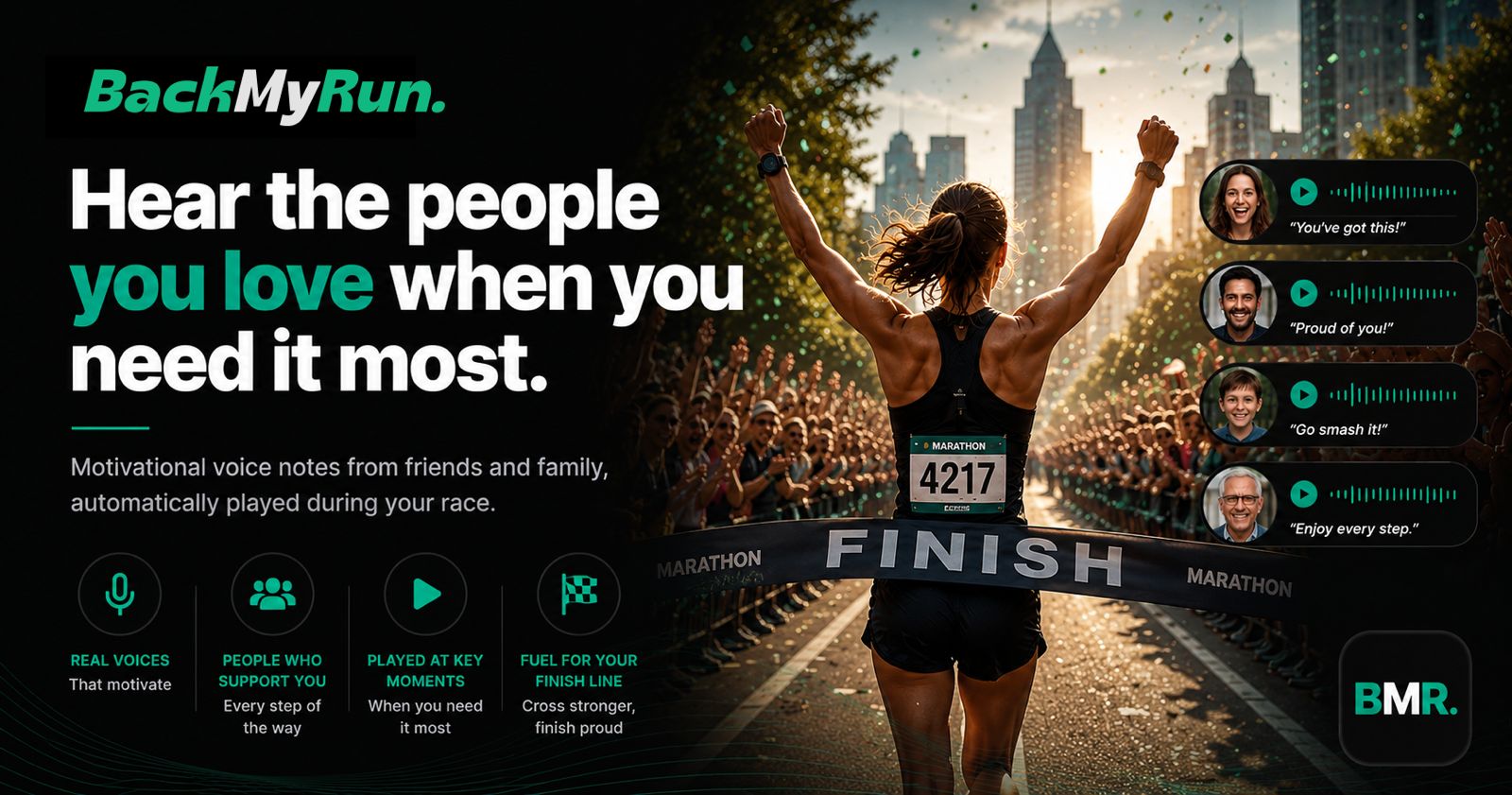
Finding this useful? Help keep Sub-3 running — support us with a coffee.