10 things I wish I'd known before running the Berlin Marathon
Berlin is one of the fastest and most iconic marathons in the world, but a little advance planning can save a lot of unnecessary stress, leaving you free to focus on what really matters on race day.
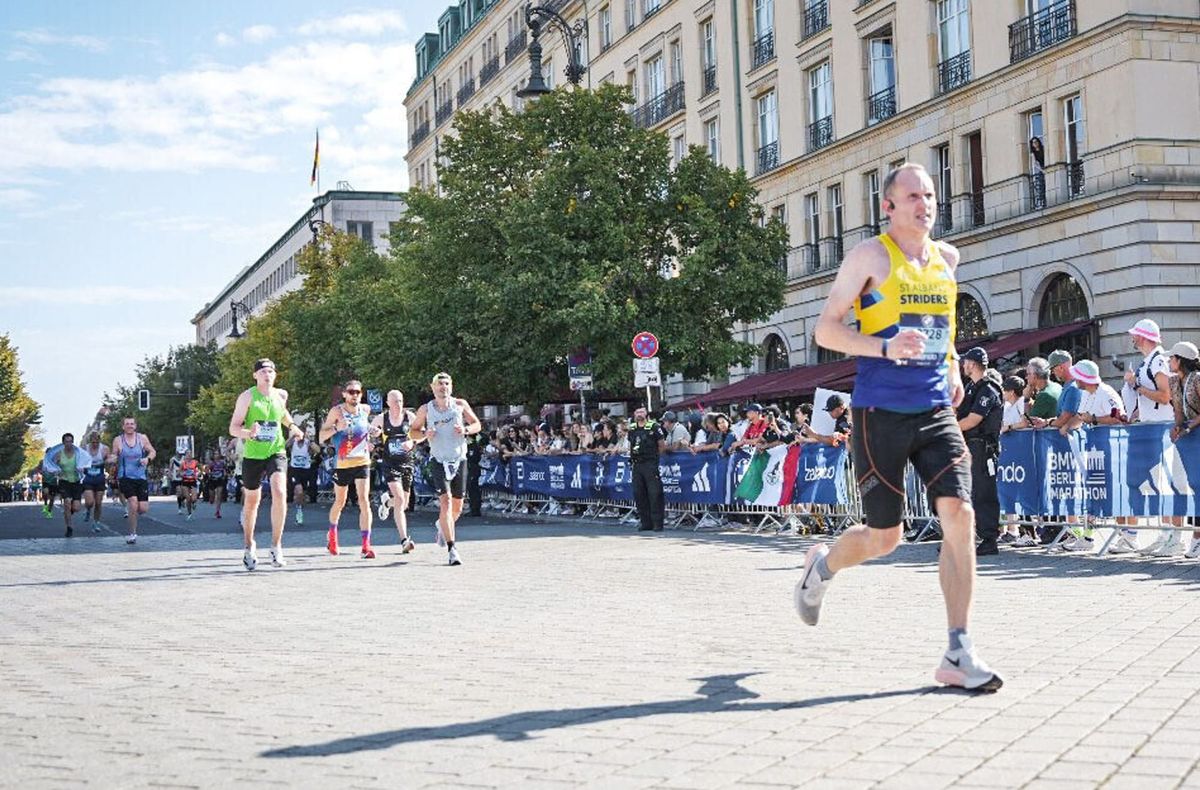
The Berlin Marathon is one of the world's great races. It's flat, fast and brilliantly supported, with hundreds of thousands of spectators lining the streets. If you're chasing a personal best, there are few better places to do it. If you get the chance to run it, simply take it.
Like every major marathon, though, Berlin has its own quirks. Some are brilliant, others are mildly frustrating, and a few are things I'd much rather have known before I arrived (leaving aside the unseasonable heatwave that added to the challenge in 2025!)
Here's what I'd tell anyone running Berlin for the first time:
1. Make full use of the public transport
One of the lesser-known benefits of running Berlin is that your race bib doubles as a travel pass on the city's public transport network on race day. Make the most of it. The U-Bahn and S-Bahn are generally quicker and far more reliable than trying to find a taxi through the inevitable road closures, and they're exceptionally good at moving huge numbers of runners around the city. It's worth taking full advatage of this - and obviously don't try to run too far to the start line, save your energy for the 26.2 miles.
2. Don't spend all day at the expo
The Berlin Marathon Expo is well worth visiting, but it's vast and surprisingly easy to spend several hours wandering around it. Remember that every minute you're walking around a convention centre is time on your feet that your legs don't really need a day or two before the race. Collect your race pack, have a browse if you'd like to, but don't feel obliged to make an afternoon of it. Public transport links here are excellent, and the queues move quickly.
3. Resist the temptation to buy something for race day
The expo is full of tempting purchases, from the latest gels and hydration products to new socks, shorts and running tops. However convincing the marketing sounds, race weekend is not the time to experiment. If you haven't trained in it, don't wear it, and if you haven't practised fuelling with it, don't suddenly decide to introduce it 20 miles into your marathon. That, of course, didn't stop me buying a few things the official t– shirts are fantastic quality - but save them for when you're in training for the next marathon.
4. Think about carrying your own water
Berlin now uses reusable plastic cups at its drinks stations for environmental reasons. In my experience, though, the cups often retain quite a strong washing-up liquid taste, which can make the water distinctly unpleasant. The detergent residue also seems to make the road around the water stations noticeably slipperier than at most other marathons, so take a little extra care underfoot. If you're someone who likes to sip little and often, carrying your own bottle (I used two Salomon Soft Flasks) is certainly worth considering.
5. Don't assume you'll find a toilet near the start
If you're someone who usually likes one final visit to the toilet 45-60 minutes - or less - before the gun, it's worth adjusting your expectations. Toilet provision simply doesn't keep pace with demand, and by that point the queues are often completely unmanageable. Dozens of people in the queue in front of me gave up after 30-40 mins of waiting and had to improvise.
The unfortunate consequence is that seemingly thousands of runners head for the bushes in the Tiergarten instead. It's not particularly pleasant and it's certainly not something Berlin should be proud of, but it is the reality. I cannot believe this will have been fully addressed in future iterations - despite constant negative feedback from runners - so it's best to assume you won't get access and mentally prepare yourself for a slightly undignified start to the marathon.
If you find yourself with little alternative, make sure you've packed some tissues beforehand and, above all, be discreet and leave the area as you found it.
6. Give yourself more time than you think you'll need
The start area is vast, and the final approach takes longer than many first-time runners expect. Between security, bag drop, navigating the barriers and simply walking to your start block, it's very easy for time to disappear. Arriving early removes a huge amount of unnecessary stress and allows you to focus on the race rather than worrying about whether you'll make the start.
7. Know exactly which entrance you need
Before leaving your hotel, make sure you know which start gate and starting block you're aiming for. The start area isn't somewhere you want to be trying to decipher maps while surrounded by tens of thousands of other runners, and walking to the wrong entrance can easily cost you another 10 or 15 minutes. Definitely identify your entrance and get close to it before doing warm ups.
8. Don't get caught up in the panic before the start
The closer it gets to the gun, the more frantic the atmosphere becomes. The network of metal barriers leading to the start can become heavily congested and, as the music gets louder and the countdown approaches, it's not unusual to see runners climbing over barriers or trying to force them open in an attempt to reach their pens more quickly. Testosterone levels are running high.
It's simply not worth joining them. Berlin is chip-timed, so your race only starts when you cross the line, and no personal best has ever been helped by twisting an ankle or getting into an argument five minutes before the gun. The boulevards are so wide that congestion largely disappears after the first couple of kilometres. Unlike some major marathons, you don't need to be standing on the front row to run a fast time.
9. Berlin offers very little shade
One lesson from the 2025 race is that you can't assume late September will always deliver perfect marathon weather. While Berlin has a deserved reputation as a fast autumn marathon, last year's unseasonable heatwave was a reminder that temperatures can still climb comfortably above 20°C.
Berlin is a surprisingly exposed marathon, with long, wide boulevards offering very little shade. Unlike some city marathons that weave between tall buildings or tree-lined streets, much of the course runs through open avenues where there is little protection from the sun. If temperatures do rise, you'll spend much of the race in direct sunlight.
Applying sun cream before leaving your hotel is simply good practice, and one less thing to think about once you've arrived at the start. Hopefully you won't need it, but if race day turns into another warm one, you'll be glad you did.
10. Arrange where you'll meet afterwards
The finish area is enormous and, once you've collected your medal, drinks and bag, it's easy to lose half an hour trying to find friends or family. Agree a meeting point before the race starts rather than relying on mobile phones, which can become unreliable when thousands of people are all trying to do exactly the same thing - I didn't have any signal at all until I was back at the central station on the train.
None of these quirks should detract from what is a truly outstanding marathon. Berlin is fast, friendly, superbly organised where it matters most and attracts some of the best crowds you'll find anywhere in the world. Go in knowing what to expect, avoid a few easily made mistakes and you give yourself the best possible chance of enjoying one of marathon running's great experiences.
Finding this useful? Help keep Sub-3 running — support us with a coffee.