How to qualify for the London Marathon through Good For Age
London Marathon Good For Age offers faster UK runners an alternative route into one of the world’s most oversubscribed races. Here’s how the system works, the times you need to target and how to maximise your chances of securing a place.
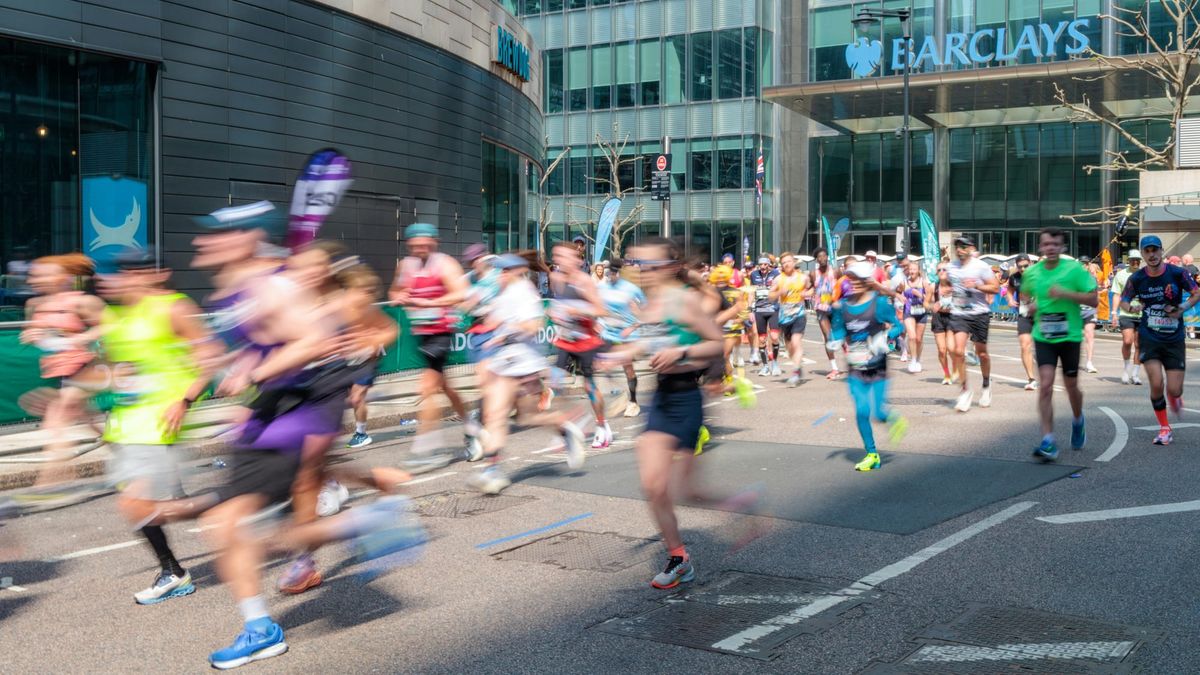
Getting into the London Marathon through the ballot has become extraordinarily difficult. More than 1.3 million people applied for the 2027 race, making a Good For Age (GFA) place an increasingly attractive alternative for faster UK runners.
I’ve now qualified for London through Good For Age three times, having never once been successful in the ballot in over a decade of trying. If you’re capable of running the required time – or getting beneath it – it’s a route well worth understanding.
What is London Marathon Good For Age?
Good For Age rewards runners who achieve a marathon time considered strong for their age group. Crucially, though, simply running the published standard does not guarantee entry.
In this respect, London is similar to Boston. The qualifying time gets you into the application process, but if there are more eligible runners than available places, you may need to have run considerably faster.
For the 2026 London Marathon there were 6,000 GFA places: 3,000 for men and 3,000 for women. If applications exceed the available places, they are allocated on a “fastest first” basis relative to the qualifying standard for your age. In other words, think of the published time as the minimum required to apply, not necessarily the time required to get in.
The 2027 standards have yet to be announced, with London Marathon Events saying they will publish details in autumn 2026. For reference, the 2026 qualifying times can be found here. These are 2026 standards for guidance only. Check the official London Marathon Good For Age page for the 2027 criteria when they are released - you can often find out when this is released via social media groups.
One important detail: your age group is based on your age when you run the qualifying marathon, not your age on London Marathon day. That can make a significant difference if you’re approaching a new age category. Half marathon times aren’t accepted for Good For Age qualification; you must have a full marathon result.
When do you need to run your qualifying time?
For the 2026 race, the qualifying window ran from 1 October 2024 to 30 September 2025. Applications then opened on 2 October and closed at 4pm on 30 October.
London has not yet confirmed the equivalent dates for 2027. Until it does, I would work on the assumption that you’ll need your qualifying time by the end of September. For 2026, the window closed on 30 September.
That makes a fast spring marathon – or a late-summer or September race – a sensible target. Be more careful with the traditional autumn marathon calendar: if London again closes its qualifying window at the end of September, an October marathon will be too late for the following spring’s race.
And don't train to scrape under the standard. If your GFA time is 3:02, don't build an entire campaign around running 3:01:59. The faster you are beneath the standard, the stronger your application if GFA is oversubscribed. A 2:59 gives you a considerably healthier buffer than a 3:01:50. Get a 2:52, and you can probably relax.
Choose the qualifying race for the time rather than prestige: a flat, well-organised certified course, with good pacing and a decent chance of favourable weather, gives you the best opportunity. The Sub-3 World Marathon Rankings were designed precisely to help provide this kind of guidance - you can view them here.
Make sure your race actually counts
Your qualifying marathon must be on a certified course. London accepts courses certified by UK Athletics, AIMS or the appropriate national governing body in the country where the race takes place.
When you apply, you’ll need a link to the official results page showing the event, date and your time, along with proof of age and UK residency. Keep hold of that official results link: your Strava activity isn't a substitute for an official race result.
And that last eligibility requirement is important: Good For Age is only available to UK residents.
Championship entry is different. Faster runners living outside the UK can potentially apply, provided they meet the Championship requirements, including registration with a UK athletics body.
There are also special provisions for qualifying through the TCS London Marathon MyWay, although additional evidence of an eligible in-person half-marathon performance is required.
One other point worth knowing before you apply: GFA places cannot normally be deferred to the following year, with limited exceptions such as pregnancy and postpartum deferral.
Enter the ballot as well
If your GFA performance is borderline, enter the ballot too. London Marathon itself recommends entering the ballot if your time is within 10 minutes of the GFA standard. There’s no advantage in voluntarily reducing your chances of getting a place. If you’re only a few minutes inside the standard, don't regard GFA as your replacement for the ballot – regard it as a second chance.
The complication is timing: ballot applications close months before GFA applications open. For 2027, for example, the ballot was held in spring 2026, while the new GFA details aren't being published until the autumn.
So if you think you might qualify, enter the ballot first. You can then pursue GFA afterwards.
There is an additional wrinkle for 2027: London will be staged across two days for the first time, on 24 and 25 April, with 100,000 runners expected across the weekend. At the time of writing, the specific 2027 GFA arrangements have yet to be announced.
Finally: is London a good place to chase sub-3?
There are easier places to run a fast marathon. London is flat and potentially quick, but it is also enormous. The 2026 race had 59,830 finishers – officially the largest finishing field in marathon history. I’ve found that even from the quicker starts, London remains crowded, particularly in the opening miles, and there is no completely escaping the congestion that comes with running the biggest marathon on earth.
If your only objective is breaking three hours, I’d choose a smaller, fast marathon where you can settle immediately into your pace - like Seville or Manchester - run the shortest possible racing line and worry less about weaving around other runners.
But qualifying for London is about more than finding the quickest course. From Greenwich to Cutty Sark, across Tower Bridge, through the City and along the Embankment before turning towards Buckingham Palace and the finish on The Mall, it becomes something far bigger than a race. The streets are lined with crowds the entire way, the noise builds in waves as you pass each landmark, and there are moments where it genuinely feels like the whole city is carrying you forward. It’s the kind of atmosphere that can lift you when your legs are fading and turn the final miles into something you remember long after the finish line has been crossed.
There are better marathons for running sub-3, but for a marathoner there aren’t many better rewards than having experienced the London Marathon in all its glory. Go for GFA if you can.
Finding this useful? Help keep Sub-3 running — support us with a coffee.