How I went from DNF to sub-2:50 in six weeks
At just 21, Szymon Truszkowski saw his marathon debut in Warsaw end in a painful DNF. Just weeks later, he crossed the finish line in Málaga in 2:46:32. Here, he reveals what went wrong, what he changed and how he turned disappointment into triumph.
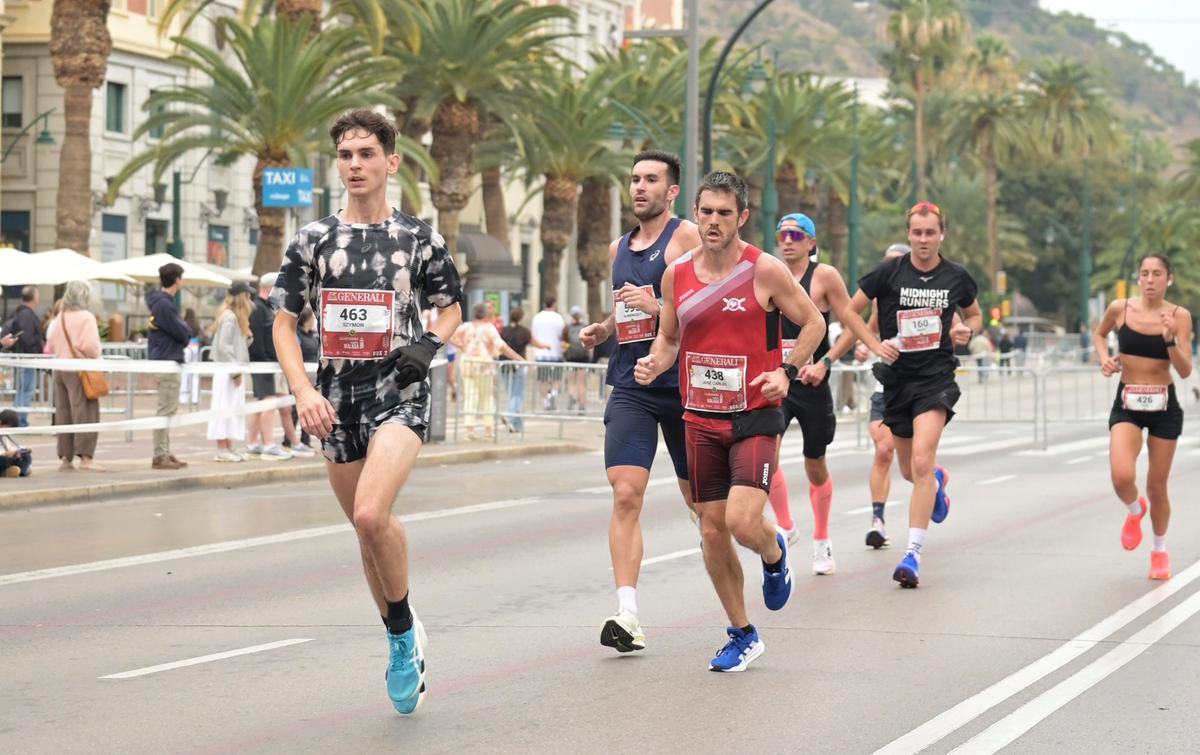
Szymon Truszkowski spent much of 2026 preparing for his first marathon, building his training to more than 100km a week and targeting a 2:45 finish in Warsaw. What followed was a painful lesson in marathon running, an unexpected half-marathon PB and, ultimately, a second, triumphant, attempt in Málaga. Here, Szymon tells his story in his own words.
Discovering running
I am a long-distance runner and began my journey during lockdown as a way of doing something other than staying at home. In 2022, at the age of 17, I signed up for the London Big Half alongside a friend from school. That entire summer we spent running consistently and on 4 September I completed my first half marathon in a time of 1:53:41.
I have such a vivid memory of speaking to my friend after the race, saying: "Now imagine running that twice and doing a full one. I don't think I ever will." Despite how challenging that race was, within hours I knew that I wanted to experience this feeling all over again, and that's when my love for running truly began.
I completed my second half marathon only six months later in Berlin, Germany, banking a new PB of 1:44:31. Finishing that race, I was beyond proud of what I had achieved on my own this time, without a training partner, but post-race I was left with a sharp pain in my left ankle. I thought it was just sore from the half, but I quickly found out that it was more serious. It put me out of running for eight months.
I then picked up running again in January 2024, when I was running for the love of running rather than to chase times. Only at the start of 2026 did I make the decision to start taking running seriously. I wanted to see how far I could push myself. Running now isn't something I do for fun. Instead, it has become something that gives me a routine and has become my priority outside of my work life.
Preparing for Warsaw
The marathon was something that inspired me and was always at the back of my mind after finishing the Big Half back in 2022. After completing the half-marathon distance several times, I was always left wanting more, which is one of the main reasons I signed up for the Warsaw Marathon.
I began training for this race in early June to give myself enough time to prepare. During this marathon build, I spent 11 weeks above 100km, with my highest being 115km (four weeks out). I ran seven days a week and only took two full rest days.
My training mainly consisted of doing one or two quality speed sessions a week and one long run, with the rest of the week being easy running. Two of my favourite speed sessions, which I kept going back to in this block, were 6 × 1km at 15–30 seconds faster than race pace, with 1km float recoveries, and 2–3 × 3km at 5–15 seconds faster than race pace, with 2km float recoveries.
My longest run was 35km, with the rest of the long runs being 25–30km. Easy pace was 4:48–4:58/km. Based on how training went, I was targeting a 2:45 marathon in Warsaw and was confident that I could achieve it.
Warsaw: when everything went wrong
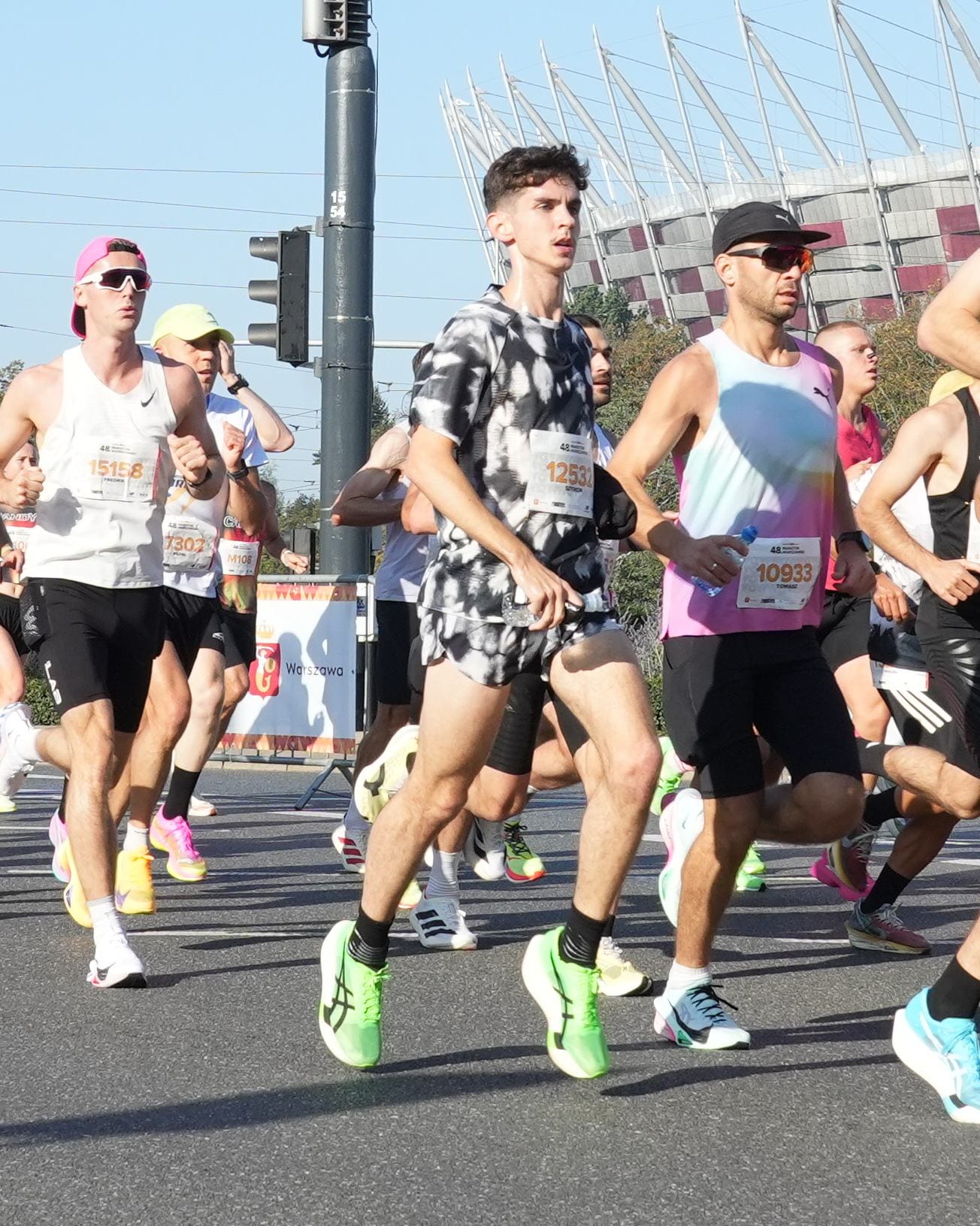
Warsaw went nothing like I imagined it would. On the day, I did not give myself enough time to properly warm up. I did my usual stretches, a quick 2km jog and a few strides, after which I had to sprint to the start line. I stood there for about two minutes and before I could process it, the race had already begun.
From the moment the gun went off, I attached myself to the 2:45 pacer. I expected the pacer to be running even splits, so I did not look at my watch to verify the pace. I felt strong and I remember the first 10km going by very quickly.
Shortly after passing through 10km, I felt discomfort on the bottom of my left foot. I looked down and saw blood slowly going through the material of my shoe. The pain was at a 3/10, so I made the decision to keep going.
Still feeling strong at 19km, I saw my family cheering me on, which gave me a much-needed boost. About a kilometre later, the entire race got flipped around. The best way I could describe it is like severe brain fog. I was still running, but my pace had dropped considerably. It's like I wanted to go faster but I couldn't focus enough to actually make the effort to increase the pace. While everyone around me was picking up the pace, I was slowing down.
I thought that it was just a phase and that eventually I would feel good again, but after that I never did. It got to a point where I was asking myself why I was still running, since I was no longer enjoying it and the time I had set myself was far out of reach. The blood on my shoe was the only thing that I could focus on at this point. I even considered the idea of walking the rest of the marathon just to finish it.
Ultimately, after battling my thoughts for several kilometres over whether or not I should continue, I made the decision to quit just before the 30km mark. Walking off the course felt strange. I was tired and in pain, but I knew that I had given it my all and that it was the right decision at the time.
Understanding the DNF
Looking back on it, I could name every excuse as to why I didn't finish that marathon. Granted, a lot of things didn't go my way, but I still think that it came down to me not having enough physical and mental strength to cover the full 42.2km.
However, I think a major mistake I made, which contributed to me not finishing the race, was relying too much on the pacer and not checking my watch to verify the actual pace at which we were running. Looking back at the splits post-race, I covered the first kilometre in 3:45 and for the next 4km ran faster than 2:45 marathon pace. While banking those few seconds at the start when the legs are still fresh might work for some runners, I can confidently say that it doesn't for me.
I also know that I wasn't mentally prepared to cover the marathon distance. This might sound stupid, but I never once prior to Warsaw considered how it would feel being at 35km and so on, and what I would do if I didn't feel great. I think the mental side of running is often neglected, as we all focus on building that base and that speed but rarely consider how it feels mentally to be running at such demanding paces.
Cardiff: a PB just seven days later
I had booked the Cardiff Half long before I even considered running the Warsaw Marathon, as it was my penultimate half marathon towards completing the SuperHalfs series. In January, this was my A race, but that changed when I booked Warsaw in March.
Pulling out at 30km meant that I didn't completely destroy my legs. Apart from my left foot, which had the blister, three days post-Warsaw my legs were back to normal. On Friday, two days out from Cardiff, I did a speed workout as a way of seeing if my legs were capable of running fast again. It was 12km (2km warm-up, 5 × 1km at 3:26/km with 1km floats).
My only aim for Cardiff was to enjoy it regardless of what time I got. The last thing I expected was running an eight-second PB. Looking back on it, I definitely needed that result, as it proved that the marathon block which I had sacrificed the whole summer for was not a waste of time. I think this race also allowed me to close the Warsaw Marathon chapter and move past that DNF.
Málaga: unfinished business
I booked Málaga only three days after Warsaw. When I walked off the Warsaw Marathon course, I held my head high as I knew I couldn't have done any better. But as soon as I got home, I just couldn't accept it. I knew that I was capable of so much more than that DNF.
The smart decision would have been waiting until next year to redo the marathon. However, not finishing that race had taken a larger toll on me mentally than I had initially realised, so I knew I simply couldn't wait that long to do another one.
Taking the lessons from Warsaw, in the weeks leading up to Málaga:
- I did considerably more work at paces much faster than the goal race pace of 3:55/km. One session which stands out in particular is 6 × 1km at 3:20/km with 1km floats.
- I incorporated marathon pace into each of my long runs, which I neglected in the build to Warsaw.
- I began experimenting with caffeine gels as a way of improving my focus and energy levels in the back end of the marathon, which ended up working extremely well during the race.
- I created a stricter fuelling strategy, which I also lacked in Warsaw: one gel every 20 minutes, 75g of carbs an hour. Seven gels in total, with one of them containing 100mg of caffeine, taken at 1:40. My last gel was taken at 2:20 into the race.
- I did one more intense workout on Wednesday of race week to keep the sharpness in my legs and avoid the sluggish feeling that sometimes comes alongside the taper.
Málaga: the race
Going into Málaga, I knew exactly what I needed to do. I got to the start line 90 minutes before the race started. This time, without rushing, I stretched, did a little shakeout and a few strides, and stood at the start line with around eight minutes to spare. In the eight minutes that I was waiting for the gun to go off, I reflected on Warsaw.
This time I started five seconds slower (4:00/km) than race pace (3:55/km) and gradually built into the marathon. Passing the 20km mark where things fell apart in Warsaw felt surreal and, in a way, reassured me that what I was doing was right.
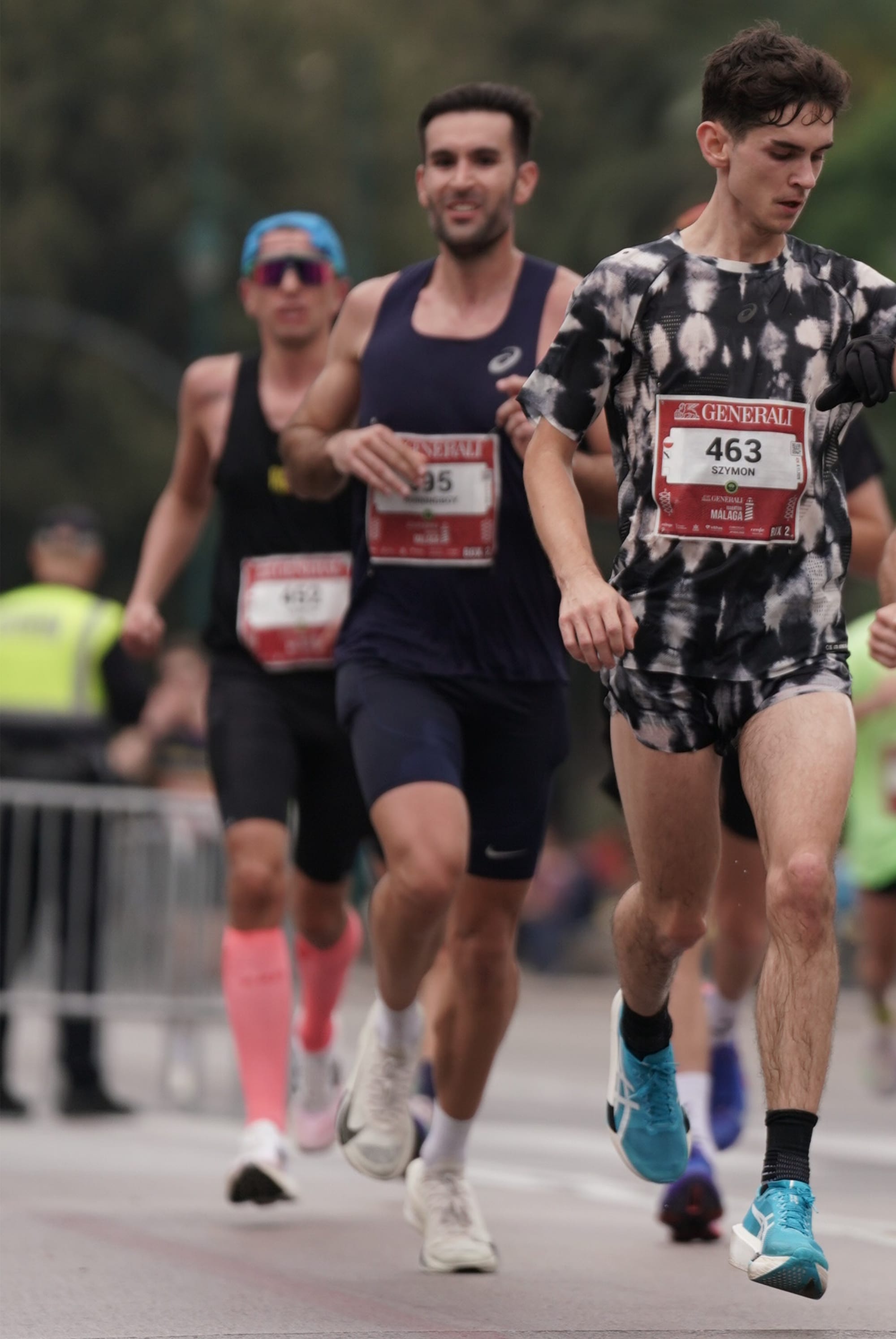
Past the halfway mark, I stopped checking my watch as often because I familiarised myself with the people around me, so I roughly knew that I was running at the right pace. Talking to the people on the course definitely helped to distract me from running itself. It was also nice knowing that we were all going through similar emotions.
I feared getting to 30km, as that's where I walked off the course in Warsaw, but eventually getting to it felt much better than I had expected. At that point of the race, I was almost certain that I would finish the marathon. Apart from some general fatigue, somehow the race never got hard and I didn't struggle in the back end, even when I entered unfamiliar territory.
The highlight of the race for me was the feeling of relief once I turned onto the final straight. Once I saw the finish roughly 300m ahead, time slowed down and I just kept repeating to myself: "I did it, I actually did it."
I crossed the finish line in a time of 2:46:32. Slightly slower than I had hoped, but I was beyond happy with my performance and grateful for being able to get to the end. Seconds after I stopped, my eyes began watering from exhaustion, pride and a sense of accomplishment.
Lessons learned and looking ahead
These two marathons taught me so much about myself, most importantly how to deal with and move past failure. In a way, I feel as though if I didn't have such a bad experience in Warsaw, I wouldn't have strived to train as hard as I did in the month leading up to Málaga. The eagerness and feeling of redemption pushed me far beyond what I thought I was capable of.
People always say this, but truly the losses sometimes teach you more than the wins do and are much more valuable in the long term.
If someone has the ambition to tackle the marathon, then do so. It's such a rewarding experience that can't be compared to anything. I am still learning every day, so I don't feel as though it's right for me to give advice, but I will say two things.
Be consistent with your training and the results are bound to happen. You may not succeed in every session or even your first marathon, just like me. That consistency is what will eventually get you over that finish line. My first run was a 2km at 7:33/km back in 2021 and through the art of consistency I got to where I am today.
Finally, don't neglect the mental side of running. Take time to prepare yourself mentally for what you've signed up for. Marathon running isn't only a physical challenge but equally a mental battle.
As for what's next for me, I have already signed up for my third marathon, which I will do on 11 April in Rotterdam. I have not set myself a time goal just yet, but I aspire to become an elite marathoner in this life, so I just hope that Rotterdam will take me one step closer to that.
Finding this useful? Help keep Sub-3 running — support us with a coffee.