
10 things I wish I'd known before running the Valencia Marathon
Valencia is one of the world's fastest marathons, attracting an extraordinary number of runners chasing personal bests. From the crowded opening kilometres to a surprisingly tricky finish, here are ten things worth knowing before race day.
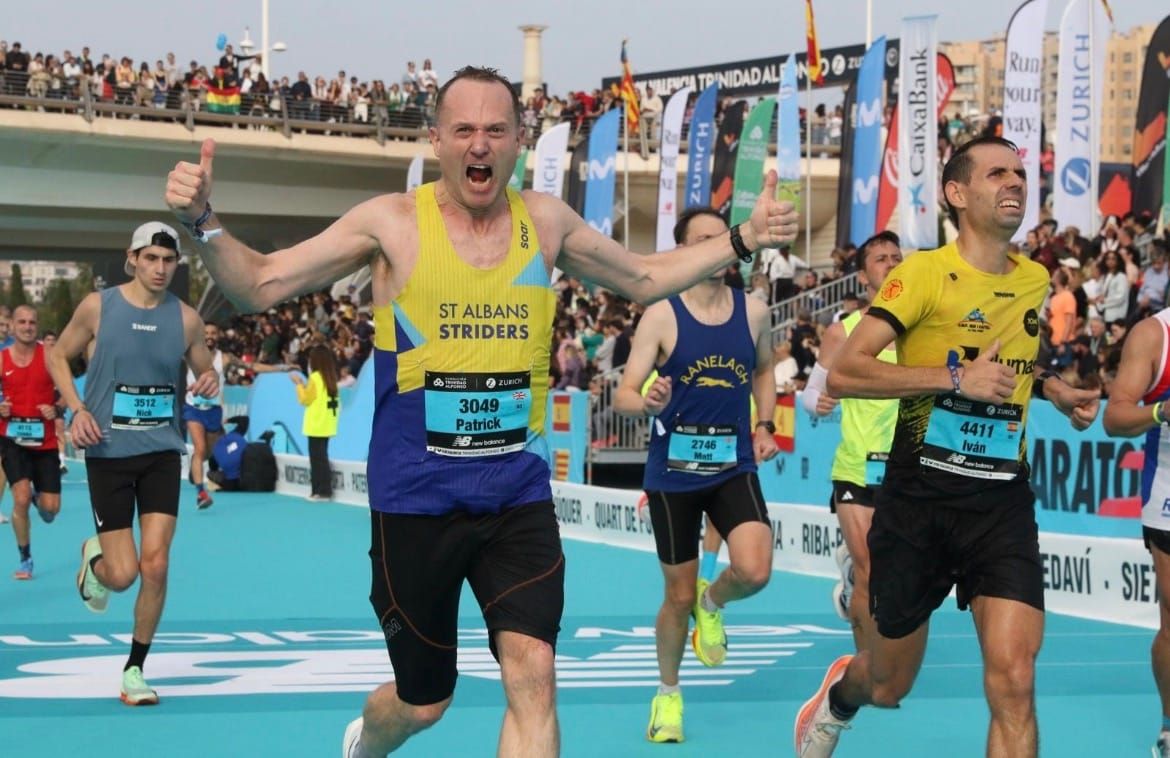
The Valencia Marathon has earned a reputation as one of the best places in the world to run a personal best. It's fast, exceptionally well supported and attracts a remarkably competitive field. In fact, Valencia sits at the top of the Sub-3 World Marathon Rankings, with more runners breaking three hours than at any other marathon in the world.
I ran Valencia in 2:48:22, a personal best at the time, and it's a race I'd wholeheartedly recommend to anyone looking to run fast. There's a wonderful sense that the entire city has embraced the marathon, and the spectacular finish is something you won't forget in a hurry.
That said, like any major marathon, there are a few things I wish I'd known beforehand. Some are practical, others concern the course itself, and a couple could make the difference between a good race and a great one.
Here's what I'd tell anyone preparing to run Valencia for the first time.
1. Consider booking your airport transfer in advance
One of the best decisions I made was booking an airport transfer through Welcome Pickups before travelling to Valencia. It might seem like an unnecessary luxury when taxis are readily available at most airports, but there's a good reason to consider it on marathon weekend.
Thousands of runners descend on Valencia over a relatively short period, and the queues for taxis at the airport can be enormous. With Welcome Pickups - recommended by my hotel - my driver was waiting in arrivals holding a sign with my name on it, and I was on my way without having to join the queue.
It costs a little more than simply turning up and finding a taxi, but for me it was worth every extra euro. After a flight, the last thing you want is to spend another hour standing around when you could be settling into your hotel and getting off your feet. Public transport is another option, of course, but if you're planning to take a taxi, I'd seriously consider arranging it beforehand.
2. The expo is a long way from the city centre
Unlike some marathons, where the expo is conveniently located near the start or finish, Valencia holds its event at Feria Valencia, a substantial distance from the city centre. And since you have to collect your race number in person, there's no avoiding the pilgrimage.
I used Uber to get there and back, which worked, but it wasn't particularly cheap and finding a driver wasn't always straightforward. It's worth planning your journey rather than assuming you'll be able to order a car and arrive ten minutes later. Tram line 4 serves Feria Valencia, and there are bus connections too, so public transport may be the more sensible option.
Timing matters as well. The expo gets extremely busy, particularly on Saturday when runners arriving for the weekend descend on the venue to collect their numbers. Queues can be enormous, so I'd strongly recommend going on Thursday or Friday if your travel arrangements allow. The last thing you want the day before a marathon is to spend hours standing in a queue.
Once you've collected your number, enjoy the atmosphere, but resist the temptation to spend the afternoon wandering around. You'll be spending quite enough time on your feet the following day.
For 2026, the expo runs from Thursday 3 December to Saturday 5 December. There is no race-number collection on Sunday morning, so make sure you've allowed sufficient time for the trip.
3. Make sure your timing chip has been checked
This caused quite a lot of confusion when I ran Valencia. There were signs at the expo directing runners towards a timing-chip checking station, but they weren't particularly clear, and there seemed to be considerable uncertainty about whether you actually needed to visit it to activate your race number.
The good news is that your timing chip doesn't need to be activated at the expo. The chip is already attached to the back of your race number, and the checking station is there to verify that it's working correctly, rather than activate it. If you miss the signs and leave without having it checked, don't panic. It doesn't mean your race number won't register when you cross the start line.
The organisers' 2026 regulations do ask runners to check their chips at the expo, so it's worth finding the station for peace of mind. But the important distinction is that checking isn't activation. If you've already left the expo without doing it, there's no need to assume you've jeopardised your race result.
4. Save the paella for after the marathon
Valencia proudly claims to be the birthplace of paella, and rightly so. It's one of the city's great culinary traditions, and sampling the local speciality should absolutely be part of any visit.
Just perhaps not the night before running a marathon.
Race weekend isn't the time to experiment with unfamiliar food, particularly if you've spent months preparing for a specific finishing time. Paella can be quite rich, and depending on the ingredients and how it's prepared, it might not be the ideal pre-race meal for everyone.
My own race-eve dinner was considerably less adventurous: a Domino's Margherita pizza. Not exactly an authentic Valencian culinary experience, but it was familiar, predictable and gave me the carbohydrates I needed without any unwelcome surprises.
There will be plenty of time to enjoy the city's restaurants afterwards. Once you've crossed that finish line, tuck in.
5. Familiarise yourself with the start area the day before
The Valencia Marathon starts close to the magnificent City of Arts and Sciences, one of the most recognisable locations in the city. It's a spectacular setting, but the roads, bridges and surrounding buildings can make navigating the area slightly confusing if you've never been there before.
I'd strongly recommend taking a short walk to the start area the day before the race. Work out where your starting pen is likely to be - they're often small squares a little away from the bridge - identify the best route from your accommodation and familiarise yourself with the surroundings. It's a small investment of time that can remove a great deal of uncertainty on race morning.
Leave plenty of time to get there, too. The toilets were reasonably well organised when I ran, certainly compared with some other major marathons, but never take that for granted. There are tens of thousands of runners trying to do much the same thing, and queues inevitably build as the start approaches.
One other practical point: unlike some marathons, Valencia doesn't automatically include baggage storage. For 2026, the service costs €6, with places that had to be reserved in advance by 1 November. If you haven't booked a place, you'll need to make alternative arrangements rather than expecting to leave a bag on the morning.
6. Don't underestimate how cold it can be before the start
Valencia enjoys a Mediterranean climate, and December generally offers excellent conditions for marathon running. But don't assume that means you'll be standing around in pleasantly warm sunshine before the race.
The marathon starts early, with the first wave scheduled for 8.15am in 2026. Sunrise is only a few minutes beforehand, meaning many runners will be making their way to the start and waiting in their pens while it's still dark or barely light.
It can be surprisingly chilly at that time of morning, particularly if you're standing still in racing kit. Bringing an old sweatshirt or disposable layer to keep warm before the start is a sensible precaution.
Of course, Valencia can warm up considerably as the morning progresses, so don't make the opposite mistake of dressing too heavily for the race itself. The key is to stay comfortable before the gun without overheating once you're running.
7. Be prepared for an extraordinary density of fast runners
This is probably the biggest difference between Valencia and most other marathons I've run.
In 2025, an astonishing 5,333 runners broke three hours in Valencia, representing 17.39% of all finishers. That makes it the world's leading marathon for sub-3 performances in absolute terms, and the sheer concentration of fast runners is immediately apparent when the race gets underway.
At most marathons, someone targeting a time comfortably under three hours can expect to find some space relatively quickly. At Valencia, you may find yourself surrounded by hundreds of runners travelling at almost exactly the same speed.
For the first few kilometres, this can feel quite uncomfortable. You might struggle to settle into your usual cadence or find that your pace is a few seconds faster or slower than you'd planned. The temptation is to weave through runners, constantly adjust your stride or expend unnecessary energy trying to hit your target splits precisely.
My advice is to resist that temptation. Go with the flow, accept that the opening kilometres might not be perfectly controlled and concentrate on running efficiently rather than fighting the crowd.
The field gradually thins as the race progresses, and there will be plenty of time to settle into your preferred rhythm. You won't lose your PB in the opening kilometre by running a few seconds slower than planned, but you might make the remaining 41 considerably harder by wasting energy trying to force your way through.
8. It's flat, but watch out for the gentle climb between 30km and 35km
Valencia is justifiably famous for its flat course. There are no significant hills to contend with, and the route has been designed to give runners every opportunity to produce a fast time.
However, flat doesn't necessarily mean completely level. Looking back at my Strava data, I noticed that the section between approximately 30km and 35km was actually mildly uphill. It's nothing dramatic, and certainly not the sort of gradient you'd describe as a hill in most other circumstances, but it's worth being aware of.
The difficulty is precisely where it occurs. Between 30km and 35km, most marathon runners are entering that uncomfortable period when fatigue is becoming increasingly noticeable and thoughts inevitably turn to The Wall.
If you're concentrating on maintaining perfectly even splits, a gradual uphill drag can make the pace feel slightly harder than expected. You might find yourself working more intensely to maintain the same speed, or notice your pace slipping despite feeling that your effort hasn't changed.
Don't panic. It doesn't necessarily mean you're running out of energy or that your race is beginning to unravel. The gradient may be contributing to the change, so concentrate on maintaining a consistent effort rather than forcing the pace.
The good news is that the final kilometres trend downhill towards the finish. Get through this section sensibly and you should be in a good position to finish strongly.
9. The crowds are incredible, and they really do make a difference
Valencia calls itself Valencia Ciudad del Running, or the City of Running, and it's much more than a marketing slogan. This is a city that takes enormous pride in its marathon. Running seems genuinely embedded in the local culture, and the enthusiasm of the spectators is one of the things that makes the event so special.
The crowds are fantastic, with enthusiastic supporters lining the streets and generating a tremendous amount of noise. One particularly lovely touch is the number of spectators who read your name from your race number and shout encouragement as you pass. Hearing complete strangers calling your name, sometimes with considerable enthusiasm, provides a real lift, particularly during the later stages when you're beginning to struggle.
There's something rather special about running through a city where the marathon feels like a major civic occasion rather than simply an event that happens to be taking place on closed roads. Valencia does this exceptionally well, and the atmosphere is a significant part of what makes it such a rewarding marathon to run.
10. The blue-carpet finish is spectacular, but watch your footing
The finish of the Valencia Marathon is one of the most extraordinary sights in road running. After more than 42 kilometres on the streets of the city, runners approach the magnificent City of Arts and Sciences before making their way along the famous blue-carpeted finish, seemingly floating across the water.
It's an unforgettable experience, particularly if you're heading towards a personal best. But there's one small detail worth knowing beforehand.
The blue carpet covers a boarded surface that can feel surprisingly bouncy and slightly uneven underfoot. After spending almost the entire marathon running on solid tarmac, the change in terrain is immediately noticeable.
That's not necessarily a problem, but it can be a little disconcerting when your legs are exhausted and you're attempting to squeeze every last second out of your finishing time.
If you're planning an all-out sprint for the line, just be conscious of the change in surface. There's absolutely no reason to be deterred, but it's better to know what to expect than to be caught off guard in the final few hundred metres.
And once you've found your footing, look up and enjoy it. There are very few marathon finishes anywhere in the world that can compete with Valencia.
None of these observations should detract from what is a genuinely outstanding marathon. Valencia has established itself as one of the world's premier destinations for runners chasing personal bests, and it's easy to understand why. The course is fast, the organisation is generally excellent and the depth of competition is remarkable.
But perhaps the biggest attraction is the city itself. From the extraordinary enthusiasm of the spectators to that unforgettable blue-carpet finish, Valencia has created something rather special. It's a marathon that feels as though the entire city wants you to succeed.
If you're heading to Valencia this December, embrace the atmosphere, trust your training and give yourself every opportunity to run well. And don't forget to treat yourself to some paella afterwards - it's excellent recovery food, and there's no better place to have some.
Finding this useful? Help keep Sub-3 running — support us with a coffee.