Amsterdam, take three: my sub-3 breakthrough
From a 3:49 debut to a 2:58 personal best, Maor Gorin's marathon journey was years in the making. He shares the lessons learnt along the way, the crucial decisions that shaped his breakthrough and the emotion of finally achieving his sub-3 ambition.

After missing the three-hour barrier by just 64 seconds in 2021, Israeli marathon runner Maor Gorin returned to Amsterdam determined to finish the job.
At 47, he had identified three lessons from his previous attempt that he believed could make all the difference.
What followed was a battle against the clock, increasingly painful legs and the fear that his opportunity might once again slip away.
In October 2022 I ran the Amsterdam Marathon in an official 2:58:20. I was 47. It was my third Amsterdam: 3:10:44 in 2019, 3:01:04 in 2021, and now a deep sub-3. My first marathon, years earlier, was 3:49:30.
Three lessons from Amsterdam 2021
The plan for Amsterdam was built on three fixes from the previous edition: run the shortest legal line, set an aggressive halfway target, and keep working in the final third, even when you don't believe it's possible. Race morning was rainy, 12 degrees, with a south-westerly wind at 24 kph. I settled onto the shortest line from the first kilometre, aiming for a 4:17/km average.
Around the Amstel, at kilometres 13 to 15, headwind and side wind, not terrible but annoying. I didn't fight it. I tucked in behind people and kept the average honest. I crossed halfway at a high 1:29, very pleased. Everything was going to plan, and I understood that 4:12/km would be enough for sub-3.
Chasing the three-hour pacer
The in-race management was constant: a gel at kilometre 10 when the average wasn't where I wanted it, three cups at the station at 15, and from kilometre 29, calming the pace for a kilometre to take a bit of air before the last 12. Around kilometre 30 I spotted the sub-3 pacer about 500 metres ahead of me. I closed him down slowly.
At kilometres 34-35 I decided: this is the time to bring this marathon home. I passed him at 35. Now I have to work all the way to the line. I've pushed too hard and my quads are hurting.
At the 35km water station, I took another caffeine gel and almost choked on a drink. I eased off at kilometre 36 to catch my breath, then picked up the pace again at 37, aiming for 4:11/km per kilometre on my watch.
When the marathon almost slipped away
It was never free. My quadriceps had been aching since before the pacer. At the 40-kilometre clock I saw 2:49 and I was really out of strength, calves starting to cramp.
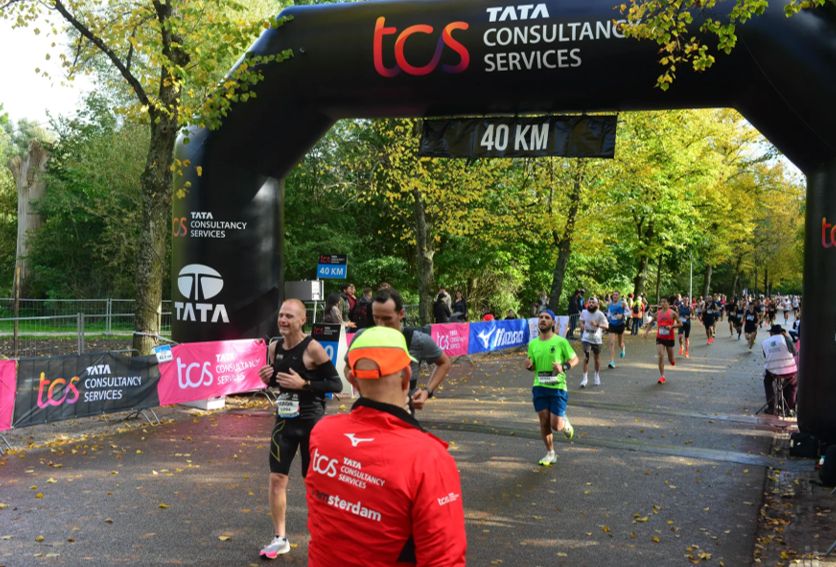
I made a decision: breathe, ease off the pace. No choice. At 41 kms, I started to fear the marathon was slipping away from me. Easing off helped me recover.
On my watch, I saw 2:56 when it beeped at 42 kilometres. Entering the stadium, the race clock showed 2:59.
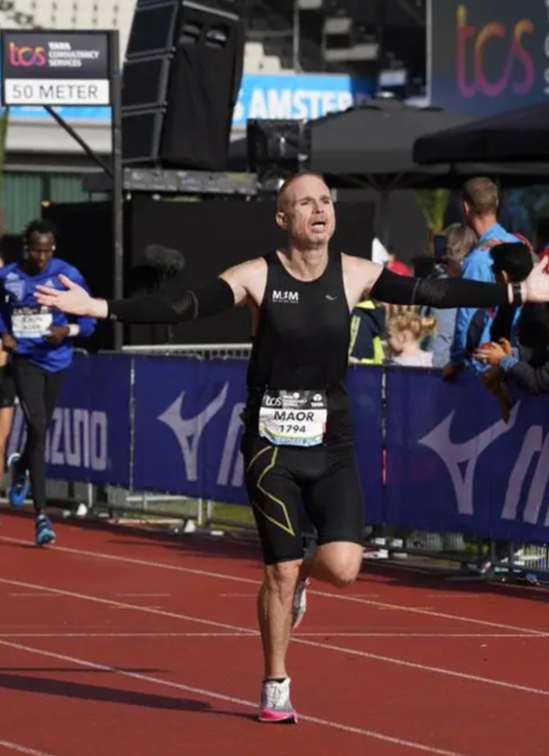
I crossed the line with 2:58:40 on my watch, official result 2:58:20. I couldn't believe it. I fell apart crying on one of the stewards, and he hugged me. Then I took out my phone: just let it tell me the truth. The rest is history.
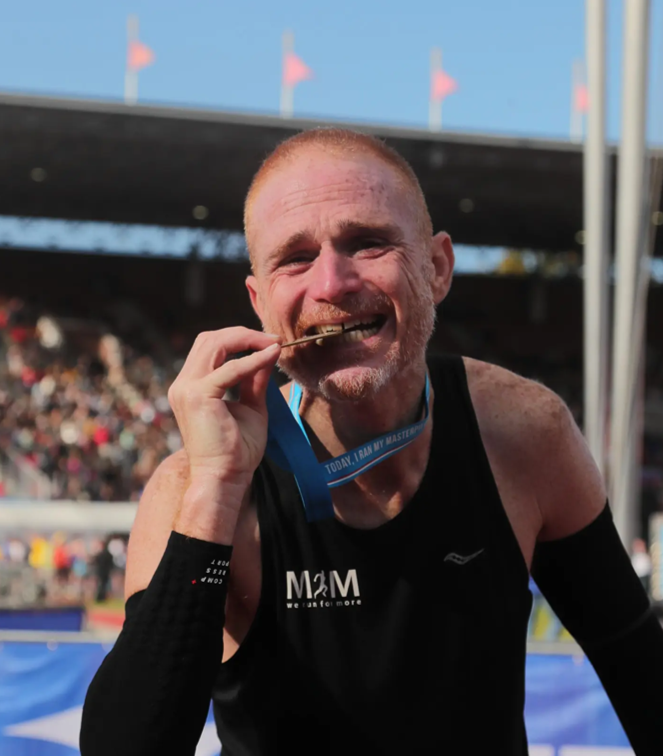
What breaking three hours taught me
The watch measured 42.59 km, and during the race, my deviation from the course markers reached about 350 metres. That extra distance is exactly why my first fix was shortening the course: running the shortest, legal line. The splits tell the rest: 42:22 at 10K, 1:24:15 at 20K, 2:06:07 at 30K, 2:47:40 at 40K.
What I'd pass on to anyone chasing three hours: fix one edition to the next. Shortest legal line. An aggressive halfway target. And work in the final third, even when you don't believe it's possible.
Since then I've kept going: in January 2026 I finished my first 100K in 11:37:39, and in October 2026 I ran 3:07:22 in Budapest. The personal best from Amsterdam still stands.
Maor documents his marathon experiences, training and running adventures on his personal website, maorgorun.com.
Finding this useful? Help keep Sub-3 running — support us with a coffee.