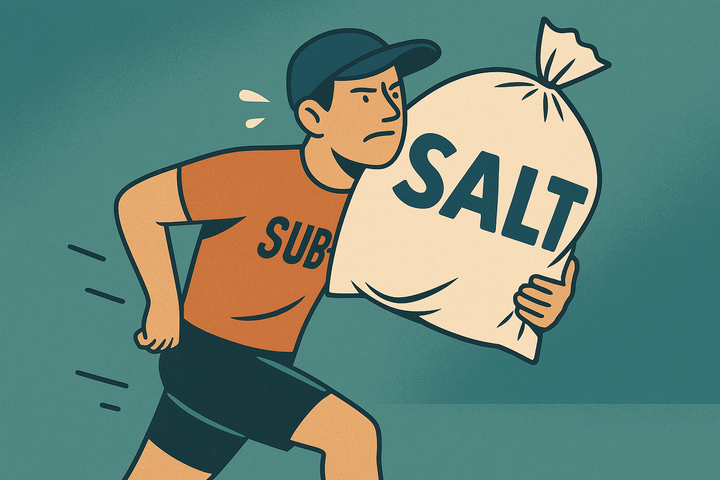
Why Ozempic isn’t for sub-3 runners
Ozempic might help you lose weight — but it won’t help you run faster. In fact, for sub-3 runners, it could blunt your appetite for food, recovery and the fight itself.

The new wave of weight-loss drugs might help some people slim down. But if you’re chasing a sub-3 marathon, appetite suppression is the last thing you need.
A man approached me at parkrun the other day with a curious question. He pointed out a couple of club runners who had clearly trimmed down over the past few months and asked, in all seriousness, “Are they on Ozempic?”
It caught me off guard. Not because it was offensive — but because it revealed how far the conversation around weight loss has shifted. In a world newly obsessed with magic pills, we’ve forgotten that marathon training is already a natural, time-tested appetite regulator. And not just that — it’s a full-body transformation programme. No prescription needed. Just commitment.
But that question stayed with me, and it raises a serious point: Could a drug like Ozempic ever be compatible with high-performance amateur running? In my view, no. And here’s why.
What Is Ozempic?
Ozempic is a brand name for semaglutide, a GLP-1 receptor agonist originally developed to treat type 2 diabetes. It works by mimicking a natural hormone that slows digestion, increases satiety, and reduces appetite. For many people with obesity or metabolic syndrome, it’s a life-changing treatment. Weight loss of 15–20% has been recorded in clinical trials. But for endurance athletes? It’s the wrong tool entirely.
Runners Need to Eat — A Lot
Training for a marathon — let alone chasing sub-3 — is not a calorie-cutting pursuit. If anything, it’s a constant battle to eat enough. You’re burning through glycogen stores with every session, breaking down muscle fibres, and stressing your entire endocrine system. To recover, rebuild and go again, you need two things in abundance: carbs and protein.
Ozempic suppresses appetite so effectively that even getting down a normal meal can be difficult. That might suit someone trying to curb emotional eating — but it’s the opposite of what you want when fuelling for peak performance. Inadequate fuelling leads to under-recovery, fatigue, illness, and ultimately injury.
Muscle Loss Is a Real Risk
One of the lesser-discussed side effects of GLP-1 drugs is lean mass loss. One 2023 systematic review and meta‑analysis in Obesity Reviews examined lean mass changes among 1,735 adults using GLP‑1 receptor agonists. It found that, although both fat and lean mass decreased, up to 40% of total weight loss came from lean tissue - not just fat. In non‑diabetic participants, lean mass dropped by approximately 1.4 kg alongside a 6 kg fat loss. For someone sedentary, that might not matter. But for a runner, muscle is essential — not just for power, but for stability, resilience, and endurance.
If you lose weight on Ozempic but take 15 minutes longer to complete a marathon, is that really a win?
What About a Quick Reset?
Some might argue there’s a role for Ozempic as a short-term reset — lose excess body fat quickly, then begin a proper training cycle leaner and lighter. And there is evidence (as in books like Burn by Herman Pontzer) that the key to long-term weight stability isn’t what you eat after weight loss — it’s whether you maintain intensive exercise. That sounds promising, but there’s a catch.
The type of weight lost on Ozempic isn’t just fat. Studies suggest up to 40% may be muscle. For runners, that’s a major red flag. You need lean mass for strength, efficiency, glycogen storage and injury prevention. Starting a marathon block with depleted muscle isn’t a head start — it’s a handicap.
Dulling the Drive?
In his oustanding book Magic Pill - I read it cover-to-cover in a day, and you should too - Johann Hari raises an even more existential concern. He wonders whether these drugs suppress not just appetite for food, but appetite for life. The hunger to strive, to improve, to do something hard. He’s cautious in his conclusions, but it’s a profound question.
Running a sub-3 marathon requires an enormous appetite — not just literal, but psychological. An appetite for discomfort. For routine. For the long-haul discipline most people avoid. If a drug makes you comfortable with less, it might also make you less inclined to chase more.
That might be fine for some. But it’s a terrible fit for the kind of personality that signs up for sub-3.
There’s No Shortcut to Sub-3
This isn’t a takedown of Ozempic. For some people, it’s a medical breakthrough. But for runners chasing excellence — particularly in the brutal simplicity of marathon performance — it’s the wrong solution.
Sub-3 isn’t about numbing hunger. It’s about harnessing it — fuelling smart, recovering hard, and pushing through when your body and mind are screaming to stop.
There’s no magic pill that can run 160km a week for you. Or make you do strides in the rain. Or string together five months of disciplined training without excuses.
There’s only the hard way. But that’s what makes it worth doing - and makes the achievement so satisfying.
Finding this useful? Help keep Sub-3 running — support us with a coffee.