
How to run two sub-3 marathons in one training block
Most marathon plans are built around a single peak, followed by a full reset. Conventional advice would caution against running two marathons close together, but with the right structure and enough restraint, it is possible not only to hold form but to improve.
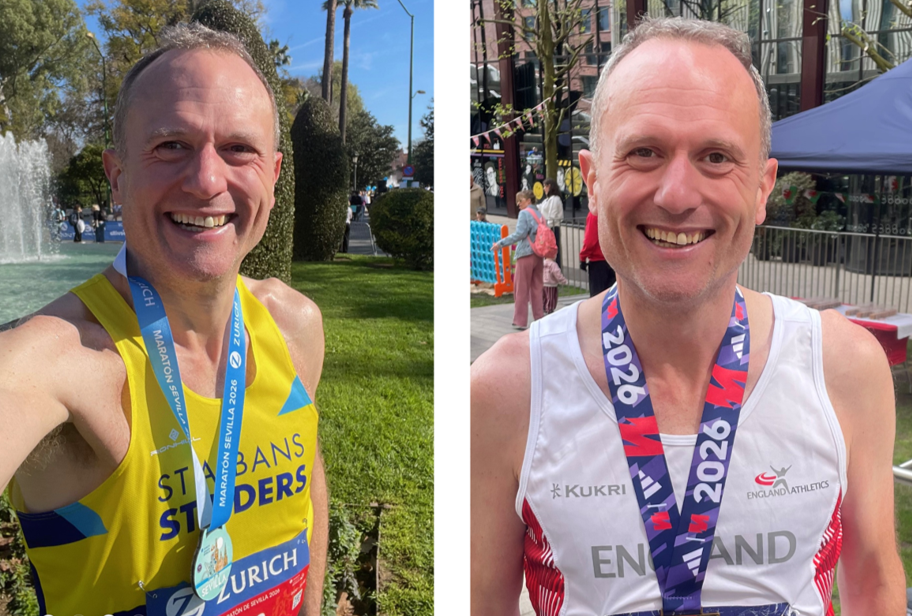
Running two sub-3 marathons within the same training block is not how most plans are set up. The conventional advice is to treat the marathon as a single peak, with a long recovery and rebuild over a significant break before the next. Many coaches would also suggest limiting yourself to two marathons a year, spaced well apart, on the basis that the race itself takes a lot out of you.
That logic generally makes sense, particularly where races sit close together. It is hard to see how something like Boston and London, or Yorkshire and Chester, could both be run properly within a matter of days without one affecting the other, or without the risk of serious injury afterwards.
The calendar does create some flexibility, though. Seville in Spain sits early in the year - February - and a gap of around two months to a spring marathon such as Manchester is long enough to recover, get back into training, and carry things forward without starting again. In my case, that window proved manageable. I ran a personal best in Seville and then improved again in Manchester, taking a further couple of minutes off under broadly similar conditions on a slightly tougher course. This only really works if the first race is run under control and the gap between races is long enough to recover properly. Without those two things, the second marathon tends to suffer.
The block itself began in early January and was built around consistent high mileage, with several weeks at or above 100 miles and long runs extending beyond standard marathon distance. The focus during that period was not on racing, but on building a level of endurance that could hold up across more than one effort. By the time Seville came around in February, the work was already in place.
After Seville, the priority was simply to step back enough to absorb the race. The first few days were very easy, no hard sessions, and there was no attempt to test anything. I tried a tempo parkrun the Saturday after, but reined myself in as my legs just weren’t ready. Running came back gradually, and the aim was to settle into a rhythm again rather than push.
From there, mileage built back up toward 100-mile peak weeks, but without changing the structure of the training. The same types of runs stayed in place, and there was no attempt to add anything extra. There is a temptation in this period to try to improve between races, but that tends to create more problems than it solves. At that point, the main job is simply to hold onto what you have.
Nutrition becomes more important between two marathons, not less. There is a tendency to ease off slightly in the recovery period, particularly if mileage drops or weight fluctuates after the first race, but that usually works against what you are trying to do. The priority is to keep fuelling consistent so that recovery is supported and the return to training is not compromised.
In practice, that meant eating normally throughout, with no attempt to diet between races. Carbohydrate intake stayed aligned with the training load - I always ran with gels - and protein was kept high to support recovery, often up to around 2g per kilo of bodyweight per day. That was not always perfect, and included a lot of more convenient sources such as Grenade bars and shakes to hit the numbers, but in the short term, I figured getting sufficient volumes mattered more than purity. Under-fuelling in this phase is one of the easiest ways to undermine the block - listen carefully to your body.
Long runs remained part of the week, but they sat within the overall pattern rather than becoming the focus on their own. Keeping that consistency made it possible to return to higher mileage without forcing things.
The races between Seville and Manchester were treated in the same way. Essex 20, a 20-mile race, fell in the middle of the block but was not approached as a goal race. The effort stayed close to marathon pace, with the emphasis on holding position and rhythm rather than chasing a time, so it effectively became a long run in a competitive setting.
A 10K race closer to Manchester served a different purpose, bringing a bit of pace back in without requiring a full taper or leaving much behind. Both races were useful, but only because they stayed within the structure of the block rather than becoming separate targets. The day after the 10K, I ran a fast cross-country parkrun, and my right ankle started to feel niggly. At that point, I eased off for a few days to let it settle before returning to normal training.
That balance matters. In any marathon block, there are always small issues that can be run through, but when you are trying to carry fitness across two races, the margin for error is smaller. Being slightly more cautious at the right moment is often what allows the rest of the block to hold together.
The final taper before Manchester was deeper than the first. Mileage dropped more noticeably, and the focus shifted toward arriving fresh rather than keeping volume high. At that stage, there was nothing to gain from trying to hold onto mileage, and more to gain from letting the legs recover properly. Sometimes I get irritable and desperate to run - this time my body really embraced the taper.
Both races were approached in the same way, with a controlled start, a steady middle section, and a gradual lift later on. There was no need to change anything, because the same approach still worked. If anything, I went into Manchester with greater confidence. I run dozens of 5Ks and 10Ks each year, so I am very familiar with how to approach those distances, but the long gaps between marathons can make the event itself feel unfamiliar again. Doubts about pacing or concerns about hitting the wall can start to creep back in. Running two marathons within a relatively short period helped remove that, and made the second race feel more like an extension of something recent rather than a return to something distant. The second race felt controlled throughout, and I was able to lift the pace late on without any real sense of the wheels coming off.
Running two sub-3 marathons in one training block comes down to building enough depth at the start, then not interfering with it. The first race is not the end of the process, and the second is not a rebuild, but part of the same piece of work carried through.
At some point, though, every block does end. In my case, I may not run another marathon this year, and the focus now shifts toward slimming down - I put on weight during this block - and sharpening up for shorter distances. It remains to be seen how much of the fitness developed during this block carries across, but that is part of the longer cycle. The marathon phase has done its job, and the next phase begins from there.
Finding this useful? Help keep Sub-3 running — support us with a coffee.