
Even pacing in big city marathons: is it realistic for sub-3?
Even pacing in big city marathons is rarely realistic for sub-3 runners due to congestion, GPS drift and human behaviour. But by running to effort, aiming for a slight negative split, and harnessing the energy of the crowds and occasion, you can still achieve the evenness that really matters.
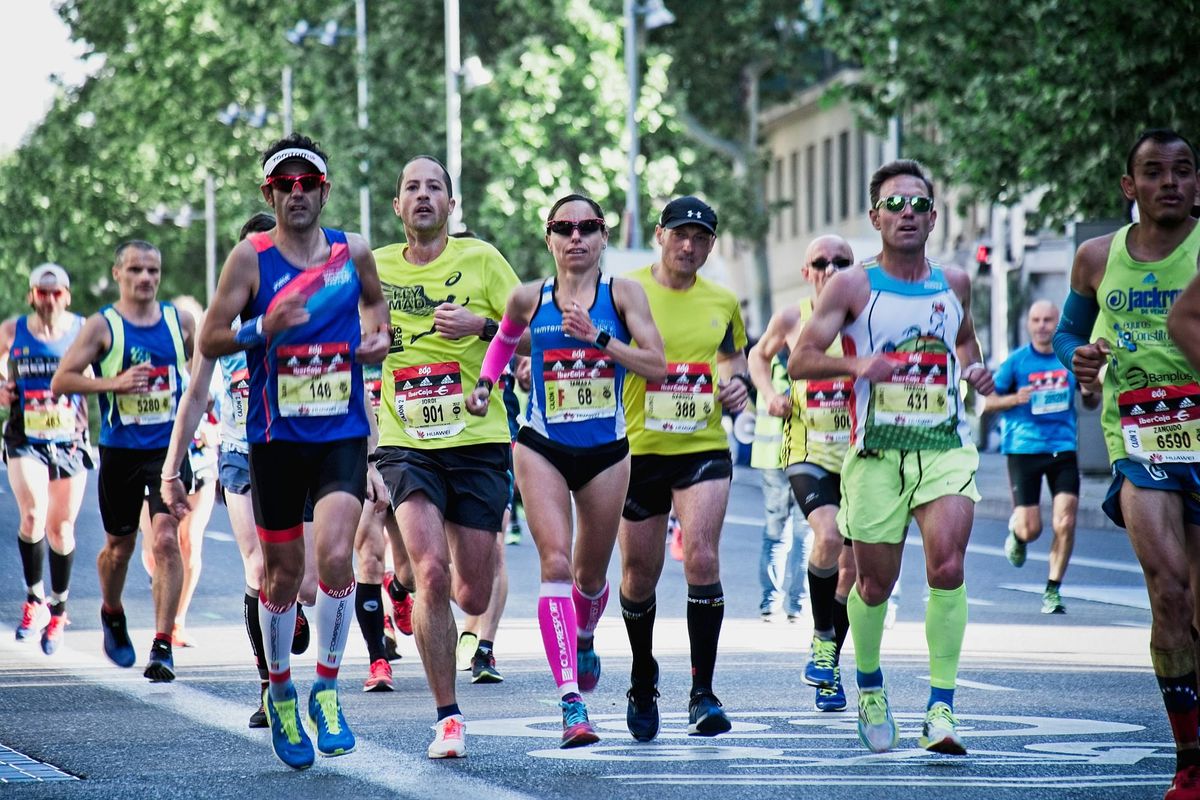
One of the most common pieces of marathon advice is to aim for even splits. In theory, it is the most efficient way to use your energy across 42.2km. But anyone who has run a big city race like London, Berlin or Valencia knows the theory rarely matches reality.
The start of these marathons feels less like controlled running and more like being caught in a shoal of fish. Thousands of bodies surge forward together, jostling for position, reacting to the rhythm of those around them. Even if you line up in the right starting pen, you are unlikely to find clear space for the first few kilometres. Trying to force even splits here is a recipe for frustration. Weaving through gaps or charging down the edges might look heroic on paper, but in practice it adds distance and burns matches you will need later.
Then there is technology. Tall buildings, tunnels and crowded GPS signals can play havoc with your watch. In New York or Chicago, the skyscrapers can make kilometre splits meaningless. Even in London, Canary Wharf is notorious for throwing pacing targets off balance. If you are glued to your watch looking for perfect symmetry, you may find yourself speeding up or slowing down at the worst possible times.
Of course, there are races where even pacing is far more achievable. Lapped marathons or smaller city events with fewer runners often allow you to lock into rhythm from the start and hold it all the way. These are excellent tests of pure pacing discipline.
But the big city marathons bring other advantages. The crowds and atmosphere can lift you when the race begins to bite. The density of runners offers sparring partners to latch onto in the middle and later stages. And the sense of occasion - knowing you are part of something you have trained months or even years for - can help carry you through the rough patches. The psychological element of running sub-3 should not be underestimated, and in this respect the majors often provide exactly the kind of energy that matters most.
For sub-3 runners, the smarter approach is often to think in terms of ranges rather than rigid splits. Accept that the first 5km may be slightly off target, but do not panic. Keep the effort controlled and know that by halfway the field usually spreads and the roads open up. By the second half, you will often find yourself running in cleaner air, able to click into rhythm and gradually increase the pressure.
This is where a controlled negative split comes into its own. Starting slightly on the conservative side - even just 5 to 10 seconds per kilometre slower than goal pace - leaves headroom to pick it up later. It also helps you avoid the far bigger mistake: banking time early. The marathon rarely forgives an overeager first 10km, but it often rewards restraint.
So, is even pacing realistic in a big city marathon? Not in the strict sense. The combination of congestion, GPS drift and human behaviour makes textbook symmetry unlikely. But if you zoom out, the principle still holds: spread your effort evenly, avoid big surges or crashes, and trust that the race-day atmosphere will provide the extra boost you need.
Finding this useful? Help keep Sub-3 running — support us with a coffee.