What’s the ideal cadence for a sub-3 marathon?
Cadence plays a role in marathon efficiency, but there’s no magic number – what really counts is finding a rhythm that supports your sub-3 performance goals.
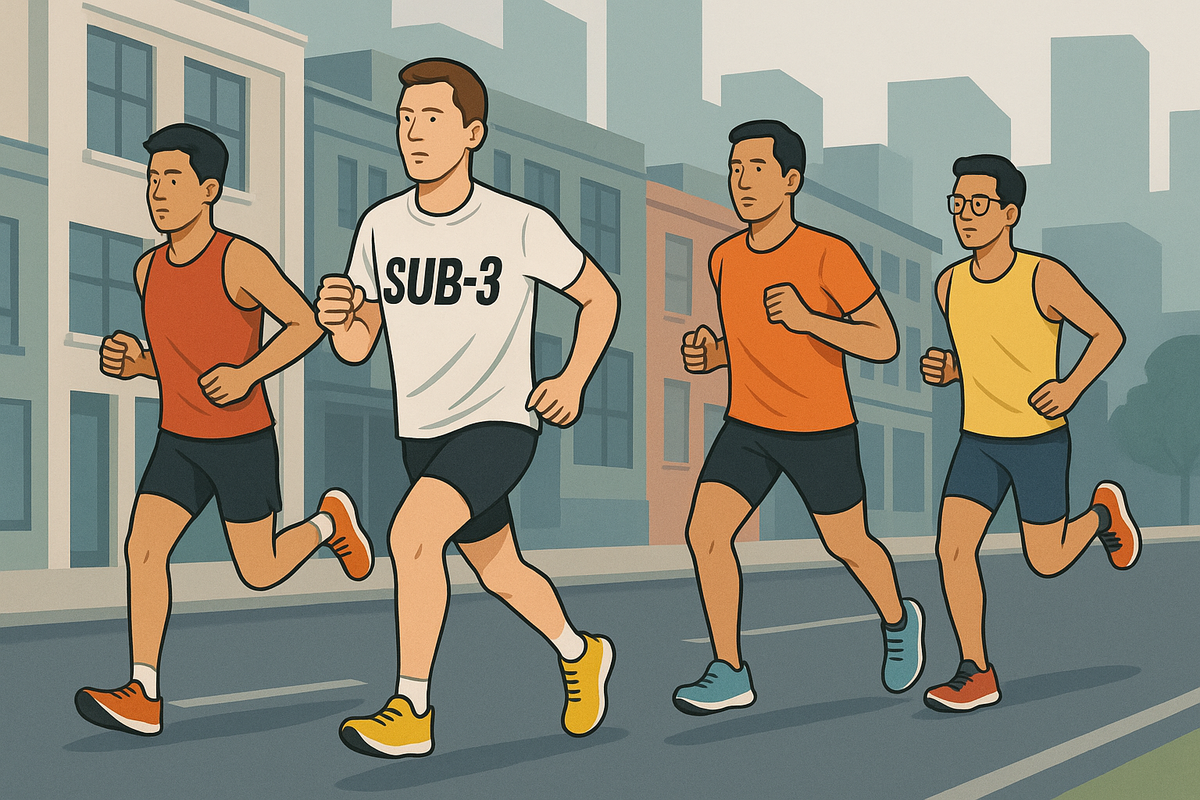
Of all the metrics Garmin and Strava serve up, cadence is one of the easiest to obsess over. You’ll often hear that 180 steps per minute (SPM) is the magic number – the golden target for efficient running. But where did that come from?
The 180 figure became popular after running coach Jack Daniels observed that elite distance runners at the 1984 Olympics generally ran with a cadence of 180 or higher. But that wasn’t a scientific recommendation – just an observation. Over time it hardened into dogma, even though Daniels himself never claimed it was universal. It was the midpoint in a range – not a rule.
Cadence is highly individual. Factors like height, leg length, biomechanics and running experience all affect it. What matters most is not chasing a magic number but understanding how cadence relates to your own form and performance.
I became fixated on it myself. During marathons, my cadence used to hover around 210 – far higher than the supposed ideal. My stride length was tiny. Over time, I brought that down to 185 SPM through daily yoga, targeted hamstring work and (probably most significantly) losing 14 kilograms. But that was my solution, not a universal one.
In general, a slightly higher cadence can reduce impact forces and lower injury risk – especially compared to overstriding, which can put a lot of force through the joints. But you shouldn’t treat cadence as a performance target in isolation.
Here are some practical tips for approaching cadence the right way:
1. Don’t obsess over it
There’s no ideal cadence for everyone. A number like 180 might work for some, but it shouldn’t become a yardstick you measure yourself against daily.
2. Avoid constant comparison
Other runners may have radically different cadence due to their height, leg turnover or stride mechanics. Comparing cadence numbers is rarely useful.
3. Understand it varies
Cadence changes depending on terrain, surface, fatigue and pace. A hilly trail run and a flat 5K will produce different readings. Don’t treat it as a fixed metric.
4. If you want to tweak it, do it gently
You can try running to music with a higher BPM to slightly raise your cadence – but don’t force it. Small, natural adjustments are better than deliberate over-corrections.
5. Improve your flexibility and range
If your cadence is unusually high and your stride feels short, targeted stretching – particularly hamstrings and hip flexors – can help lengthen your stride and lower your turnover naturally.
6. Use hills to your advantage
Uphill reps are a great way to train a quick turnover, improve form and develop strength. They also reinforce better mechanics without needing to think about cadence directly.
The best use of cadence is as a window into how your body is moving – not a performance goal in itself. Track it across time if you like, but don’t fixate on day-to-day numbers. If you’re training well, staying injury-free and making progress, your cadence is probably working just fine.
Finding this useful? Help keep Sub-3 running — support us with a coffee.