Big city vs small race marathons: which is better for sub-3?
Choosing between a big city and a smaller marathon can decide whether you run 2:59 or 3:01. Crowds bring energy, but space and control often make the difference.
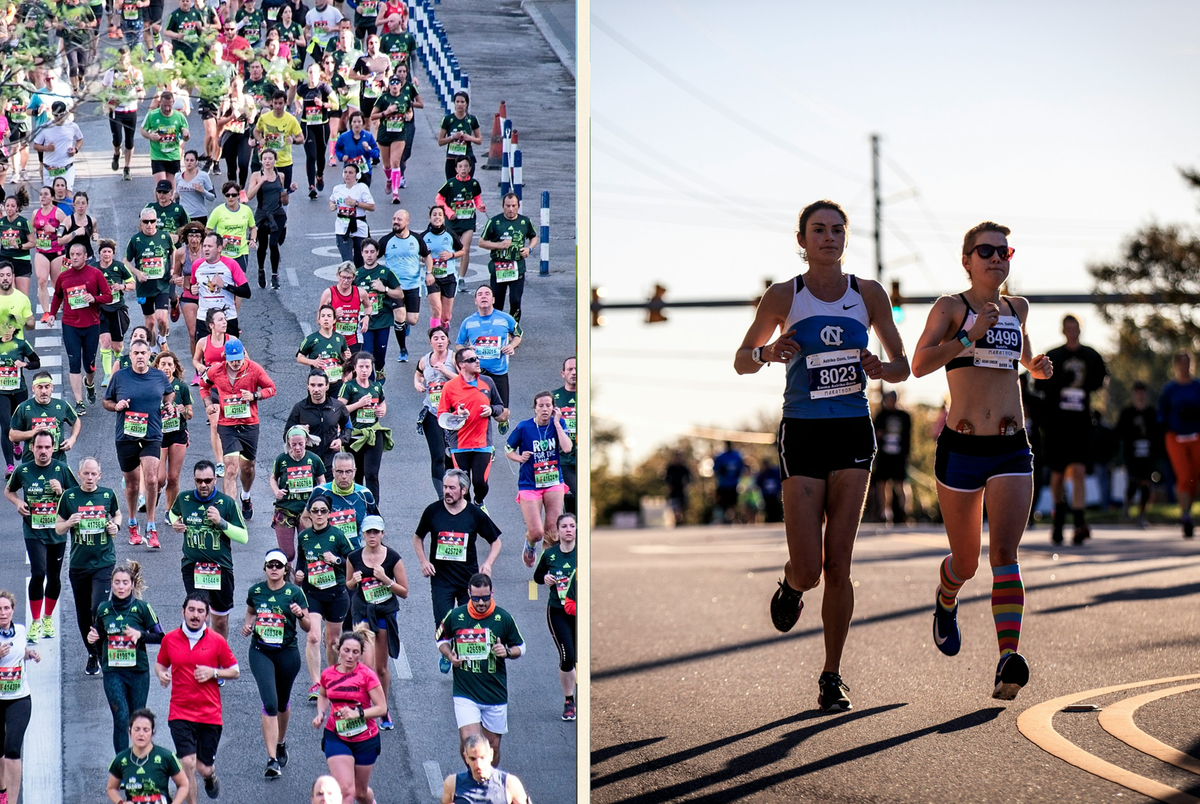
For runners chasing a sub-3 marathon, the race you choose can be the difference between hitting your goal and watching it slip away. On paper, 42.2 kilometres is 42.2 kilometres anywhere in the world. In practice, the context matters. Do you go for the roar of a big city marathon or the stripped-back control of a smaller race? The answer isn’t the same for everyone.
The case for the big city marathon
There’s no denying the power of atmosphere. Standing on the start line in London, Berlin or Valencia, you can feel the energy of thousands of runners and tens of thousands of spectators. That buzz carries into the race itself, and for many, it’s what helps them hold pace when the last 10K begins to bite. The psychological lift of a crowd shouting your name can’t be simulated in training.
Big city marathons also bring depth of field. At the sub-3 level, you’re rarely short of company. Even pacing groups are usually well-stocked, giving you the chance to tuck in and let others share the work. The organisation tends to be slick, with frequent water stations and a sense of occasion that can pull you along to a personal best.
But there are downsides. Congestion is the biggest. Even in sub-3 pens, the early miles can feel crowded, forcing you into constant weaving and missed tangents. Over 42.2km, that can mean running a surprising amount extra. I’ve always found myself running long in big city marathons – 42.7km in London, for instance – whereas smaller races like Yorkshire tend to be bang on 42.2km. That half-kilometre can alter pacing strategies and, for someone chasing the cut-off, be the difference between a 3:01 and a 2:59. Aid stations can also be chaotic, with bottles flying everywhere and rhythm disrupted. You may come away with the medal but also the sense you fought the course as much as the clock.
The case for the smaller race
Smaller marathons offer the opposite: space and control. With fewer runners, you’re more likely to stick close to the official distance, run clean tangents, and find a steady rhythm early on. There’s less jostling, less wasted energy, and more chance of running the race exactly as you planned it. If you find a small group around your pace, you can feed off one another consistently rather than watching runners appear and vanish in a huge pack.
The flip side is solitude. A clubmate of mine ran his PB at a marathon consisting of laps around a lake. He spent much of it alone. It was bleak, more like an extended training run than a grand event. For him, that didn’t matter; he had the confidence to keep pushing himself. But for others, the silence can become oppressive. Without the external lift of the crowd, the final miles rely entirely on internal drive. If your mental game wavers, there’s little around you to pick it up.
How to decide
The crucial question is what kind of runner you are. Do you draw strength from the crowd, or from within? If you thrive on atmosphere and external pressure, then a big city marathon may give you the psychological edge you need. If you prefer control, space and certainty, then a smaller event might suit you better.
Other factors matter too. Always check that a smaller race is fully accredited—your sub-3 only counts if the course is official. Look at logistics: will the aid stations be reliable? Is the course flat and fast, or twisty and exposed? On the big city side, be realistic about congestion: are you prepared to add a few hundred metres and still run under three hours?
Practical tips
If you pick a big city marathon, practise running tangents in training and accept that weaving is part of the challenge. Focus on staying calm in the early chaos and trust that rhythm will come. If you go small, practise mental strategies for solitude—break the race into chunks, use mantras, and be ready to drive yourself when the silence feels heavy.
The verdict
There isn’t a universal answer. The best marathon for sub-3 is the one that plays to your strengths. Some runners need the theatre of a major city to squeeze out those last seconds. Others want the simplicity of a quiet road where nothing gets in the way. Be honest with yourself, choose accordingly, and then train for the reality of the race you’ve picked.
Sub-3 is hard enough without the course working against you. Pick the environment that helps you run the distance your way.
Finding this useful? Help keep Sub-3 running — support us with a coffee.