How to use energy gels for a marathon
Energy gels can help keep you fuelled through 26.2 miles, but taking the right amount is only part of getting your marathon nutrition right. From training your stomach to choosing your carbohydrates and caffeine, here are five tips for making sure your fuelling strategy works on race day.
For most runners trying to break three hours for the marathon, energy gels are going to be an important part of race-day fuelling. You can start a marathon with your glycogen stores well stocked through sensible carbohydrate loading, but the amount of carbohydrate the body can store is limited, while running 42.2km hard places an enormous demand on it.
Taking carbohydrate during the race helps maintain blood glucose and provides an additional source of fuel as your own stores are depleted, delaying the point at which carbohydrate availability becomes a limiting factor. The general guidance is that carbohydrate becomes increasingly useful once exercise extends beyond around an hour, with 30–60g per hour traditionally recommended for events lasting one to 2.5 hours and intakes of up to around 90g per hour commonly recommended for longer endurance events, particularly when using a mixture of different carbohydrates.
For a sub-three marathon, which by definition is going to take somewhere approaching three hours, getting enough carbohydrate into the body without upsetting your stomach is one of the things worth practising just as deliberately as your long runs, marathon-pace sessions and choice of shoes. There is no single gel strategy that will work perfectly for everybody, and faster runners will inevitably consume fewer gels in absolute terms than somebody spending five hours on the course, but there are some basic principles that can make the whole process considerably more reliable.
1. Practise your race-day fuelling on your long runs
The most important rule is also the simplest: nothing new on race day. If you intend to take a particular brand and flavour of gel during your marathon, you should have used it repeatedly during training, ideally on several of your longest runs and at something close to the frequency you intend to use in the race. It is not enough to eat one at home, decide that it tastes all right and assume that your stomach will respond in the same way when you are 30km into a marathon and running close to your limit.
This is partly about discovering what agrees with you, but there is also evidence that the gut itself can be trained. Repeatedly consuming carbohydrate while running can improve tolerance, and research has found reductions in gastrointestinal symptoms and carbohydrate malabsorption after periods of deliberate gut training. One study in endurance runners found that two weeks of repeated carbohydrate consumption during running reduced gastrointestinal symptoms and improved subsequent running performance, while the wider evidence suggests that the gastrointestinal system adapts to the demands placed upon it. In other words, your long runs are not simply training your legs and cardiovascular system for the marathon; they are an opportunity to train your stomach to process fuel while running as well.
I use HIGH5 Aqua gels because they are much more liquid than many conventional gels, which makes them easy to gulp down quickly without having to spend much time chewing or washing down a thick paste. That is entirely a personal preference rather than a recommendation that everybody should use the same product, and other runners will get on perfectly well with different brands and consistencies. The important thing is to find something that works for you and then use it often enough in training that taking it during the marathon feels completely routine.
2. Work out how much carbohydrate you are actually taking
It is easy to talk about taking a gel every 20 minutes or every 5km without looking at what is actually inside it, but gels vary considerably in their carbohydrate content. A useful starting point is therefore to turn your planned race-day intake into grams of carbohydrate per hour rather than simply counting packets. For prolonged endurance exercise, 30–60g per hour has long been a standard recommendation, while intakes approaching 90g per hour can be useful during events lasting beyond about 2.5 hours, provided the runner can tolerate and absorb that amount. Some elite endurance athletes now consume considerably more than this, and recent research is examining whether well-trained athletes can benefit from intakes around 120g per hour, but that should not be interpreted as a target that every marathon runner suddenly needs to chase; the evidence for very high intakes is still developing and gastrointestinal tolerance remains a major consideration.
The type of carbohydrate matters as the amount rises. Glucose and fructose are absorbed in the intestine using different transport mechanisms, which means that combining them can allow carbohydrate to be absorbed and oxidised at a greater rate than relying on glucose alone. Research on so-called multiple transportable carbohydrates has consequently found advantages to glucose-fructose mixtures when athletes are consuming high amounts of carbohydrate during prolonged exercise. You do not need to become a sports nutritionist and start doing calculations at every drinks station, but it is worth turning over the packet and understanding how many grams of carbohydrate your chosen gel contains and what the carbohydrate sources actually are.
My own approach during a marathon is based more on distance than time: I normally take a gel approximately every 7km, which means five or six during the race, as well as two before the start. At sub-three pace, 7km is a little under half an hour, so the intake is spread reasonably evenly rather than leaving long gaps and then trying to catch up later. The precise amount of carbohydrate this provides obviously depends on the gel, and somebody aiming for a higher carbohydrate intake may need to fuel more frequently or choose gels containing more carbohydrate, but the principle is to establish the schedule beforehand and then follow it rather than waiting until you feel yourself running out of energy. By the time you are desperately craving a gel at 35km, you have left things rather late.
3. Use caffeine carefully rather than throwing it into every gel
Caffeine can be genuinely useful for endurance performance, but it is another area where more is not automatically better. The evidence of caffeine's performance benefits is strong, particularly for aerobic endurance exercise, with doses of around 3–6mg per kilogram of body weight consistently associated with performance benefits, although individual responses vary considerably and lower doses can also be effective. Very high doses appear to offer little additional advantage while increasing the likelihood of side effects.
The main performance effect is through the central nervous system: caffeine blocks adenosine receptors, which can reduce perceived effort, increase alertness and help you sustain hard exercise when fatigue is beginning to accumulate. That can obviously be useful in a marathon, but only if you already know that you tolerate caffeine well. Too much can leave runners jittery, raise gastrointestinal discomfort or simply make an already stressful race morning feel considerably more frantic, and caffeine can remain in the body for many hours.
I use Maurten caffeinated gels before a race - too viscous for me during a race - but again this is something I have tested rather than as an experiment conducted on the day. If you are going to use caffeinated gels before or during your marathon, practise the same strategy beforehand and keep track of your total caffeine intake, including coffee, energy drinks and any other sources. A caffeinated gel is not simply an ordinary gel with an inconsequential extra ingredient, and somebody who rarely consumes caffeine should be particularly cautious about suddenly taking several of them during a race.
4. Carry your own gels – and make sure they stay with you
There is little point developing the perfect fuelling strategy if half of it ends up scattered along the road behind you. I learnt this during the Yorkshire Marathon, when I used a running belt specifically designed to carry gels through a series of elastic loops, rather like cartridges on an ammunition belt. It looked like an ingenious solution before the race, but turned out to be rather less ingenious once I started running at marathon pace and left a trail of gels behind me. Going back to retrieve them was obviously not an option, while realising another one had disappeared was both distracting and disruptive to the rhythm of the race. And I ended up with insufficient fuel, until handed a bottle of Lucozade Sport by relatives mid-way through the race.
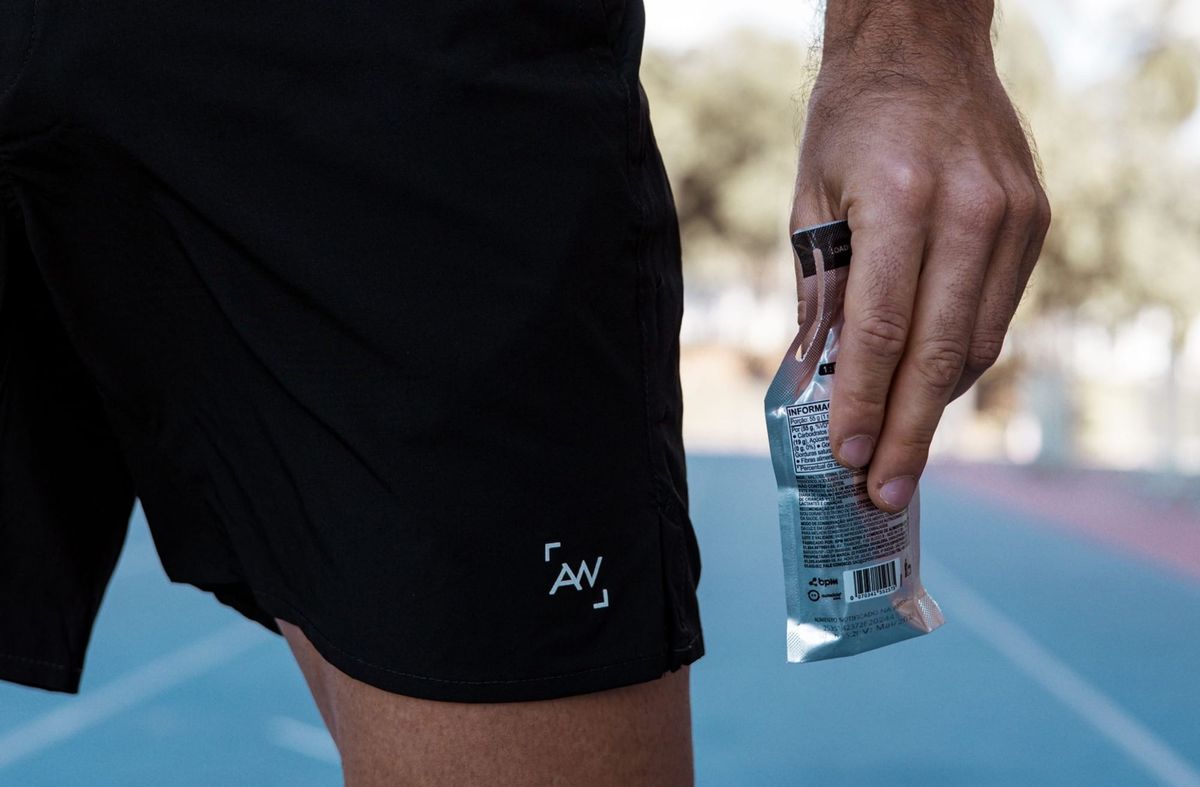
I now use the leg pockets in my running shorts, carrying three gels in each, which keeps them secure and also makes it easy to reach one without breaking stride. Whatever system you choose, test that as thoroughly as the gels themselves. Fill the pockets or belt exactly as you intend to on race day and run hard with them, because something that feels perfectly secure while jogging around the house can behave very differently after 15km of running.
Nor would I ever build a marathon fuelling plan around the gels supplied by the organisers. Even when a race advertises a particular brand, you are relying on gels being available when and where you expect them, and potentially on your preferred flavour or variety not having run out by the time you arrive. More importantly, taking an unfamiliar gel handed to you at an aid station breaks the most important rule of marathon fuelling: nothing new on race day. The same applies to the free samples handed out at marathon expos. However tempting they look, put them in your bag and try them on a training run another day rather than deciding that a free gel which looks vaguely similar to your usual one must be safe to experiment with at 30km.
5. Plan your gels before you travel, particularly for overseas marathons
If you are travelling abroad for a marathon, take the gels you need with you rather than assuming you will be able to buy your normal brand when you arrive. Sports nutrition products that are ubiquitous in Britain may be difficult to find elsewhere, the local range of flavours may be different, and hunting around an unfamiliar city the day before a marathon for a particular gel is an unnecessary source of stress. If you have trained for months using one product and know that your stomach tolerates it, there is no good reason to replace it at the last moment because the local running shop happens to stock something else.
The only complication is airport security, where gels seem to attract a disproportionate amount of attention. Mine have been inspected, tested and swabbed more times than I can remember when travelling to overseas races, although I have always eventually managed to get them through. Because energy gels are liquids or semi-liquids, however, security rules can apply depending on the airport and how they are packed, so check the current rules for the airports you are travelling through rather than assuming that being a sports nutrition product gives them some special exemption. Allow a little extra time, keep them together rather than buried throughout your luggage and, if possible, take enough for the race plus a spare or two in case one leaks or disappears.
Getting marathon gels right is not especially complicated, but it does require a little more thought than stuffing a handful into your shorts on race morning. Work out roughly how much carbohydrate you need, choose a product and flavour that you can comfortably consume while running hard, practise taking it repeatedly on long runs, experiment carefully with caffeine if you want to use it, and make sure you can carry everything securely for 42.2km.
By race day, your fuelling strategy should be one of the least interesting parts of the marathon: the same gels, carried in the same place and taken at the same intervals you have already rehearsed many times in training.
Finding this useful? Help keep Sub-3 running — support us with a coffee.