How to use drafting to run a sub-3 marathon
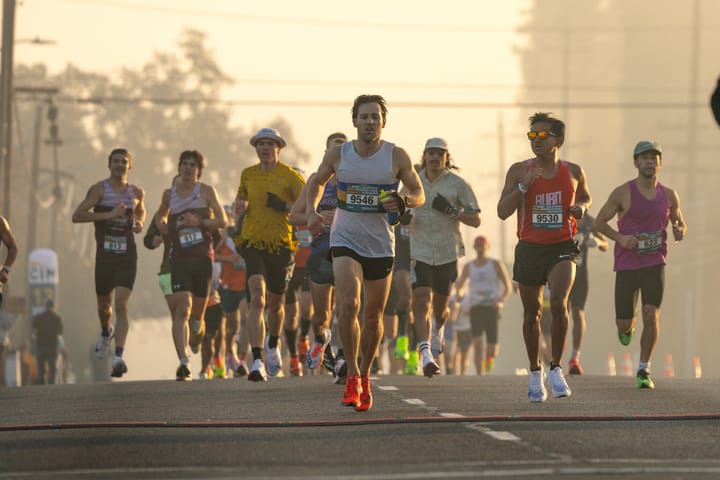
Drafting isn’t just for elites with pacer teams. For sub-3 runners it’s a simple way to save energy, especially on windy stretches, and can be the difference between fading and finishing strong.
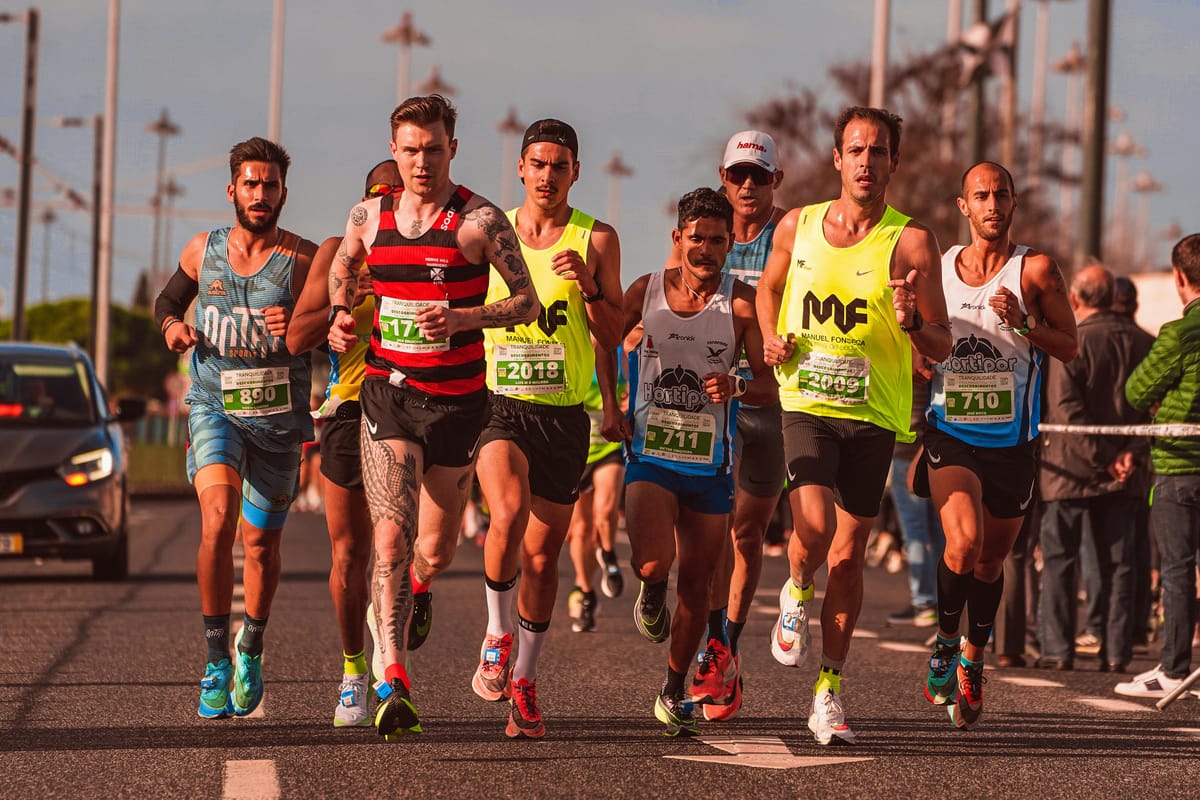
The image of Eliud Kipchoge running behind a formation of pacers in Vienna during his sub-2 attempt has stuck in the minds of runners everywhere. Perfectly choreographed, the rotating V-shape shielded him from wind resistance and gave him the smoothest possible path to history. Most of us will never have that level of support—but drafting remains a tactic worth considering if you’re chasing a sub-3 marathon.
Running into headwinds is costly. Studies using wind tunnels, computational models, and physiology experiments show that drafting can reduce aerodynamic drag by as much as 50 to 70 percent, depending on formation. For marathoners, that translates into measurable savings: researchers estimate improvements in running economy of around 3 to 4 percent, enough to shave two to five minutes off finishing times. One analysis even suggests a 3:35 marathoner — like a typical mid-packer — could improve her time by as much as five minutes by drafting wisely.
That’s why elite teams use drafting. Engineers predicted Kipchoge could have run as fast as 1:59:45 in Berlin 2022 if he had enjoyed a pacer formation as effective as his 2019 Vienna team. In practice, the physics apply to us all - on a windy day, tuck behind someone and the accumulated energy saved over 42.2 km can be profound.
The benefit is not just physical. Following a steady runner or group lets you lock into rhythm, conserve mental energy, and ease the constant vigilance of pacing alone. But there’s risk: if the person in front stutters or drops off, you can be left exposed. Drafting works best when you trust the runner ahead - perhaps a pacer or a clubmate whose style you know.
Not every lead runner appreciates company. Some find it intrusive, and more than one has tried to shake off an uninvited shadow. A little tact goes a long way. Slip in quietly, give space, and don’t lean so heavily you throw off their rhythm.
Drafting is not a blanket strategy. Many course sections offer natural shelter where it makes little difference. Instead, treat it as a tool in your arsenal: on exposed roads, bridges, or windy stretches it can be a cheap and efficient boost. Pacers remain the safest option—but even they imperfect, so it pays to remain alert.
Drafting won’t carry you effortlessly to a sub-3 - but it can tilt the odds in your favor. In calm city races it may contribute marginally. On a windy day it could prove decisive. Kipchoge had a perfectly drilled team; you just need a sharp eye, good judgment, and the willingness to harness the runners around you.
Finding this useful? Help keep Sub-3 running — support us with a coffee.