How Jerry Rief ran sub-3 marathons in every US state
Over 27 years, Jerry Rief completed sub-3 marathons in all 50 US states and Washington, D.C., averaging 2:49 while rarely racing more than three times a year. In this Q&A, he explains how patience, restraint and consistency made the project possible.
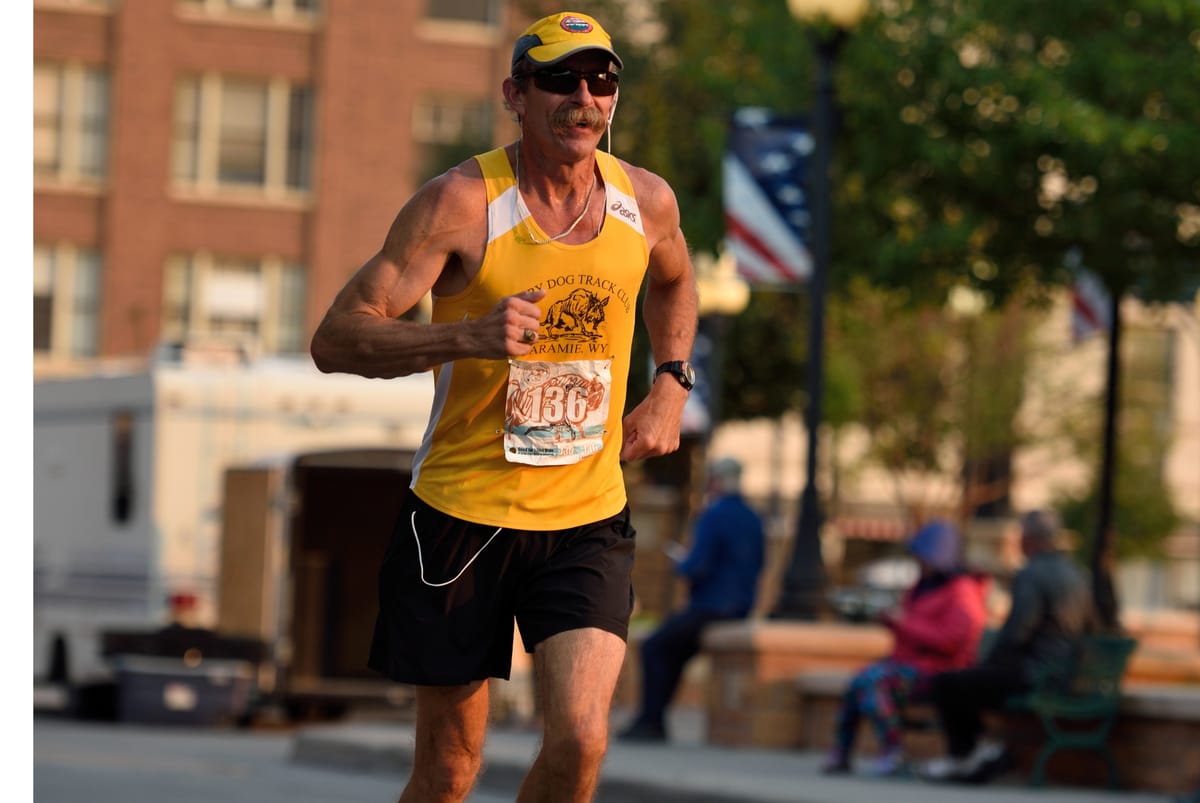
What first gave you the idea to try running a sub-3 marathon in every US state and Washington, D.C.? And at what point did it feel like a real, long-term project rather than just a fun concept?
I ran my first marathon in 1987 when I was 22 on a whim after talking to some former high school cross-country teammates the night before. That marathon was the Wyoming Governor's Cup Marathon in Guernsey, Wyoming. There were 13 runners in the race. I had never run over 14 miles before and definitely hadn't trained for it. It was in early July and very hot.
As I toed the line, there was an older, balding, hairy runner next to me. My thought was that I had to at least beat him. We screamed through the first half up the hills. I could barely hold on and let him go.
Of course, in 1987 at small marathons there were no mile markers along the way. No GPS watches to know what pace or how far you had run. I suffered miserably and felt like I was crawling in. I finished in 2:58:23.
Of course that inspired me, knowing I could do better.
I ran three more marathons within the next year and a half, going down to 2:51, then 2:44 at Boston in 1988. I ran the Guernsey Marathon again because of the location. I didn't run another marathon until 1992 since I was going to the University of Wyoming and running for them.
It was at this point that I realised I had three states done. I haven't repeated many states.
But back to my first race. The old hairy balding man was actually Toby Skinner – the first man to run all 50 states under three hours, who finished them in 1991.
I believe he may have motivated me in that quest, although I hadn't known it until 1992. Knowing that it could be done, and that I was in no hurry, I set out to enjoy visiting every state and running a marathon along the way.
You completed the full set over many years, often running no more than a few marathons per year. How deliberate was that pacing, and how important was it in avoiding injuries that could have ended the attempt?
My goal from the beginning was to never run more than three per year. At that pace I could enjoy the travelling and sometimes take my family along. Since it was a long-term goal, I knew that if I did miss any times I would be able to complete that state again before I turned 50.
Also, by only running at most three per year, I think I was able to fully recover before running my next marathon. I allowed myself to recover and then rebuild in most cases for the next marathon.
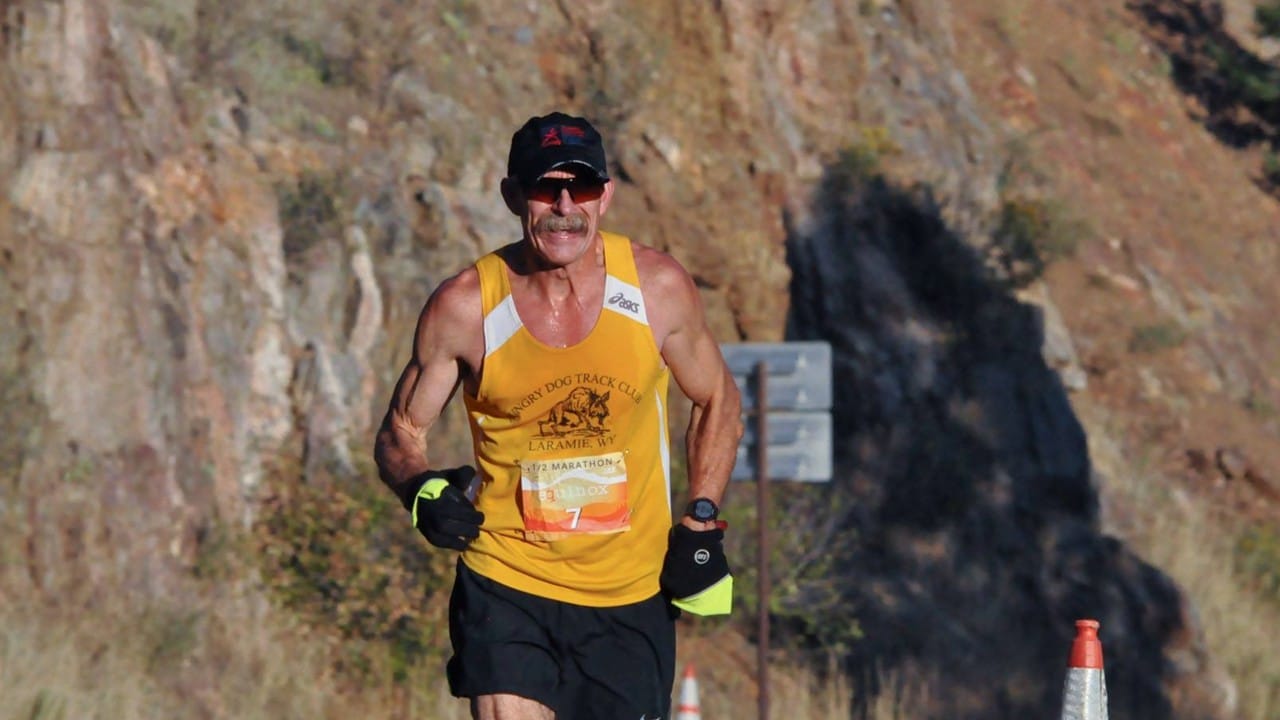
You recorded 51 sub-3 finishes in 53 attempts. On race day, what were your non-negotiables for keeping the sub-3 intact?
I believe I probably race differently than most marathoners. In most cases I would try to make it to the halfway point by 1:25. Knowing that I could still hit the wall and only needed to run 10 minutes slower (around 7:00 per mile) in the second half made it more manageable.
In most cases I would try to maintain 6:30s until 19 miles and then could let up if necessary or power through until the end.
My thoughts on fuelling have been to alternate between water and whatever sports drink they have along the way every four miles. I have tried the power gels, but they never really did anything for me. I'm not sure if it's due to the amount of water you need to take with them, the time it takes before it hits your bloodstream, or having to hold your breath while running and trying to "chew your gu".
My go-to meal before marathons (unless there is a spaghetti dinner with the event) is the footlong Subway Black Forest Ham. It is safe and never disagrees with my digestive system.
My warm-up before the marathon was usually running at least a mile with some surges before the start.
Were there particular states, courses, or conditions that made the sub-3 requirement feel especially tight?
There were quite a few states where I didn't know if I would be able to go sub-3. One of my last marathons was in Miami in February. The heat was in the 80s and the humidity was the same. I had run two months earlier in Honolulu, but there was no humidity there.
I had a hard time keeping cool, so I tried to maintain pace as long as I could. I ended up finishing in one of my slowest times in 2:58:23.
When I ran the Bismarck, ND marathon it was super windy. It was an out-and-back route, but it seemed like the wind shifted and it was a headwind both ways. I got a stitch around mile 20 to make matters worse. I was able to force myself in and still managed to win the race.
The only two marathons that I have not run under three hours were ones that I probably would not have even started if I weren't already registered and had my flight plans, hotel, etc.
In 1999, I ran the Providence, RI marathon. Due to flight complications (way too long to print here), I ended up getting to Providence at 3:30am. After waking up and starving, the only place close was McDonald's. Big mistake.
I was up all night with food poisoning. I didn't know if I could make it from the bus transport pickup to the starting line. Completely depleted before the marathon began, my stomach still aching, I charged on.
Around mile 14, I vomited three times and felt much better. I picked up the pace but was afraid to take in any fluids. I crawled in after hitting the wall. I know there were a couple of 8:30 miles in there.
I crossed the finish line and collapsed. The medical staff took me to a tent and put an IV in me. About that time my calves felt like they wanted to detach from the bone as I screamed out in pain from the cramps.
I ended up running 3:05, so I knew I would have to come back. The worst thing was I still had to drive back into Boston while my right calf was still cramping.
How did your training evolve over the years as circumstances changed and you got older?
I never was a very good high-mileage runner. Early on my high mileage weeks would be around 70, but as I got older I would only do 60-mile weeks.
Of course my speed workouts (usually a short interval workout) and a tempo run or race each week slowed considerably from when I first started.
My recovery was also longer, but I tried to get three key workouts in each week. The other workout alternated between a medium-distance run (12–14 miles) and a long run (18 miles max).
I also was not afraid to take an easy day if needed. I would take a day off running every 7–10 days.
Many runners assume that sub-3 requires very high mileage and frequent racing. What did your approach look like in practice, and what did you deliberately not do?
As stated above, I didn't do much high mileage. I did prefer to run a shorter race (5K–10K) on Saturday instead of a tempo run. This would be followed by my long run on Sunday.
That long run would sometimes be painful at the beginning but would normally loosen up along the way. My legs would still be dead toward the end, but I figured it was probably a good marathon race simulation.
How did you handle the mental side of a multi-year challenge like this – staying motivated, dealing with near-misses, and keeping it enjoyable rather than turning it into a grind?
Toward the end it was more challenging as I was struggling and barely able to break three hours. However, since I only ran two or three per year, I usually stayed after completing the marathon to visit the city. I would walk everywhere to see the sights.
Some runners talk about the runner's high, but I would say that is the feeling I would get once I crossed the finish line. It is similar to finishing your last final of the school year – total relief and excitement.
The best trips were ones where I was accompanied by my family or friends. It is much more exciting if you can share that experience with someone.
My two misses were pretty much concluded at the starting line: the Providence, RI marathon (3:05), where - as mentioned earlier - I had food poisoning from the day before, and the Columbia, SC marathon (3:02), when I had bronchitis.
I had prepared for not making it in time before. Frustrating as it was, I gave it the old college try.
I may have been able to make the Columbia marathon as I went through halfway in 1:29:30, which was my slowest half.
However, around 17 miles I was barely running behind two runners when I had to hit the port-a-potty. As I came out, I bolted ahead after them. I was gaining on them and then noticed they were coming back toward me. They had missed the turn.
I quickly turned around and got back on course.
After the race I discovered the runner I followed had a running guide. She was legally blind.
Lesson of the day: don't follow a blind runner.
You finished the final race on your 50th birthday at the Houston Marathon. Was that planned, and what stands out most when you look back on that day?
I had planned on completing the Houston Marathon on my birthday. I actually emailed the race director seven years earlier because they had in the past moved the marathon weekend due to a huge Avon Convention.
It was a great day with my wife, daughter, son and in-laws flying to Houston to cheer me on. It seemed a little warm for the marathon, but not overly hot.
The pre-race booklet had a picture of me and a short summary of my forthcoming feat. They also gave me the bib number with the name "Jerry 50<3" with the number "A 5050" for all the states.
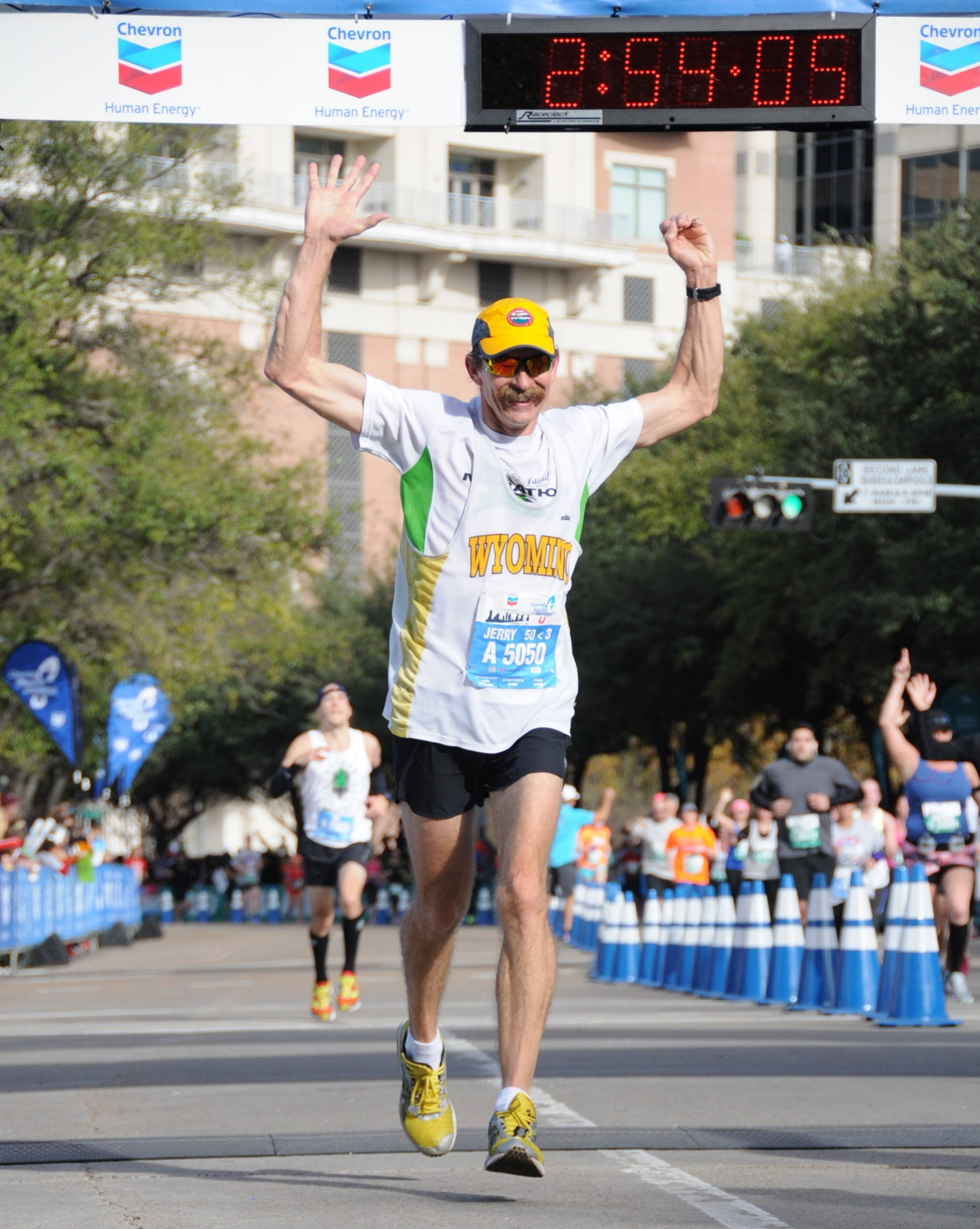
The race itself was pretty consistent. I hit the halfway mark in 1:24:46. I slowed down a bit from there but ran within myself knowing I could comfortably break three hours.
I do remember heading down one street toward a really high overpass and starting to worry. Fortunately, we turned just before it and headed toward the finish line.
The last mile I felt like I was flying. I was going as fast as I could. I only ran a 6:41 mile but it felt really easy.
I crossed the line in 2:53:53.
I raised my arms, pointed five fingers upward on one hand and formed a zero with the other, signifying I had finally completed the 50 states and DC.
My family was there to congratulate me and I was floating on air. It only took 27.5 years to finish, but it gave me a lifetime full of stories and wonderful people and places along the way.
There’s no single official record book for challenges like this, but communities such as the 50 States Marathon Club help track and connect runners pursuing them. What role did that wider community play in your journey?
Joe Bowman (another sub-3 marathoner) used to have a website that he maintained while working on completing the 50 states under three hours. He kept a record of everyone else who was also working on that feat.
There were five of us listed at that time. It was great knowing there were other runners out there trying to accomplish something that few had.
Joe and I shared a room at the Connecticut Marathon. In that race he passed me with about two miles to go and beat me by eight seconds, but I didn't mind. The ultimate goal wasn't beating each other but completing another state.
When I was struggling toward the end of the New Hampshire Marathon there were very few runners around to run with. Gary Krugger actually slowed down and paced me to the finish.
Talking with Chuck Engle before a marathon was always inspirational as well. I was nowhere near him in those races, but we always supported each other.
Within this group of runners it was always nice to know where they were running, what they had run in other states and marathons, and to acknowledge their accomplishments.
The Sub-4 Marathon Club also keeps track of these runners and lists the results of each marathon they have run.
As most of these marathoners know, the accomplishment is really a personal goal. However, there are still other runners who look at it and think, "Wow, that's cool. I think I could do that."
Got a sub-3 story you’d like to share with the next generation of sub-3 runners? We’d love to hear from you — email editor@sub3-marathon.com
Finding this useful? Help keep Sub-3 running — support us with a coffee.