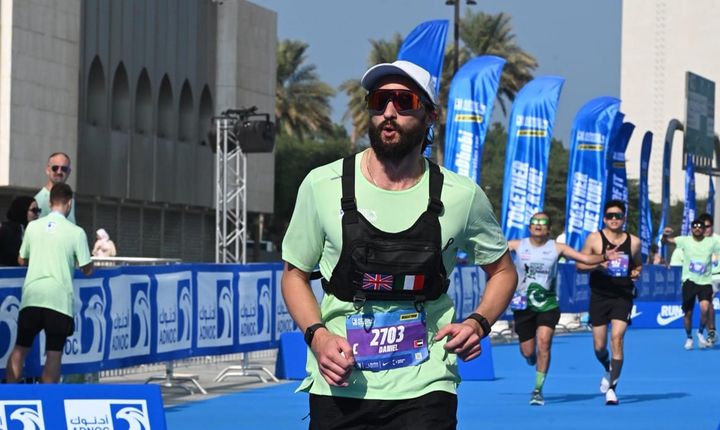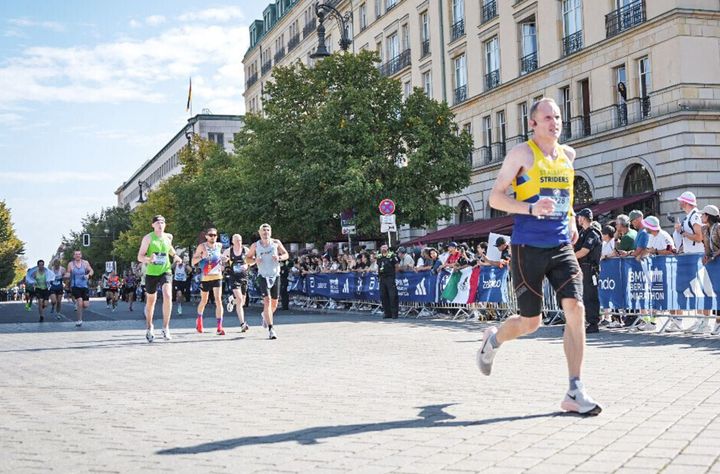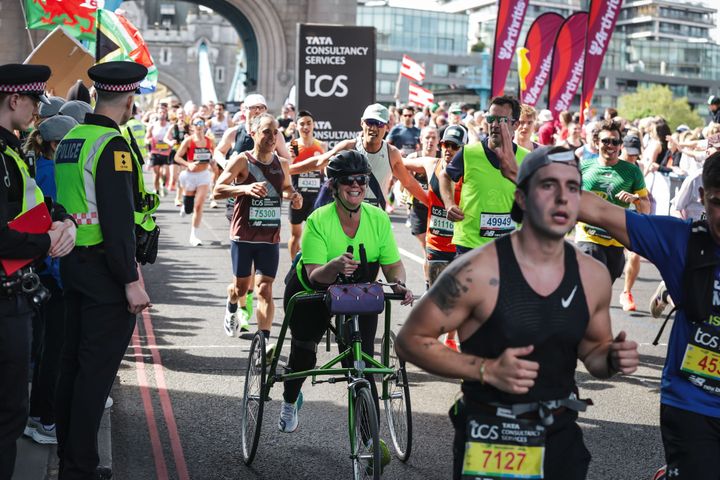
How I finally broke three hours at the Zurich Marathon
César Borges charts his journey from an overweight beginner to breaking three hours after years of steady progression. He explains how increased mileage, threshold-focused training and a disciplined race plan came together to deliver 2:59 in Zurich.
It was October 2017 when I weighed 96kg (I’m only 1.67m tall), with elevated cholesterol levels and already taking medication to control my blood pressure. Motivated by my wife’s pregnancy - she was expecting our first daughter - I decided to get off the couch and go for a 5km run. Even though I was significantly overweight, I believed it would be an easy distance to complete.
I stopped at 2.65km, running at a 6:43/km pace, completely exhausted.
From that day on, I decided I would lose weight. Given my work routine, which involves frequent travel, running was the sport that best fit my lifestyle - it only required packing a pair of running shoes. Since then, I’ve never stopped training.
From October 2017 to June 2025, my training routine consisted of three sessions per week, with peak mileage around 55km. During that period, I completed nine marathons and reached a time of 3:10 at the 2025 Seville Marathon.
In September 2025, I followed a new training cycle for the Buenos Aires Marathon in Argentina, increasing to four sessions per week and averaging around 70km weekly. I ran 3:05, and that’s when I realised that if I dedicated myself a bit more, breaking three hours and achieving a Boston Qualifying time could become a reality rather than just a dream.
I then aligned with my coach to train five times per week, and we structured the next training cycle accordingly. I consistently stayed above 80km per week, peaking at 87km. We followed an adaptation of the Norwegian double-threshold system, using a single-threshold approach but with a strong emphasis on threshold workouts. Tuesdays and Thursdays were dedicated to threshold sessions, Saturdays were long runs with threshold blocks within the workout, and Wednesdays and Sundays were easy runs.
Having already run some of the fastest marathons in the world - Valencia, Seville, Berlin, Chicago, and London - my focus was to find another fast race with favourable weather conditions and a flat course. My initial target was Rotterdam, but I couldn’t secure a spot. After evaluating European courses, Milan and Zurich emerged as the best options, and I ultimately chose Zurich. The Sub-3 World Marathon Rankings were very helpful in this decision process.
For race strategy, since I’m good at maintaining pace and comfortable running alone, I chose not to follow the official pacers and instead take full control of my own race plan. As it was my first attempt at breaking three hours, what helped me most was dividing the race into four blocks, setting target paces on my Garmin while already accounting for GPS variability.
General plan for the first 30km:
- 10km at 4:15/km
- 10km at 4:13/km
- 10km at 4:12/km
Plan A for the final part:
- 5km at 4:11/km
- 5km at 4:10/km
- 2.6km at 4:08/km (including GPS margin)
→ Target finish: 2:59:10
Plan B (in case of a breakdown):
- 12.6km at 4:30/km
→ Finish time: 3:03:22, still a personal best
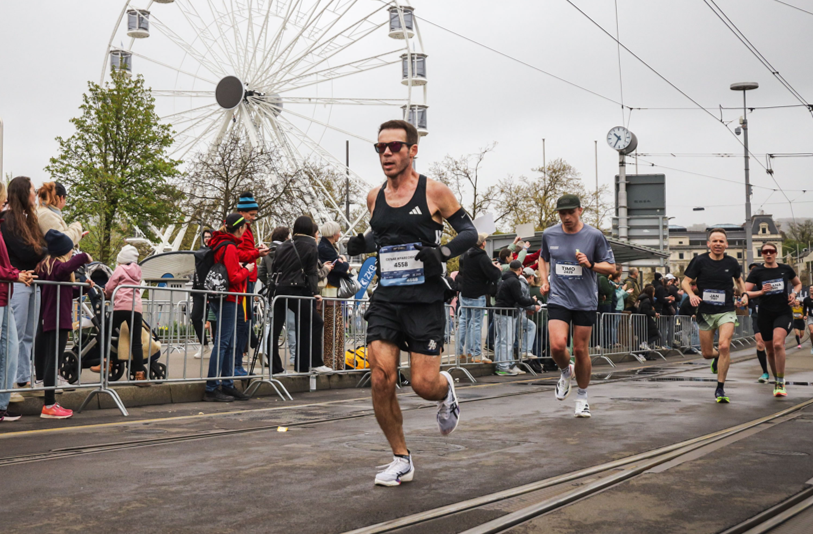
During the race, the strategy worked very well. The first 20km went exactly to plan, and I reached halfway in 1:29:50. The conditions were ideal: 10°C, cloudy skies, and no rain. For me, as a Brazilian used to training in temperatures above 23°C, this made a huge difference.
The next phase was more challenging. The course had some rolling sections, and my pace dipped slightly, but I stayed composed and focused on the overall target rather than individual splits.
At 30km, it was decision time. I felt good enough to commit to Plan A and kept pushing.
A few kilometres later, another runner noticed my effort and helped guide me for around 800 metres, running the tangents and giving me some rhythm. That small moment made a difference. It helped me lift the pace again, and I realised it wasn’t my legs holding me back - it was my mind.
Soon after, I saw my family - my wife and my kids (8 and 2 years old) - cheering for me. That gave me a final boost. I committed fully, pushing through the closing kilometres and running the final stretch at 3:45/km pace.
I finished strong, with a slight negative split (1:29:50 for the first half and 1:29:16 for the second), crossing the line in 2:59:06.
Even now, it’s hard to believe I broke three hours in the marathon and achieved a potential Boston Qualifier. For my age group (40–44), the BQ standard is 3:05, so I now have nearly a 6-minute margin for the cut-off.
I’m not sure I’m in a position to give advice to others chasing a sub-3 marathon, as my work routine and frequent travel don’t allow me to include strength training or maintain ideal recovery habits. However, if I could share one piece of advice, it would be to train intelligently.
- I currently do fewer VO₂ max sessions but significantly more threshold workouts
- Aim for a peak weekly mileage of at least 85–90km, and respect your body
- Choose your race carefully - the Sub-3 website is an excellent tool for that
- Most importantly, have a solid race-day strategy, ideally with Plan A, B, and even C, so you can adapt to whatever conditions arise
And finally, never forget:
the race truly begins after kilometre 30.
Finding this useful? Help keep Sub-3 running — support us with a coffee.