How fast can I really run a marathon?
You've finished your first marathon. The medal's hanging on the wall, the sore legs have recovered, and a new question starts to creep into your mind: what if that wasn't the best I could do?
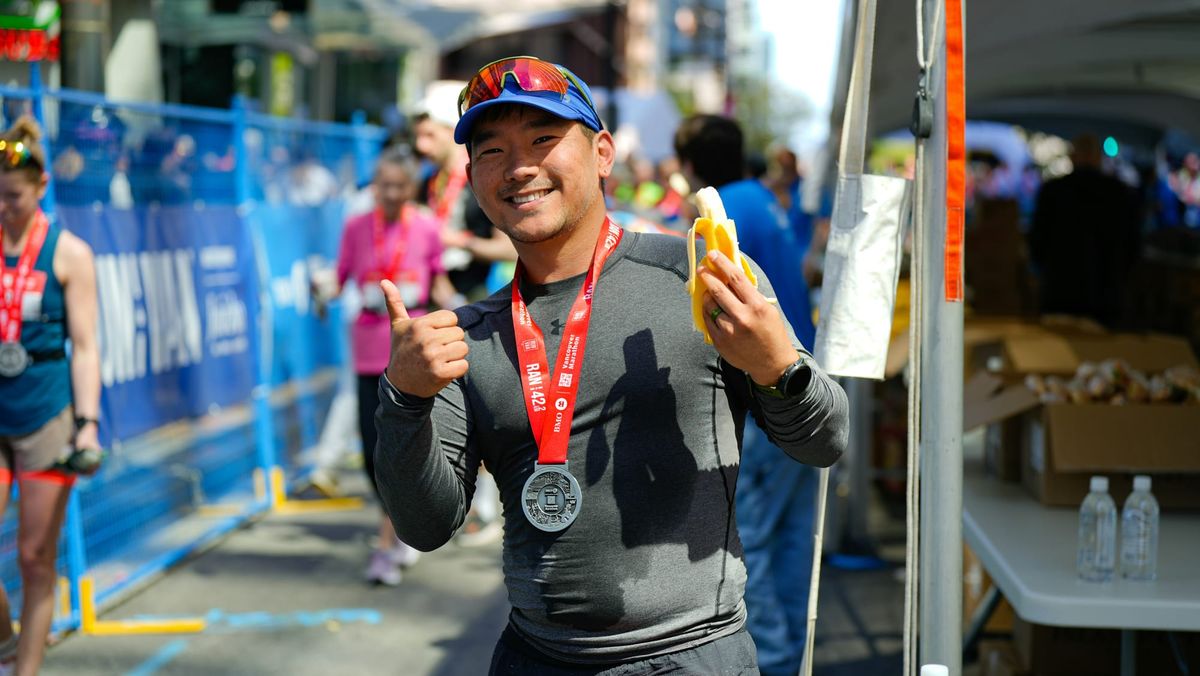
When you cross the finish line of a marathon, you have achieved something only a fraction of the world's population will ever achieve. Running, even if a proportion of it was little more than a stagger, 26.2 miles is something only a little over a million people do each year. You have joined an elite club, membership of which can never be taken away from you.
But the actual running of the marathon – taking to the streets and enduring hours of intense effort, your mind convincing the body to keep going when everything tells you to stop - is the tip of a much larger iceberg. What may not be fully appreciated by the huge crowds of people who turn out to cheer you on, or who tune into television broadcasts of the larger marathons, is that the key to the marathon at any level is preparation. Those of you who have made it round the 26.2 don their medal with pride not just because of the distance covered, but because it is more often than not the culmination of months, if not years, of preparation.
This includes running multiple times a week, becoming familiar with taking on fuel, potentially doing some faster workouts and those notorious hill reps, and numerous long runs to become acquainted with the distance. All of this requires time, energy and dedication – and often a very patient family.
Because, with a handful of exceptions, you don't realise your marathon-running potential with your debut. Indeed, again with a handful of exceptions, I would advise against trying to go sub-three first time out. The marathon isn't a parkrun, or a hard 10K race. It's something that needs to be experienced to be understood.
For the majority of marathon runners, covering the distance once is more than enough – time to tick something off the bucket list, or get back to normal life once the blisters have healed and sore legs have recovered. The number of people deciding to go again is far smaller than those who decide once is enough.
But once the initial elation of crossing the finish line, reaping the kudos from friends, colleagues and family and proudly wearing the medal wears off, there are some who think: "Is that actually as fast as I can go?"
If you're among this select group of marathon runners who disregard the hours spent pounding the roads in training, the mental and physical agony of the final 10km and the often severe muscle soreness experienced afterwards, and instead wonder, "What is my actual potential and how do I achieve it?", then welcome to Sub-3.
This does not, I should say, always mean achieving a sub-three-hour marathon. It could be 3:30 or 3:15. Even sub-four. Only 4.5% of marathon runners go sub-three each year – and this is closer to 1% for female marathoners. Some may be too old – after 60 years old, sub-three gets increasingly hard – and others may ultimately find they have physical limitations that prevent them. But if you are looking to answer the question, "How fast can I go?", then many of the same lessons can be learned. Yes, the mileage may have to be less, and potentially more recovery time is needed. But the basic principles are remarkably consistent.
Equally, if you're an elite sportsperson transitioning to the marathon from shorter distances, you will doubtless have coaches and training partners who can better advise. Sub-3 is signifcant primarily for those aspiring to be among the amateur elite – people with busy lives, often juggling family, work and a multitude of other commitments. That's the beauty of this benchmark. While the sub-two-hour marathon has now been broken, even in an era of super shoes and performance fuel, sub-three retains such a cachet in the amateur running world because, for most people, it is achievable without needing the genes or all-encompassing dedication of the legendary Eliud Kipchoge.
Finding this useful? Help keep Sub-3 running — support us with a coffee.