How chasing sub-3 could become a £10,000-a-year habit
What running under three hours really costs – and how to stop it draining your wallet.
Running is often described as the poor man’s sport. No expensive club memberships, no £5,000 bikes, no complicated gear. Just a pair of trainers and the open road. And at first glance, that holds up - parkrun is free, club nights are cheap, and a local 10K can cost less than a round of drinks.
But once you set your sights on sub-3, things start to shift.
Because going under three hours isn’t just about squeezing in an extra tempo run or signing up for a spring marathon. It becomes a way of life. You start structuring your year around races, upgrading your kit, fuelling like an athlete, and making recovery a priority. Some of this is essential. Some is bordering on indulgent. But most of it is common among serious amateur runners - and it doesn’t take much for the annual spend to creep up close to £10,000.
Here’s how it breaks down.
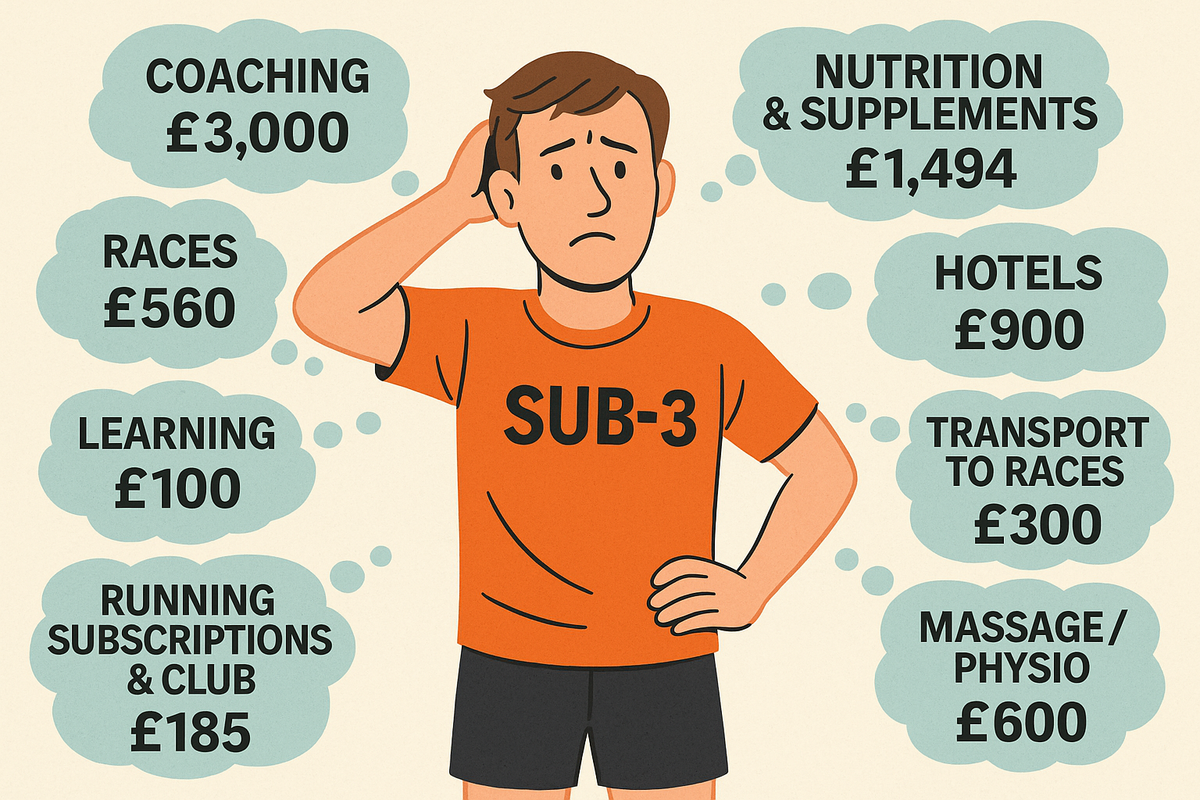
Coaching – £3,000 a year
This is the biggest item. We’ve estimated £250 a month, which gets you a personal coach who builds your training block, gives you regular feedback, and helps you stay accountable. Some coaches charge less, others more. Either way, it’s not just a financial commitment, it’s emotional too. A good coach becomes part of your routine, which can make it harder to walk away if you need to tighten your belt financially.
Learning – £100
Books, podcasts, training videos and coaching guides. Most runners consume some kind of material to improve their running IQ. Not a huge outlay, but worth including.
Running Subscriptions & Club – £185
Strava Premium (£55), Runner’s World (£55), and your club membership (£75). You could arguably drop the first two, but joining a club is essential for most sub-3 runners - it gives you access to racing, group sessions, competition, camaraderie and community. Few people do this entirely alone, and the savings you'll make from everything from car pooling to race discounts will easily justify the cost of membership.
Nutrition & Supplements – £820
This includes four pairs of everyday trainers (£130 each), two carbon-plated racing shoes (£200 each), plus socks, shorts, tops and some winter gear. It may seem like a lot, but this isn’t fashion spending. These items get used day-in, day-out, in all weathers. You wear through shoes in 10 to 12 weeks and live in the same kit year-round. The value per use is actually pretty high.
Nutrition & Supplements – £1,494
This includes:
- Gels (£270)
- Protein powder (£300)
- Protein bars (£180)
- Supplements like magnesium, beta-alanine or creatine (£360)
- Beetroot juice (£144)
- Sports drinks (£240)
It’s a serious list - but most sub-3 runners have at least a few of these on rotation. Some items feel like luxuries, others like necessities. Together, they form a routine that supports recovery, performance and consistency.
Races – £560
One race per month at £30, plus two marathons at £120 each. That’s a sensible racing calendar for someone in structured training. And of course, parkruns are free - though the coffee and cake afterwards can quietly become a recurring expense.
Hotels – £900
Six nights at £150 a time, typically for big races or travel-heavy events. This doesn’t include international marathons (see below) but covers major domestic races that involve an overnight stay. If you’re doing London, Manchester, or a club weekend away, this is a common spend.
Transport to Races – £300
Whether it’s a train, petrol, or car hire, getting to events isn’t free. Some runners keep this low by sticking to local routes or car-sharing. Others rack up hundreds of miles without realising. We’ve assumed twelve events at £25 at time.
Overseas Race – £400
Flights only - hotels are counted elsewhere. This assumes one big international race a year: Berlin, Valencia, Boston. It’s a reasonable average for someone committed to chasing fast courses or bucket-list events.
Gym Membership – £720
£60 a month. For strength work, winter treadmill sessions, mobility, or sauna. Not everyone uses the gym, but many sub-3 runners do at some stage of the year, especially during off-seasons or when working on weaknesses.
Massage / Physio – £600
Six sessions at £100 each. Tight hamstrings, post-marathon soreness, injury prevention or rehab - it’s rare to go a whole year without needing some hands-on help. For some, this is a lifeline. For others, a rare treat.
Miscellany – £736
Watches, headphones, batteries, race belts, body glide, foam rollers, hydration vests, spare shoes. This is the everything-else category, and it’s rarely empty. Most runners spend more than they think here, especially when upgrading watches or replacing worn kit on short notice.
Five Tips to Stop Your Sub-3 Costs Ballooning
Not every sub-3 runner spends this much. Many get there on a shoestring. And ultimately you can't buy your way to a sub-3 - training is the key. If you're watching the pennies - or just want to cut out the fluff - here are five ways to stay lean without compromising performance:
1. Race local, race smart
Target events you can drive to in a day. Join a club and make use of closed-road long runs, league races, and cheaper club-affiliated entries. Parkrun is always free - even if the post-run flapjack isn’t. If you're a fast enough runner, some organisers may even give you a free elite entry (e.g RunThrough).
2. Share the load
Lift-share to races. Use club kit discounts or hand-me-downs. Running might be a solo sport, but your wallet will thank you for making it communal.
3. Cut the branded supplements
Most fancy tubs are just dressed-up creatine or caffeine. Stick to the basics: generic whey, electrolytes, a multivitamin if you need it. Your body doesn’t know the brand name. You can also get great deals on sites like Nutricircle, especially if you're likely to consume supplements within 2-3 months, so long expiry dates don't matter.
4. Buy smart, not new
Pick up nearly-new carbon shoes from runners who didn’t like the fit, or the discounted colourway no-one seems to want. Shop off-season. Get your GPS watch second-hand. You don’t need the latest model to clock a negative split. And this isn't about aesthetics, it's about performance.
5. Invest in consistency, not gadgets
The best upgrade isn’t a watch or massage gun - it’s turning up day after day. If you’re going to spend, spend on whatever helps you stay consistent. That could be a coach, a gym, or just shoes that don’t give you blisters.
Finding this useful? Help keep Sub-3 running — support us with a coffee.