Five reasons to consider Vaporfly 4 for your next marathon
Often positioned as a shorter-distance super shoe, the Nike Vaporfly 4 remains a credible marathon racing option for sub-3 runners with strong durability who value responsiveness and late-race control.
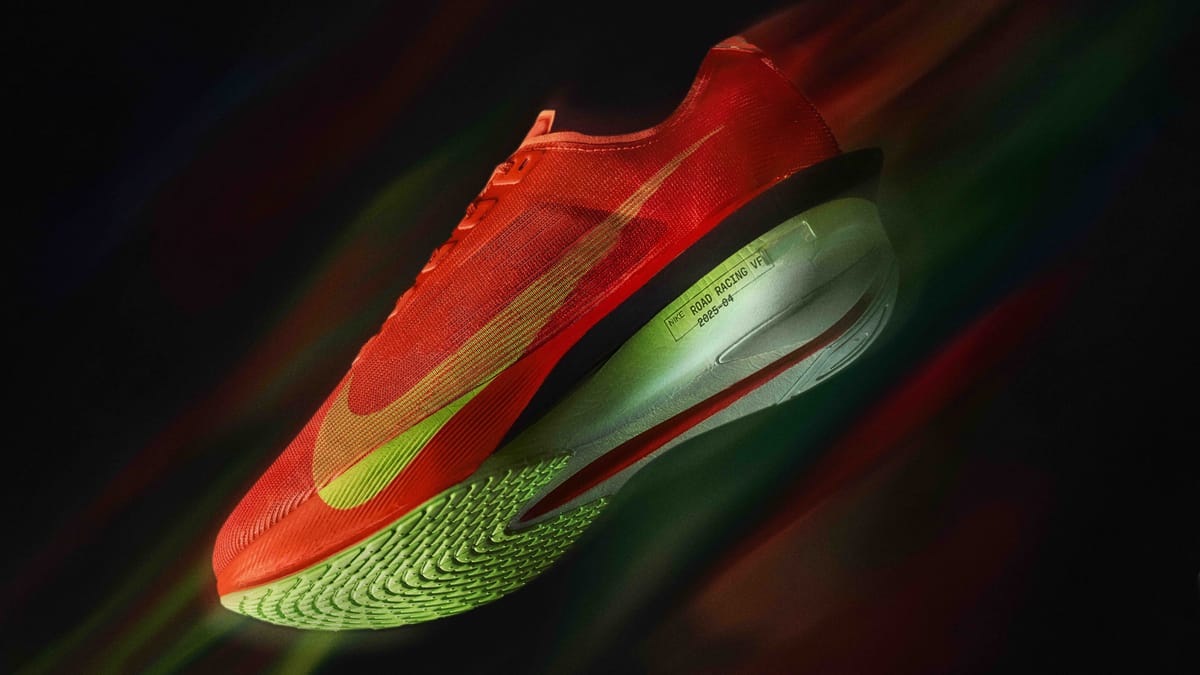
The Vaporfly 4 is often framed as a 5K–half marathon shoe: lighter, lower and more agile than many of the higher-stacked super shoes now dominating the marathon start line. I understand why, having PB-ed across every distance from 5K to half marathon in them. In the build-up to Seville, I gave the decision to race the marathon in Vaporfly 4s a lot of thought. Many reviews caution against using them over 42.2km, arguing that the reduced amount of foam could make the latter stages of a marathon less comfortable.
I was aware of that risk going in. But after running a PB of 2:39:30 at the 2026 Seville Marathon – my first time under 2:40 – and finishing the race by accelerating rather than hanging on, I’m convinced that view misses something important about how marathons are actually raced. The gamble paid off for me, and here are five reasons why the Vaporfly 4 may be worth considering over the full marathon distance, particularly for sub-3 runners who value control, efficiency and late-race execution.
1. Lightness reduces late-race mechanical cost
Late in a marathon, cadence is fragile. As soon as stride shortens or the feet start to feel heavy, pace slips almost imperceptibly. One of the biggest advantages of the Vaporfly 4 is how little it asks of tired legs. At roughly 166g, it’s around 13% lighter than the Vaporfly 3 and significantly lighter than pod-laden alternatives like the Alphafly. In Seville, whenever pace dipped slightly, the shoe made it easy to correct rather than slowly accept a slowdown. This isn’t about early-race comfort; it’s about limiting mechanical cost when fatigue is already present.
2. Maximal cushioning isn’t a prerequisite for the marathon
There’s an assumption that more foam automatically equals better marathon performance. Historically, that simply isn’t true. Early marathon runners raced in very simple, light shoes with minimal cushioning by modern standards. I’m not arguing for a return to that era, but it’s a useful reminder that the marathon has never required maximal stack height to be run well. Nike’s decision to reduce the Vaporfly 4’s stack height to around 34mm – a rare move in a market trending relentlessly upwards – produces a lower, more connected ride that sits comfortably within World Athletics limits. For runners with good mileage tolerance and efficient form, a lower, more responsive shoe can be sufficient, and sometimes preferable.
3. Efficiency over time, not just early “pop”
Responsiveness in the Vaporfly 4 isn’t just subjective. Lab testing measured an energy return of 78.1%, one of the highest figures RunRepeat has recorded. That matters over a marathon not because it feels fast at 5K pace, but because it helps sustain efficiency as fatigue accumulates. In Seville, the shoe continued to give something back deep into the race rather than feeling flat or dead underfoot. That sustained efficiency matters more over 42km than any initial sense of bounce.
4. Racing the marathon still involves changing gears
Even in a well-paced marathon, there are moments where you need to lift effort: closing a gap, correcting a slowdown, or committing in the final kilometres. The Vaporfly 4 excels here. My final kilometre in Seville was the fastest of the race. That wasn’t about protection or cushioning; it was about having a shoe that still felt lively after more than two and a half hours of running. For runners who want to race the marathon rather than simply endure it, that ability to change gears late still matters.
5. Selective, not universal – and that’s the point
The Vaporfly 4 isn’t a passive shoe. Its lower stack, moderate toe spring and lighter build mean it works best for runners who stay relatively forward and engaged – forefoot or light midfoot strikers rather than heavy heel strikers. Grip is also a trade-off; it’s not quite as confidence-inspiring as the Vaporfly 3s I ran Berlin in last year, and had Seville been wet I might have thought twice. That selectivity helps explain why the shoe isn’t positioned as Nike’s default marathon option. But it’s also why it has appeared at the sharp end of major marathons, including Deresa Geleta’s 2:03:51 at Tokyo in 2025. Increasingly, it’s also available at far more accessible prices – I recently picked up a new pair for £100 to race Manchester – which makes it a credible and surprisingly good-value option for the right runner.
For me, the Vaporfly 4 didn’t make Seville easier. It made it sharper. For sub-3 runners - or aspirants - who don’t rely on maximal cushioning to get them through the final 10km, and who want a shoe that rewards engagement rather than passivity, it’s well worth considering over the marathon distance.
Finding this useful? Help keep Sub-3 running — support us with a coffee.