Do you need track sessions to run a sub-3 marathon?
Track sessions are not essential for a sub-3 marathon, but they can sharpen fitness, boost confidence, and build strength if used wisely alongside road training.
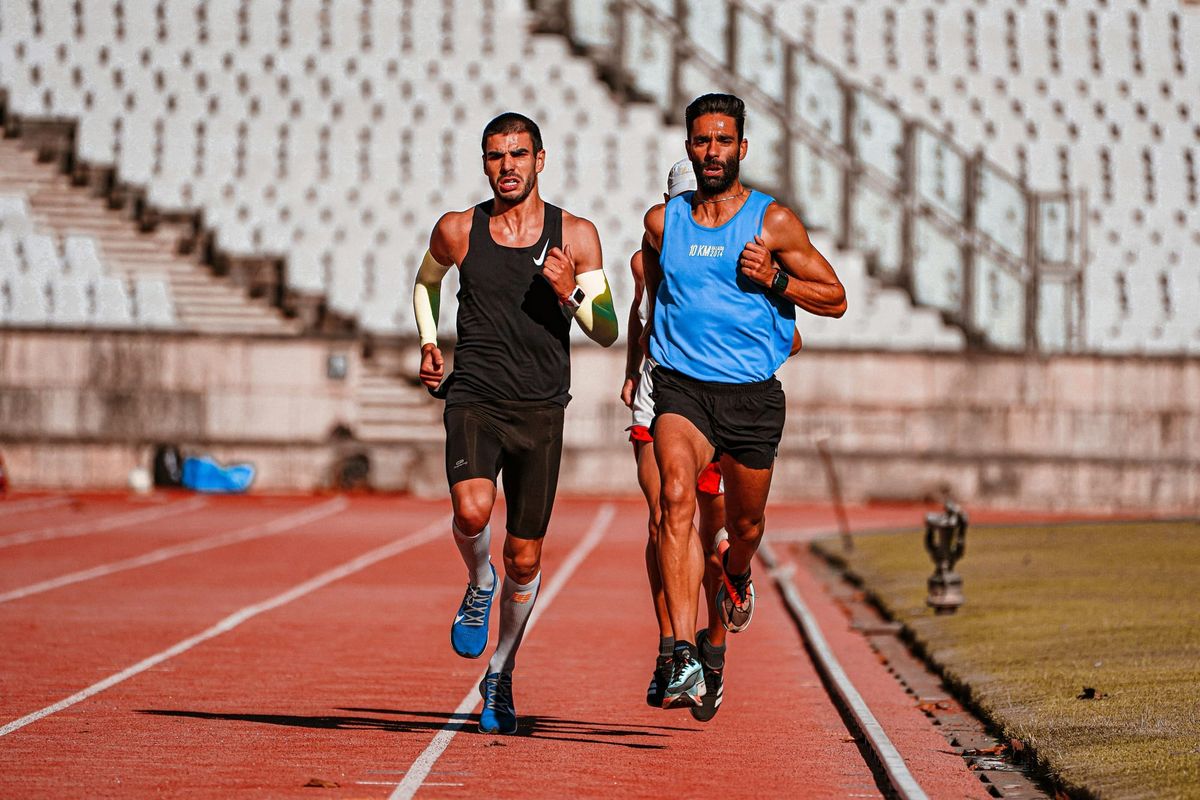
Sub-3 marathoners are often drawn to the track like a moth to a flame. There is something compelling about it, something that feels homely and beautiful. A runner’s playground. Perfectly measured, floodlit, quiet, with nothing to distract you from the rhythm of your stride. You do not need track sessions to run a sub-3 marathon, but you will be a stronger, more confident runner if you use them wisely.
A marathon is a road race, and if you are chasing sub-3 then the bulk of your training should be on the kind of surface you will face on race day. But the track is one of the best places to push your body well beyond marathon pace in a controlled way. By running intervals at speeds significantly faster than marathon pace, you are stressing your VO2 max, improving the efficiency of oxygen delivery and use in your muscles. Your body learns to tolerate higher levels of lactate, while your muscles, tendons, and ligaments adapt to a more forceful stride. In effect, you train your system to work far harder than it ever will at marathon pace. That makes locking into 6:50 per mile on race day feel more controlled, because you know what it is to suffer at 5:30 or 6:00 pace for repeated bursts. Track sessions build confidence as much as fitness.
The track also eliminates distractions. When you are working in Zone 5, you do not want to be dodging traffic, worrying about a cyclist cutting across your path, or watching for ice. On the track, all you need to do is run. You can dial into your body, hit your splits, and push yourself without interference. In winter the floodlights make certain sessions possible that would be risky or impossible on dark, icy roads. I have often found myself on the track at six in the morning in January, the floodlights casting long shadows as the cold air bites. There is a strange, silent camaraderie among the handful of hardened runners who show up at that hour. We might nod, or we might not, but everyone knows we are there for the same reason: to get the work done before the commute or the school run, because there is no other time.
There are pitfalls. Too much running on a 400m oval can put strain on muscles that are not used to repetitive bends (I find my calves can get sore, which they never normally do). If possible, mix up the direction by running some reps the opposite way or use the outside lanes. Do not get sucked into racing strangers on the track or burning yourself out in a competitive atmosphere. Ego is the enemy here. As legendary marathoner Bill Rodgers put it in his autobiography Marathon Man: “My philosophy was always, You can win the workout. All I care about is winning the race.” Keep that in mind when others surge past you.
Track work should not dominate your week. One or two sessions are enough, and they should complement your long runs, tempo runs, and steady aerobic mileage. Intervals could be 12 by 400m, 6 by 1,000m, or a ladder session where the distance gradually increases. What matters is that they are done at a pace well above marathon effort, with enough recovery to sustain the quality.
For many sub-3 runners the track is a godsend. It makes hard work both possible and enjoyable. The surface feels bouncy and fast, the atmosphere is focused, and the sessions create a sharpness that carries through the whole training block. You might not strictly need it, but if you want every advantage, the track is hard to beat.
Finding this useful? Help keep Sub-3 running — support us with a coffee.