Are your running shoes good value? Try this simple test
High price doesn’t always mean poor value. Here’s how tracking cost per kilometre can help you make smarter choices - and stretch your shoe budget further.
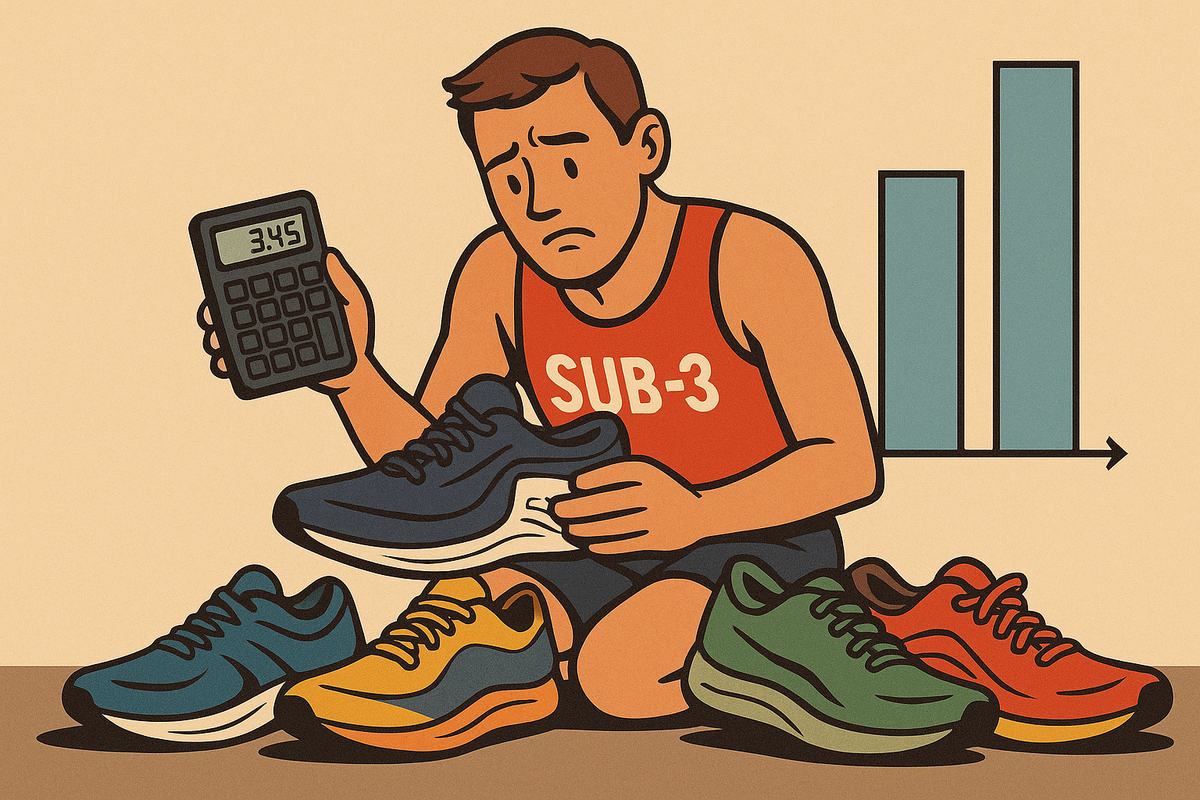
Most runners know how much they spent on their shoes. Fewer know how far those shoes have carried them. And almost no one regularly thinks in terms of cost per kilometre – a simple, practical way to gauge value over time.
Take two examples from my own rotation. A pair of Vaporfly 3s cost me £200. Sounds steep. But I’ve run over 1,000km in them, bringing the cost down to 20p per kilometre. A pair of trail shoes, by contrast, cost £99 but barely got used—working out at 51p per kilometre, more than double the cost despite the lower price tag. My trusty workhorse Brooks Hyperion Tempos (12 pairs and counting), rack up 941kms on average, so a mere 12p per kilometre.
Once you look at shoes this way, value can flip on its head.
How To Calculate It
It’s straightforward:
Cost per kilometre = total cost / total kilometres run
For example:
- £120 shoe lasting 1,000km = 12p/km
- £250 carbon shoe lasting 300km = 83p/km
You can estimate distance, but the easiest way to be accurate is to track shoe usage over time. Platforms like Strava, Garmin and others let you assign a shoe to each run. It takes a few seconds to set up and gives you a much clearer sense of what’s lasting - and what’s not.
Why It’s Worth Doing
If you’re putting in serious mileage each year, the numbers start to matter. You’ll quickly spot patterns:
- Some cheaper shoes wear out fast.
- Some high-end shoes, especially plated ones, last far longer than expected.
- Some “bargains” gather dust after a single test run.
Knowing what actually delivers value helps when deciding whether to double up on a pair you love, avoid a risky model, or wait for a trusted shoe to come back into stock.
A Few Tips
1. Track mileage per shoe
Assigning a shoe to each run on Strava is easy and helps you monitor durability. After a few months, you’ll have real data to compare.
2. Don’t dismiss expensive shoes
Some carbon racers are surprisingly durable. I’ve put well over 1,000km into a pair of Vaporflys. That £200 up-front cost doesn’t look so bad when they’re still going strong after six months of tempo work and races.
3. Be wary of the “cupboard shoe”
We all have them - the pair that looked good, got a solid review, but never felt quite right. If it only sees 50km, even a £60 shoe becomes a £1.20/km dud. Sometimes you need to take the plunge to discover a new favourite, but be cautious.
4. Buy tactically
If you know what you like, set alerts on eBay, Vinted or outlet sites. I’ve picked up new pairs of my favourite trainers for under £40. That’s 3–4p per kilometre for a shoe that lasts a thousand.
5. Patch and prolong
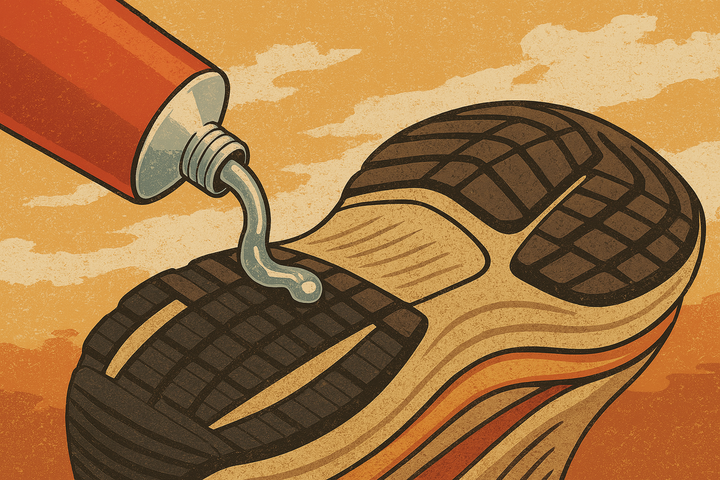
A bit of Shoe Goo on the outsole or a replacement insole can buy you extra mileage - especially on daily trainers. It won’t win style points, but it keeps your rotation going longer. And who closely examines the soles of your shoes anyway?
6. Do your homework
Sites like RunRepeat offer detailed breakdowns of durability, outsole wear and build quality. If you’re considering a new model, it’s worth reading a few trusted reviews first. Saves disappointment - and cash.
Final Thought
This isn’t about spreadsheets or obsessing over decimal points. It’s just a useful way to think about the real value of what you’re running in.
For newer runners, it’s a smart habit to build. For experienced ones, it can help fine-tune your buying decisions. Either way, it’s worth keeping an eye on what your shoes are costing—not just at checkout, but kilometre by kilometre.
Want to give it a go?
Think of your top three shoes. Estimate their mileage. Divide cost by distance. The answers might surprise you.
Finding this useful? Help keep Sub-3 running — support us with a coffee.