10 things that finally made sub-2:40 happen in Seville
A sub-2:40 marathon isn’t about one breakthrough moment. Drawing on a breakthrough run in Seville, here’s an account of the practical decisions that stacked the odds, from training compromises to race-day execution.
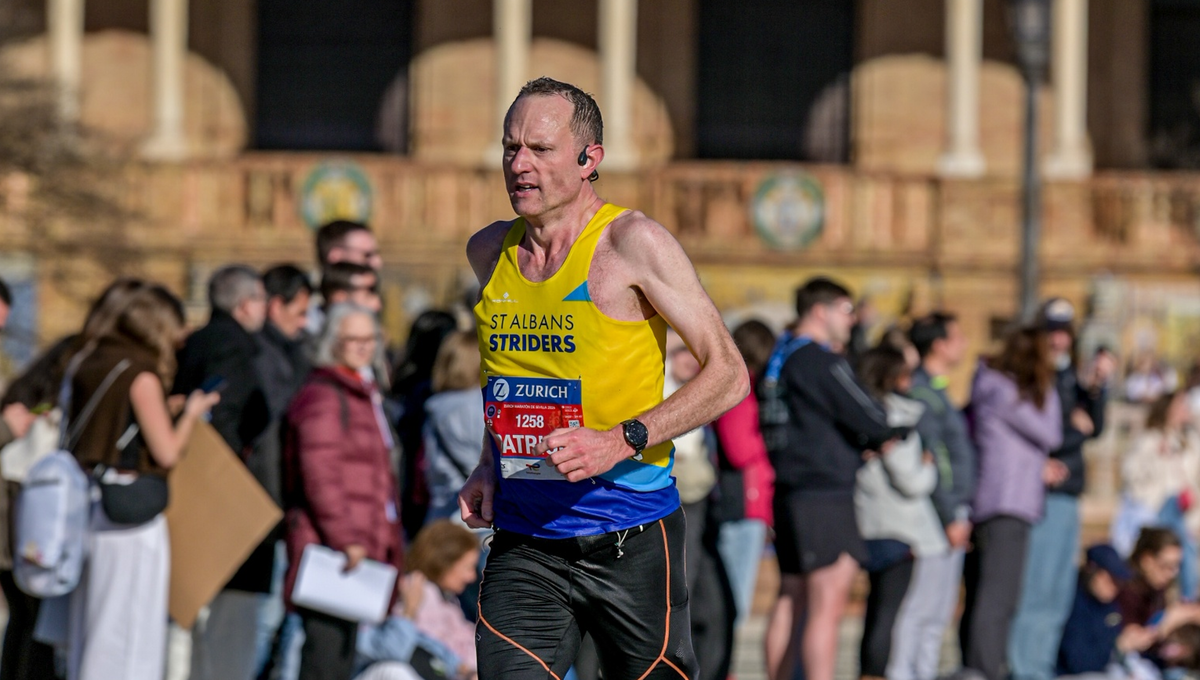
Around 14 months ago, I finished Valencia Marathon with a new PB of 2:48:22. I had to dig very deep in the second half to stay on track, and for the first time wasn’t sure if there was much I had left to give. At 44, had I finally maxed out at the marathon?
Despite welcoming the PB, it all felt a bit deflating. For the two years prior, I’d used an online coach to help structure my training, and diligently did everything I was told to do. The result after all that work was just about a minute and a half shaved off my 2:50 at the Yorkshire Marathon in 2022, a far hillier course than Valencia.
I could either resign myself to having peaked, or shake things up. After Valencia, I decided some things had to change. I’d noticed just how much bulkier I was compared to peers on the start line, and rather than aggressively throwing myself into training, I focused first on a significant weight-loss programme, losing about 14kg in three months. I then stepped up the training, normalising 100-mile weeks during a marathon block, when previously I would only have one or two. This was a radical departure from my coach’s advice, so I had to take matters into my own hands.
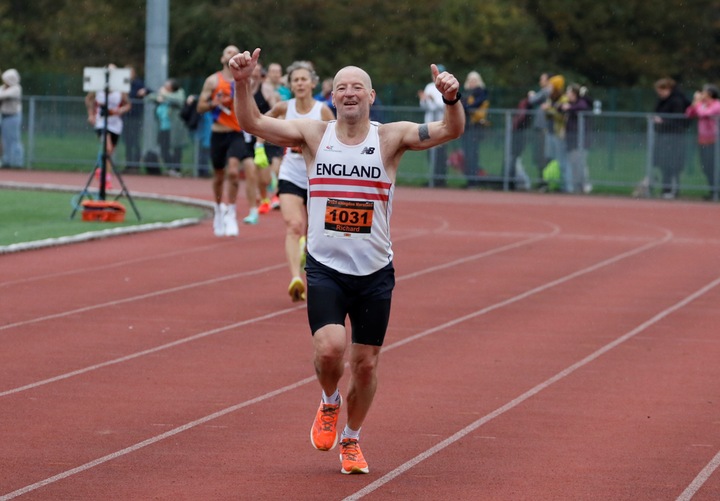
The impact on my 5K to half-marathon times was phenomenal. My 16:11 for 5K saw me selected to run for England Masters. But I was unlucky with the marathon in 2025. Both London and Berlin were extremely hot. At London I made it to 2:45, but when 26 degrees was forecast in Berlin, I decided it was best to just go sub-2:50 and enjoy the experience rather than potentially crash and burn.
Jump forward to February 2026, and I managed a breakthrough, finally realising my A goal after three years of largely plateauing: 2:39:30. Here’s an account of what I did that could be useful to other sub-3 runners.
1. The right course
I was early in my research for the Sub-3 World Marathon Rankings last year, and Seville sprang out at me: a very high proportion of sub-3s, a flat course and, with only around 10,000 runners, it wouldn’t be congested either. Valencia is now roughly three times that size, which increases stress from weaving and makes it easier to run long. Also, the timing in February meant it was unlikely that temperatures would reach the highs you sometimes get in late spring or early autumn.
Of the hundreds of marathons I researched, Seville, alongside probably Frankfurt, Ballarat and Indianapolis, seemed to sit in a Goldilocks zone for me. The other great thing about Seville is that it’s one of only a handful of races that has 2:45 pacers, rather than just 3:00. Even though I kept well clear of them from early on, I could feel their presence behind me, which proved strangely motivating.
2. Conditions you can’t argue with
Like most marathon runners, as soon as the long-range forecast comes into view, I obsessively check weather apps to see what conditions are likely to be. For Seville it had initially been forecast to be rainy, with very wet and stormy weather besetting that part of Spain for weeks beforehand. I would take that over heat, but you can never quite go as hard when running on wet surfaces, especially polished stones in Seville’s old town.
After all the bad luck of the 2025 heatwaves, the forecast eventually settled on pretty much perfect weather: clear skies and temperatures of around 6–10 degrees.
3. No excuses on the day
While you can’t control the weather, the great thing about knowing the conditions are ideal is that you don’t go into marathon morning with a ready-made excuse in the back of your head. For Berlin 2025, I’d been managing expectations with friends and family for days beforehand. That wasn’t possible for Seville.
There’s something liberating, and slightly unsettling, about knowing the conditions are going to be good. It means it’s on you. If the wheels come off, it’s likely because you either weren’t prepared enough or didn’t dig deep enough on the day. It adds pressure, but without the safety net of an excuse, you feel compelled to press on.
4. Enough training, not perfect training
I had big plans for my Seville training block: seven 100-mile weeks, with a marathon-length long run each week. This was curtailed by the worst flu I’ve ever had in December, leaving me bed-ridden for around 10 days. One lesson here: next year, get a flu jab.
That left me with six weeks in the new year, and I could only build up to three 100-mile weeks before tapering. My mileage ended up being 85-100-100-100-75, then taper. I always find I start to peak during my third 100-mile week, when my legs are well adapted to high mileage but before exhaustion sets in.
I worked in around three threshold sessions a week, of varying lengths at roughly marathon pace, with scattered strides during other runs. I also ran four marathon-length easy runs, going for around an hour longer than I ran in Seville. I’m a firm believer in running marathon distance during training so your legs get used to the distance, you practise fuelling, and you’re on your feet far longer than you’ll be racing. That way there are far fewer shocks to the system on race day.
This experience has led me to question whether I actually need more 100-mile weeks, given I average around 70 miles a week year-round. I plan to repeat this five-week, high-mileage block with a couple of other races later in the year and see whether it continues to work.
5. Shoe choice as a conscious trade-off
I tend to run marathons in Alphaflys, as the foam and pods are supposed to provide comfort later in the race. But all of my best races in 2025 were in Vaporfly 4s: highly responsive and super-light, but with far less foam and stack height.
After probably overthinking it, I decided to chance Vaporfly 4s in Seville. When shoes are too comfortable, you can take it too easy and lose focus. I’ve also always found Alphaflys a little heavy towards the end of marathons. No such issues with the Vaporfly 4s. Their biggest advantage was the ability to accelerate.
I tried to stay at a constant pace of 3:45 per kilometre, and if I felt myself slowing, the lighter shoes made it easy to lift the pace. My final kilometre was run at 3:23/km, helped in no small part by lighter, more responsive shoes.
6. No fear of the wall anymore
Like most marathon runners, I hit the wall badly around 20 miles into my rookie races. I was so inexperienced in my first two that I didn’t even fuel. For my first sub-3, at Brighton Marathon, I was so paranoid about it happening again that I ran the final 10km at an easy pace to secure the time and avoid cramping.
Something shifted in Seville. I had confidence that my legs had enough mileage in them not to fear the wall. That meant I treated the final part of the race more like a 10K or half marathon. Instead of holding back, I put my foot down in the final 5km. Next time, I’ll see if I can do that even earlier.
7. Fuelled to remove doubt
While I’d lost a lot of weight previously, during this block I focused purely on fuelling for performance and recovery. Protein in particular played a big role during the 100-mile weeks. I was eating around 2g per kilo of body weight per day, including a large shake within 20 minutes of a hard or long session, and a substantial amount an hour or so before bed, usually Skyr and protein granola.
Not all of it was high-quality protein. Grenade bars definitely played their part too. This meant I could run 100km in three days, including a track session, and never feel particularly sore. (It must be said, my daily 20 minute yoga routine helps immeasurably with this as well.)
During the marathon itself, I fuelled as usual: a gel every 7.5km, plus a soft flask of 250ml of High5 energy powder drink, stashed in my running belt, that I sipped whenever I felt thirsty.
8. Metronome pacing, not micromanagement
My mum, still running marathons into her 70s, is known for running at a metronome pace. I took inspiration from her in Seville. On a flat course, even pacing is far more achievable, and early on I settled into a rhythm averaging 3:45/km.
If I got caught up in the moment, I’d rein it in. If I felt myself flagging, I’d gently lift the pace. It became like driving on a traffic-free motorway: hit a speed and cruise. The only time this changed was in the final kilometres, when I realised I’d run around 300 metres long and needed to make up time to secure sub-2:40. By then I knew I had gas left, and I’d have kicked myself if I hadn’t used it.
9. Familiar music, familiar focus
I avoided running with music for years, but I was given a pair of Shokz headphones as a present and eventually gave in. There’s no getting away from it: I run faster with music.
Ironically, I think music cuts out noise. Familiar songs seem to occupy the part of my brain that would otherwise be worrying about minor niggles, getting drawn into pointless battles with other runners, or running endless mental calculations about pace and finish times. A familiar Oasis track took me straight back to last year’s reunion concerts. And has there ever been a band better to run to than The Bracknall? Driving songs that feel almost designed to keep you moving forward.
10. Planning everything outside the race
Finally, the boring bit. Making sure all the logistics run smoothly before race day. Even though my flight from Luton was delayed by three hours, which was out of my control, I had a taxi waiting on arrival, skipping a huge queue. I also walked the route from my hotel to the start line the day before, to avoid any navigation stress on race-morning.
My only failure was the impossibility of finding beetroot juice anywhere in Seville on a Saturday afternoon for my usual nitrate hit. I resisted forcing down a jar of pickled beetroot. Nothing new on race day. As it turned out, it wasn’t needed after all.
Finding this useful? Help keep Sub-3 running — support us with a coffee.